


Subconscious Fat at 30,000 feet
Imagine spending five years believing you have a serious, progressive neurological disease.
You change your lifestyle. Your career suffers. Your entire identity becomes intertwined with a diagnosis.
Then one day, your doctor tells you something extraordinary:
You never had that disease in the first place.
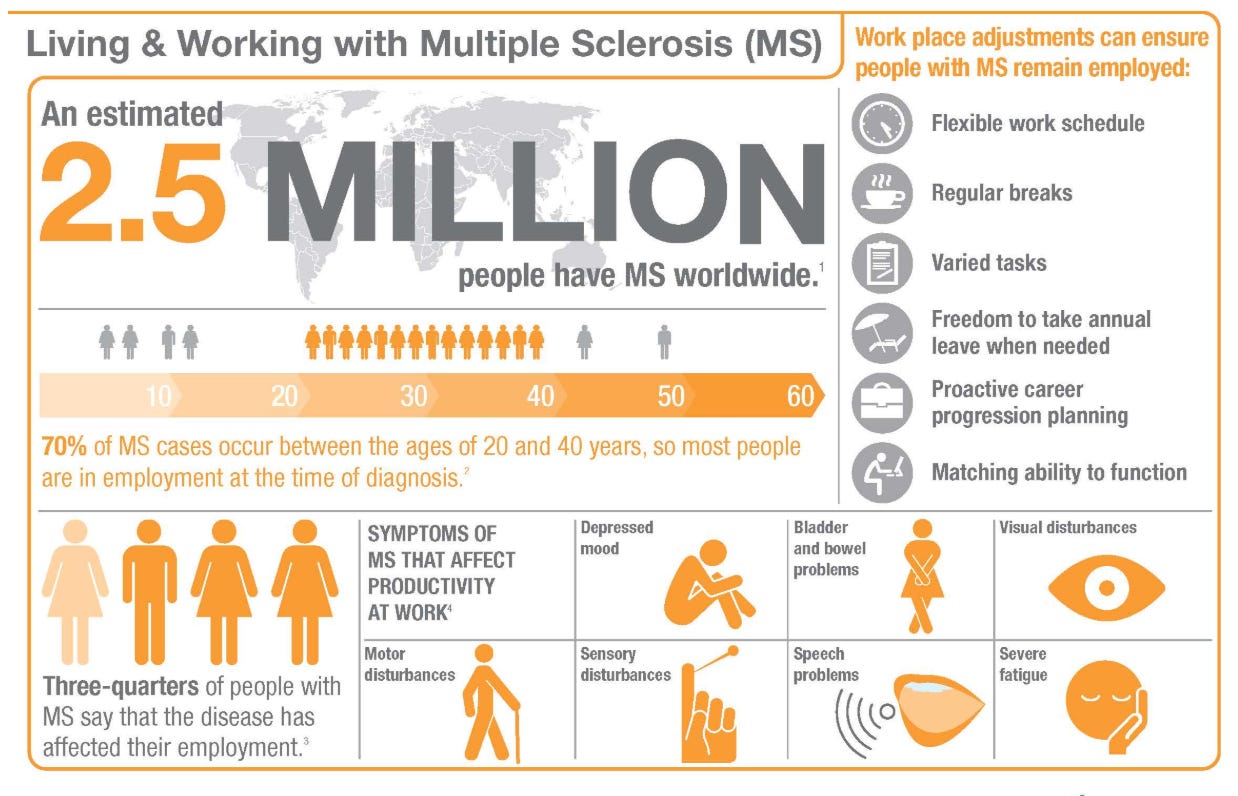
That’s essentially what actress Christina Applegate recently revealed. After five years believing she had multiple sclerosis (MS), her doctors now say she was misdiagnosed.
Yet her debilitating symptoms remain.
She’s still suffering, only now she doesn’t know why.
And that brings me to something I’ve believed throughout my approximately 22 years practicing chiropractic:
The human body is extraordinarily complicated, and diagnosing what’s wrong isn’t nearly as straightforward as people think.
But before discussing chiropractic, let me take you back more than 225 years to another famous American whose medical treatment raises an uncomfortable question.


Subconscious Fat at 10,000 feet
George Washington, our first president, died on December 14, 1799, at age 67.
He developed a throat illness, accompanied by difficulty swallowing and breathing.
Three physicians attended him.
And what did they do?
They repeatedly removed blood from his body.
Why?
Because bloodletting was an accepted medical treatment at the time. Physicians believed removing blood could reduce inflammation and restore the balance of bodily fluids.
Over approximately 12 hours, Washington underwent four bloodlettings, losing an estimated 40% of his total blood volume!
One physician even objected to the excessive bleeding and suggested another approach, but his objections were overruled.
Washington died that evening.
Although we cannot know whether he would have survived with different treatment, historians believe the massive blood loss likely worsened his condition and may have contributed to his death.
Think about that.
These weren’t necessarily incompetent or uncaring physicians.
They were educated professionals practicing what they’d been taught was appropriate medicine.
The problem?
Their underlying understanding of disease and treatment was seriously flawed.
Today, we recognize that removing massive quantities of blood doesn’t cure a severe throat infection. Although therapeutic blood removal still has legitimate uses for certain conditions, it isn’t a treatment for what Washington experienced.
And here’s my point: If several professionals learn the same incorrect information, their agreement doesn’t magically make that information correct.
Now, fast-forward to Christina Applegate.
Diagnosing MS requires interpreting neurological symptoms, imaging, clinical findings, and excluding other possible explanations.
There’s no single definitive test.
Symptoms overlap with other conditions, and sometimes physicians must reconsider their original conclusions.
That’s not necessarily negligence. It’s a reminder of how complicated biology really is.
And it brings me to a philosophical division within chiropractic.
Traditionally, chiropractors were divided into two camps.
The mixers incorporated broader diagnostic and therapeutic approaches, often resembling conventional medical practice.
The straights concentrated on locating and correcting what chiropractic philosophy calls vertebral subluxations, emphasizing the body’s inherent capacity to regulate and heal itself.
When I operated my own chiropractic office, I leaned toward the straight chiropractic philosophy.
Why?
Because I was uncomfortable pretending that every collection of symptoms could be neatly explained by a diagnostic label.
I preferred focusing on what I believed I could address as a chiropractor, while recognizing that serious medical conditions required appropriate evaluation.
Chiropractic adjustments are not established treatments for MS or systemic diseases, and the traditional vertebral subluxation theory has not been scientifically validated as an explanation for all diseases.
But one philosophical principle has stayed with me:
The body is more complicated than any single diagnosis or theory.
Subconscious Fat at Eye-Level
Here comes Mr. Skeptical!
“Hold on, Hermann! Are you comparing modern medicine to bloodletting in 1799? We’ve come a long way since George Washington!”
Absolutely, Mr. Skeptical!
Modern medicine has made extraordinary advances.
We have antibiotics, sophisticated imaging, effective emergency procedures, and treatments that have saved millions of lives.
I’m not questioning those achievements.
I’m questioning the assumption that today’s accepted medical beliefs are beyond challenge.
Think about it.
George Washington’s physicians weren’t deliberately trying to harm him. They believed they were helping.
Their medical framework was simply wrong.
“Okay, Hermann, but doesn’t science eventually correct its mistakes?”
Yes! And that’s precisely why questioning established ideas is so important.
Science should be a process of continual investigation, correction, and improvement.
The danger comes when we confuse professional consensus with absolute certainty.
That doesn’t mean consensus is meaningless. Modern scientific agreement supported by rigorous, reproducible evidence is more reliable than eighteenth-century health care.
But even good science must remain open to new evidence.
Christina Applegate’s experience reminds us that diagnoses can change as better information becomes available.
And George Washington’s experience reminds us that even widely accepted treatments can eventually be recognized as harmful. Of course, I can’t help but think of the recent use of opioids and the overuse of statin drugs for high cholesterol or chemotherapy for cancer as things we may look back on and think, “What were we thinking?”


Practical Suggestions and Conclusions
So what should we take away from these stories?
1. Respect expertise, but don’t surrender your curiosity.
An expert’s opinion matters. But understanding the evidence behind that opinion matters too.
2. Ask about alternatives.
When diagnosed with a serious condition, ask what else might explain your symptoms and how the diagnosis was established.
3. Seek a second opinion when appropriate. Scratch that previous comment that ChatGPT suggested; instead, I suggest: ALWAYS get an independent 2ND opinion.
Especially when facing lifelong medications, invasive procedures, or uncertain findings.
4. Remember that agreement isn’t the same as proof.
Several professionals relying on the same assumptions can reach the same incorrect conclusion.
5. Remain open to changing your mind.
That goes for physicians, chiropractors, researchers, and online fitness coaches like me!
I’m not saying we should abandon all modern medicine… well, a big portion of modern medicine for chronic conditions would be a good idea to abandon, with more emphasis on diet, which rebuilds our bodies daily.
I’m suggesting we demand the best available evidence while acknowledging that our understanding will keep evolving (and we should focus way more on diet).
George Washington had multiple professionals trying to save his life. Christina Applegate had a diagnosis that shaped five years of her life.
Two very different stories, separated by more than two centuries.
But they share one important lesson:
Being convinced you’re right is not the same thing as actually being right.
And perhaps the three most intellectually honest words in healthcare are:
“I don’t know.”
Because admitting uncertainty is often the first step toward discovering the truth.
Be aware.
Other links related to this post:
Medical Metrics Are Sandcastles In the Sand!
PS: Links on LinkedIn, Facebook, Instagram, X, and Notes.
Full disclosure: ChatGPT was used to research and enhance this post.
P.S. Free Outdoor Workout — Saturday, November 7th at Noon! Join me at Legion Memorial Park, 6447 NE 7th Avenue, Miami, for a FREE resistance band workout. Learn how to combine bands with the park’s outdoor bodyweight exercise equipment for an effective full-body workout. We’ll meet by the outdoor fitness equipment area. All fitness levels welcome!