

Subconscious Fat at 30,000 feet
Most people think sugar is merely “energy.”
That’s the spell.
Mr. Skeptical shifts in his chair.
“Don’t you have a name for that….obesity…”
Yes, I’d like to call thinking sugar is only energy an “obesity spell”.
Sugar is not merely energy. Sugar is also chemistry. And one of the most important chemical reactions sugar participates in inside the body is something called glycation.
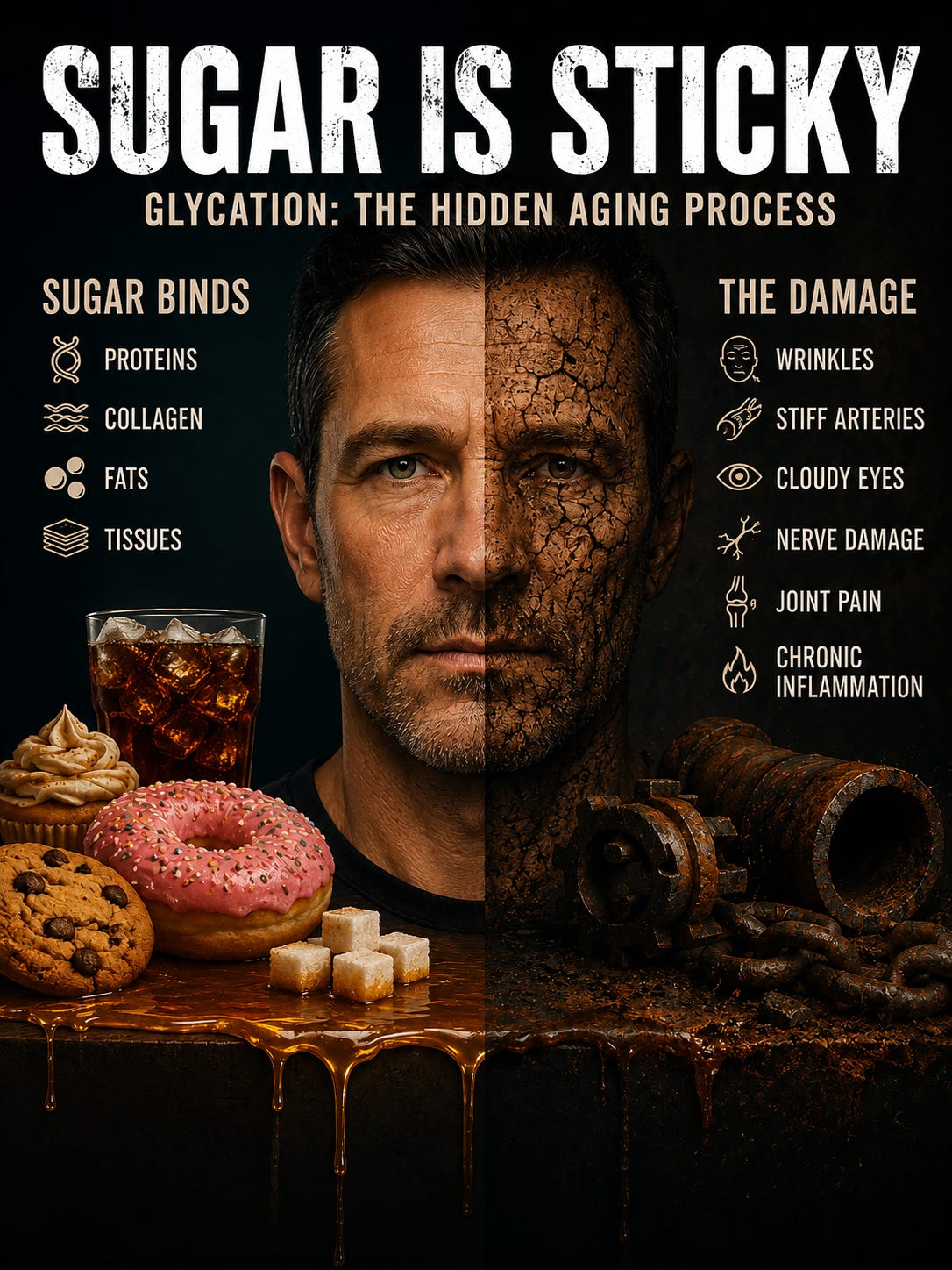
Glycation is, in many ways, biological stickiness.
Sugar sticks to proteins, fats, and tissues in the body in ways that slowly damage them over time. Think of it like syrup drying onto a countertop. At first it’s just sticky. Eventually it hardens, darkens, and becomes difficult to remove.
That’s not a bad metaphor for aging.
Wrinkled skin. Stiff arteries. Cloudy eyes. Damaged nerves. Achy joints. Poor circulation. Much of this is connected to oxidation and glycation slowly accumulating over decades.
And yet society still treats sugar as harmless fun.
Meanwhile, the human body quietly caramelizes from the inside out.
Subconscious Fat at 10,000 feet
Mr. Skeptical leans back in his chair with a grin.
“Come on. Sugar can’t possibly be THAT bad. My grandmother ate dessert every day.”
I nod.
Yes. And some people smoke until ninety.
The existence of exceptions does not erase biology.
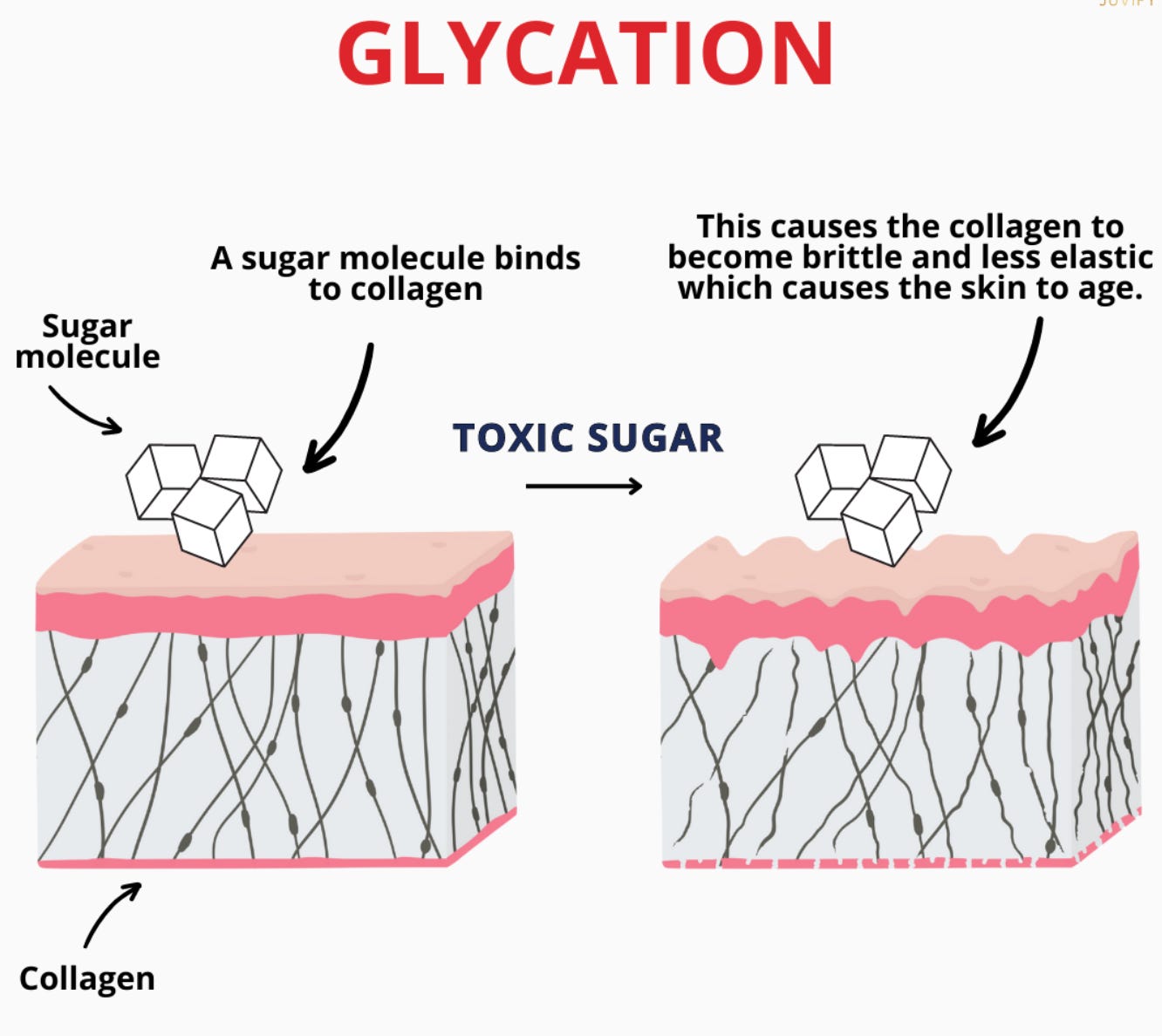
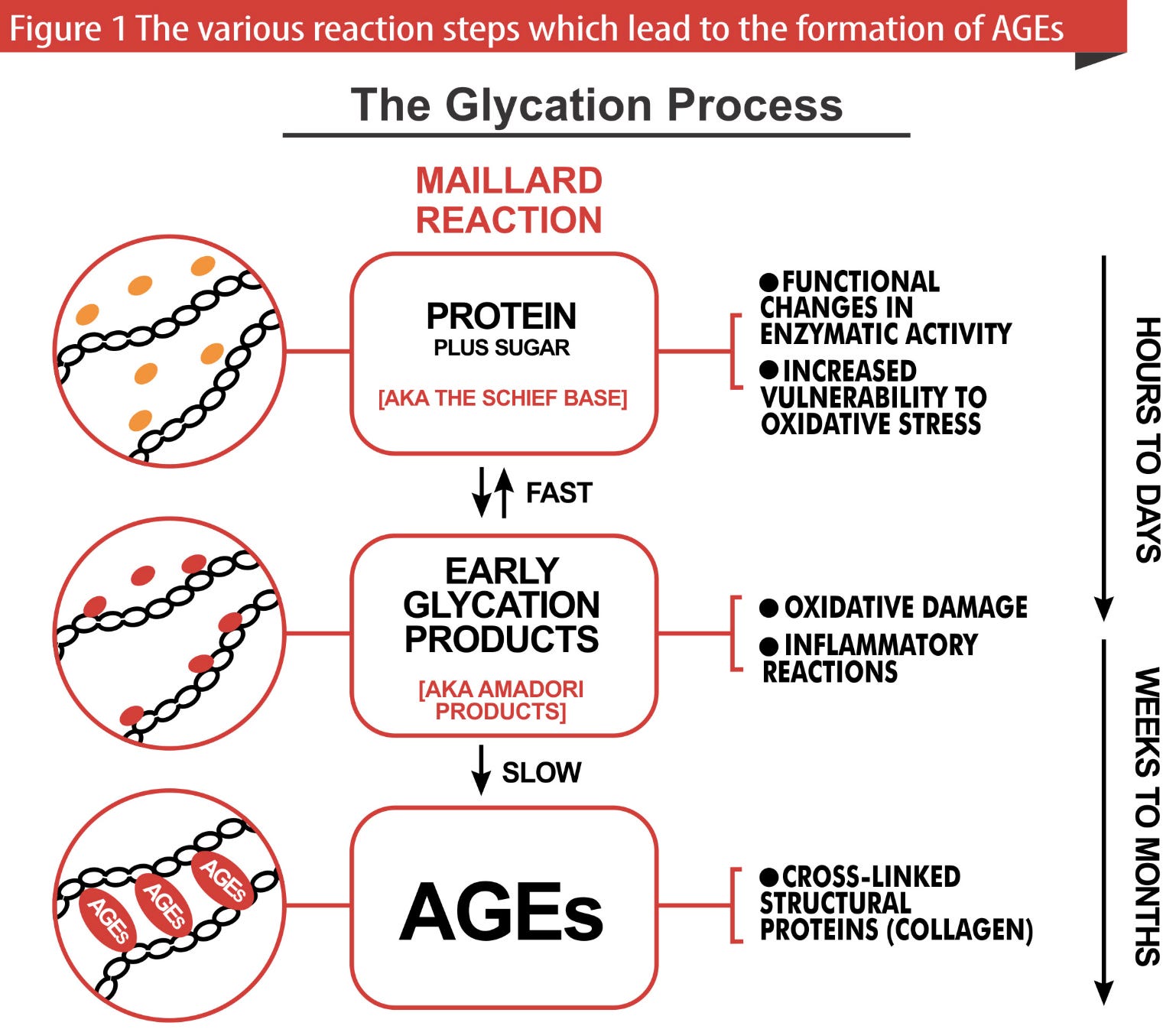
Glycation occurs when sugar molecules bind to proteins or fats in the body without enzymatic control. The result is the formation of compounds called AGEs — Advanced Glycation End Products.
Even the acronym sounds ominous.
AGES.
Because that’s exactly what they help accelerate.
Collagen becomes less flexible. Blood vessels stiffen. Proteins lose proper function. Tissues become more brittle and inflamed over time.
This is one reason diabetics often age faster physically.
Chronically elevated blood sugar dramatically accelerates glycation.
And here’s the important part: glycation is not merely about eating “desserts.”
It’s fundamentally about glucose exposure over time.
Bread.
Pasta.
Cereal.
Rice.
Juice.
Soda.
Candy.
Even “healthy” ultra-sweet smoothies.
The body often breaks many carbohydrates down into glucose anyway.
Mr. Skeptical smirks.
“So fruit is basically poison now?”
No.
Dose matters.
Context matters.
Metabolic health matters.
But modern people consume sugars and processed carbohydrates at levels human biology likely never evolved around.
That matters too.
Subconscious Fat at Eye-Level
One useful mental model is this:
Sugar is sticky.
Not literally like glue pouring through your veins. But chemically sticky enough to interfere with proteins and tissues over time.
Hemoglobin A1c — one of the most important blood markers doctors measure — is literally glycated hemoglobin.
That test partially reflects how much sugar has been attaching itself to your red blood cells over the prior months.
Think about that.
One of the most respected metabolic markers in medicine is basically measuring sugar-stickiness.
Now, sugar is not the ONLY thing involved in glycation.
Smoking increases glycation.
Oxidative stress contributes.
Highly processed foods cooked at very high temperatures can contain dietary AGEs.
Chronic inflammation worsens the process.
But elevated blood glucose remains one of the major drivers.
And this creates a difficult truth modern culture resists:
The body does not merely “burn” excessive sugar.
Some of it leaves residue.
Mr. Skeptical interrupts again.
“But the body runs on glucose!”
Partly true.
The body CAN use glucose.
The body can ALSO run heavily on fat and ketones.
Those are not the same statement.
Humans evolved with metabolic flexibility. Modern society evolved metabolic dependency.
There’s a difference.
Mr. Skeptical suddenly looks concerned.
“Wait a second. So you’re telling me sugar can make me overweight AND older looking?”
I nod.
In a strange way, yes.
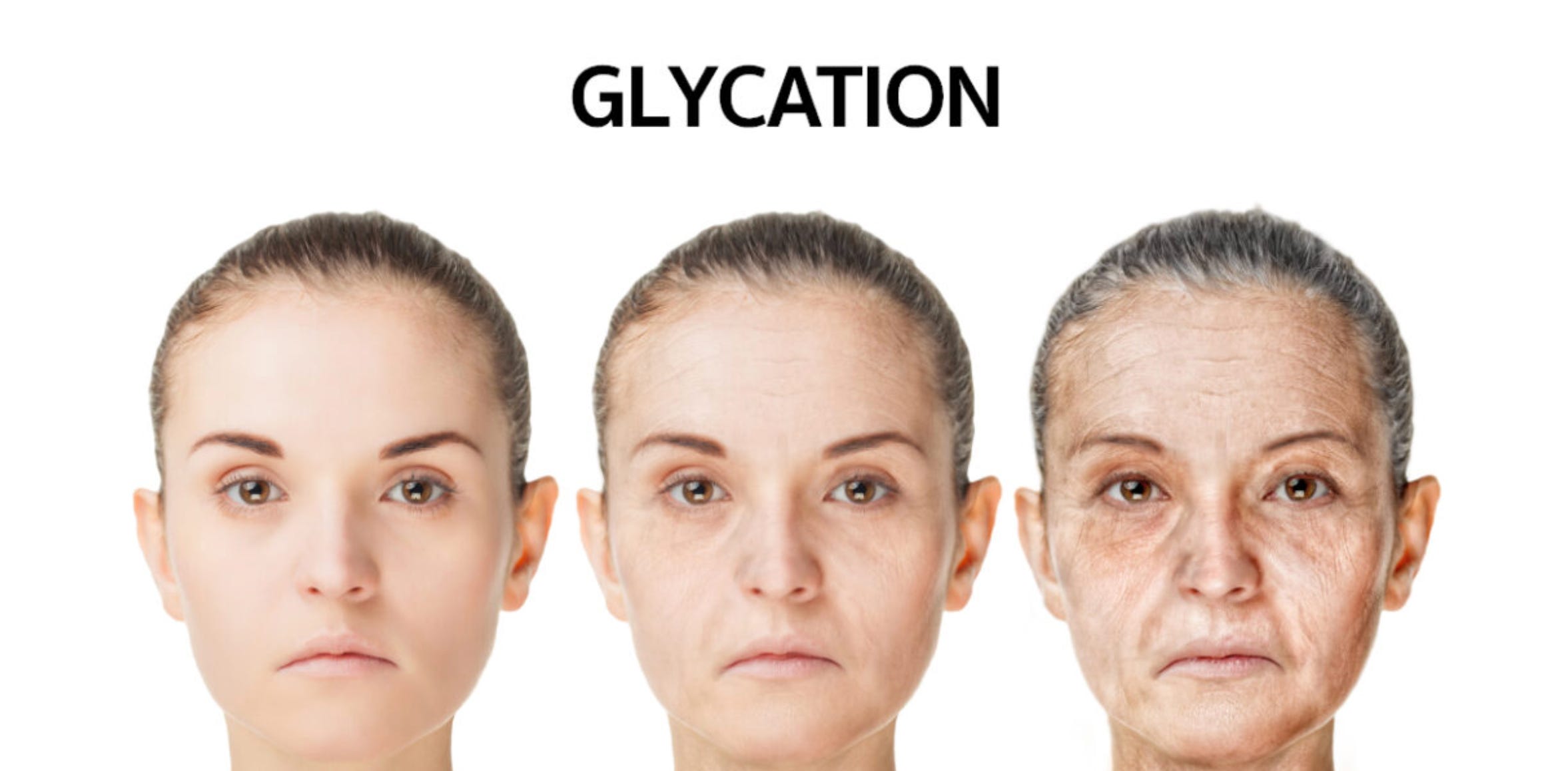
One of the cruel ironies of glycation is that excess body fat can temporarily “hide” some aging by making the face look fuller and puffier. But underneath, glycation may still be damaging collagen and reducing skin elasticity over time.
Then comes the double-whammy.
A person finally loses the weight — which is objectively healthier — but now the puffiness disappears and the damaged skin underneath becomes more visible. Wrinkles that were once stretched flat by excess fat suddenly appear more obvious.
In other words, sugar may help create the very aging process that excess weight temporarily conceals.
That’s a disturbing thought.
The body can sometimes hide damage for years.
Until it can’t.
Practical Suggestions and Conclusions
This does not mean you must become a monk living on steak and mineral water.
But it does mean you should stop thinking about sugar as nutritionally innocent.
A few practical ideas:
Reduce liquid sugars first
Stop normalizing constant snacking
Prioritize protein
Build meals around nutrient density instead of entertainment
Improve insulin sensitivity through exercise and body composition
Understand that “healthy carbs” can still become glucose
And perhaps most importantly:
Start viewing aging differently.
Many people think aging is purely time.
Often it’s accumulated damage.
Oxidation.
Inflammation.
Glycation.
The slow wearing down of biological machinery.
The modern world tells you sugar is harmless because it tastes pleasant and because everyone else is consuming it too.
But popularity does not equal biological compatibility.
After all, rust is common too.
Be aware.
PS Links on LinkedIn, Facebook, Instagram, X, and Notes. Full disclosure: ChatGPT was used to research and enhance this post.
Another very informative article with excellent explanations