


Mr. Skeptical looks at me cautiously.
“Let me guess. You’re going to blame corn for the fall of the Aztec Empire?”
Not exactly. In fact, if it weren’t for corn, that Aztec Empire would’ve never gotten so large.

Christopher Deaney is the founder of Christopher’s Organic Botanicals, a family-run kratom company established in 2016. He is a longtime kratom consumer, educator, and advocate committed to natural kratom, responsible use, rigorous laboratory testing, consumer protection, and sensible regulation. LinkedIn profile.
Shawn will be my guest on The Better Wealth and Health Podcast, dropping tomorrow at 11:57 a.m. Eastern.
Subconscious Fat at 30,000 Feet
Let’s compare two encounters between Europeans and the Indigenous peoples of North America.
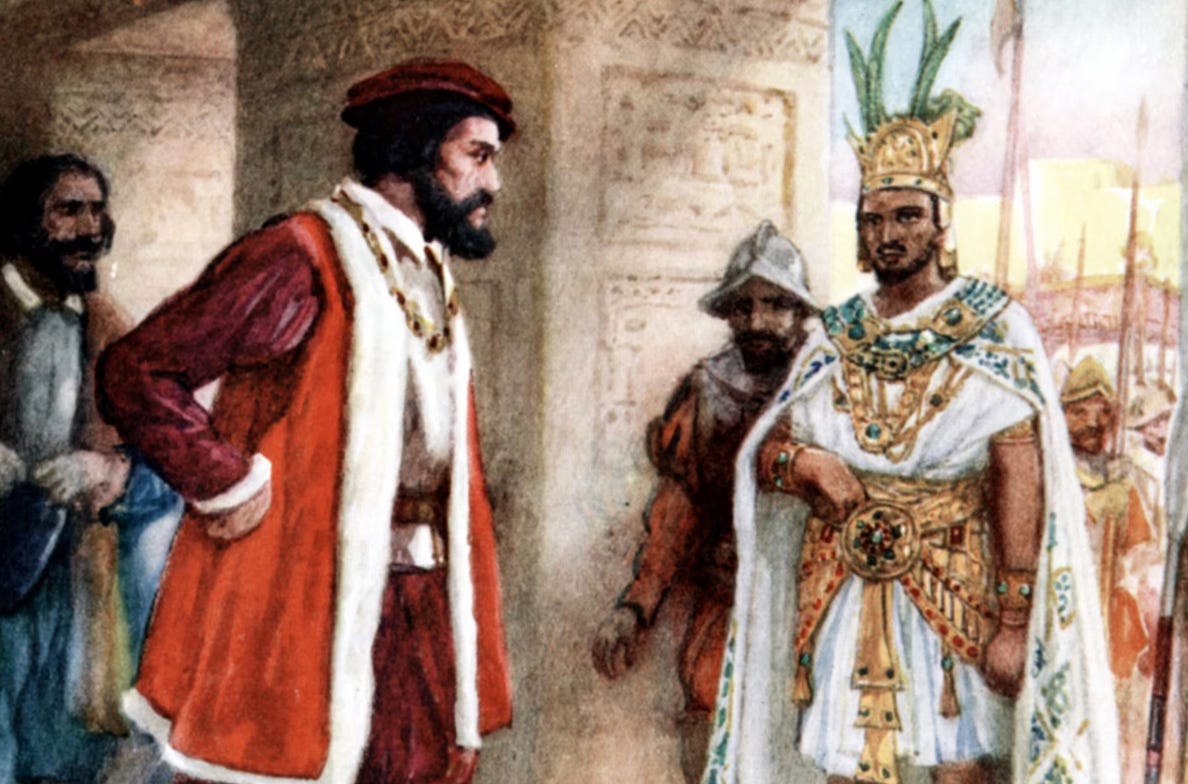
When Hernán Cortés described Mexico and the great city of Tenochtitlan, he wrote extensively about its markets, buildings, wealth, political organization, food, and enormous population.
What he apparently did not emphasize was encountering a population of unusually large or towering people.
Meanwhile, later European observers described some of Florida’s Indigenous inhabitants, particularly the Timucua, as tall, strong, agile, and well-built.
Was diet part of the reason?
That is my theory—and I’m sticking to it.
It is a theory worth chewing on.
Mr. Skeptical raises an eyebrow.
“Chewing on? Please tell me you’re not serving corn.”
I’m not. I rarely eat it, so I wouldn’t serve it.
Subconscious Fat at 10,000 Feet
Maize was one of the great inventions in human history.
It was domesticated in what is now Mexico thousands of years ago and eventually became the dietary foundation of Mesoamerican civilization. Archaeological evidence shows that maize became a major staple in parts of the region roughly 4,000 years ago, sometimes providing most of the population’s food energy.
Corn helped feed dense cities and large populations. Without it, civilizations such as the Aztec Empire may never have reached the same scale.
But keeping people alive and providing ideal nutrition are not the same thing.
The Aztec diet was not exclusively corn. It also included beans, squash, amaranth, chilies, tomatoes, fish, birds, insects, small game, algae, and other foods. Corn was traditionally treated with lime through nixtamalization, which improved its nutritional usefulness.
Still, meat from large domesticated animals was not a major part of everyday Aztec life because cattle, pigs, sheep, and goats had not yet been introduced to the Americas.
Corn was the foundation.
Animal food was the supplement.
Mr. Skeptical folds his arms.
“So corn built an empire.”
Yes—but perhaps not the biggest shoulders.
Subconscious Fat at Eye-Level
Mr. Skeptical leans forward.
“Hold on. Are you saying Mexico has never produced a tall basketball player?”
No. Mexico has produced a few very tall NBA players.
Horacio Llamas stood 6 feet 11 inches. Gustavo Ayón was 6 feet 10 inches. Eduardo Nájera was 6 feet 8 inches.
And in 2026, 6-foot-8 Karim López became the first Mexican-born player ever selected in the first round of the NBA Draft.
But think about that for a moment.
Mexico has a population of well over 100 million people, shares a border with the country that created the NBA, and has been exposed to American basketball for generations.
Yet it took until 2026 for a Mexican-born player to be selected in the first round—and only a small handful of Mexican-born players have ever reached the league at all.
Mr. Skeptical shrugs.
“But you just admitted they produced men who were 6 feet 10 and 6 feet 11.”
Of course. Population averages do not prevent unusual individuals from becoming extremely tall. Every population produces exceptions.
The more interesting question is why those exceptions have so rarely developed into major NBA prospects.
Childhood nutrition is a big piece of that puzzle.
Basketball is less culturally dominant in Mexico than soccer. Coaching, facilities, youth leagues, scouting, money, and player-development systems also matter enormously.
So the NBA record does not prove that corn kept Mexicans out.
But it does raise an interesting question: when a large population has historically relied heavily on inexpensive starches and has had uneven access to protein and complete childhood nutrition, could that affect how many children reach their full genetic potential for height and physical development?
Mr. Skeptical points toward the basketball court.
“So corn is not guarding the paint?”
No.
But nutrition may help determine who grows tall enough—and develops well enough—to reach it.
Now consider Florida.
The historical contrast becomes more interesting when we look at what early Spanish explorers said about the people they encountered in Florida.
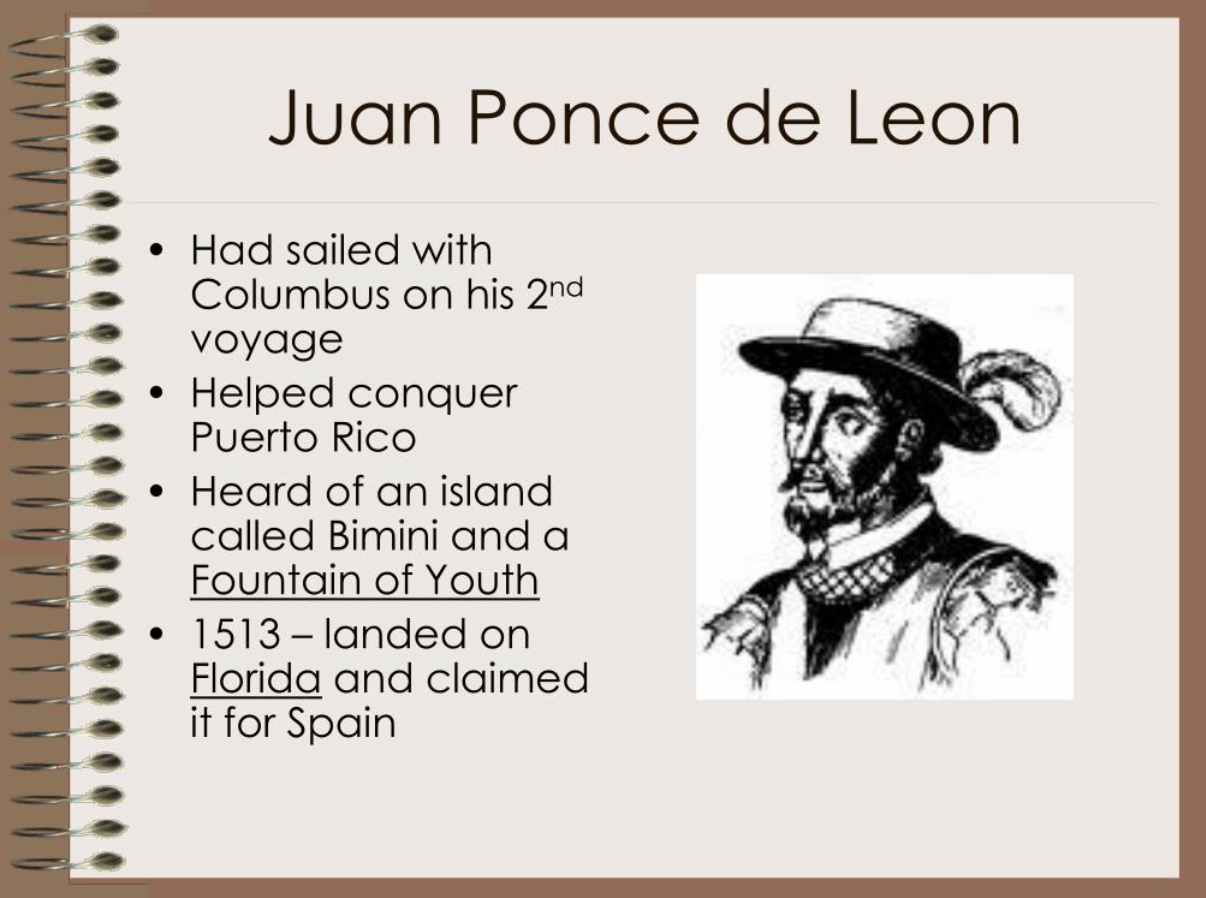
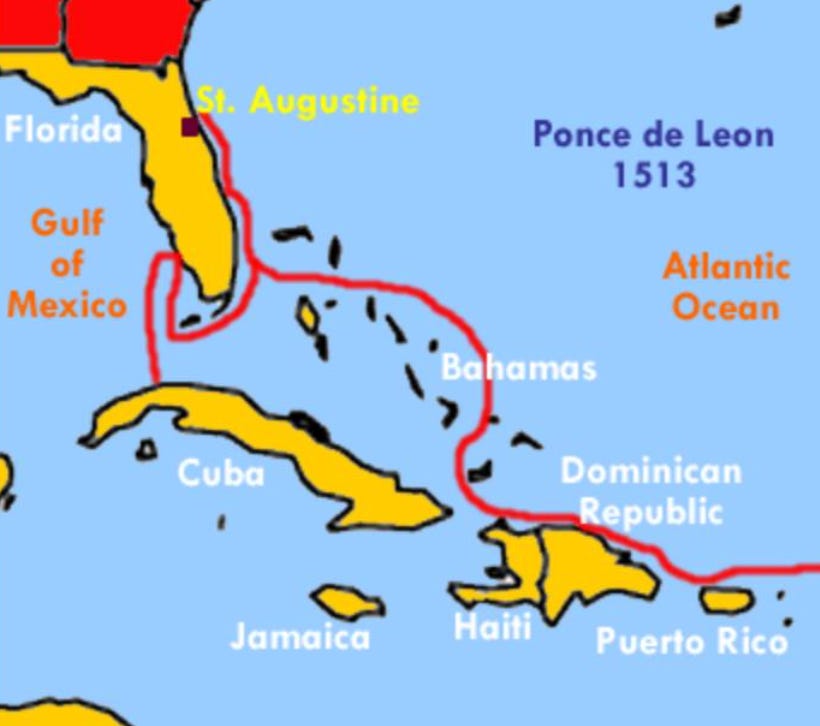
Juan Ponce de León explored Florida’s coastline in 1513, but his original account of the voyage has not survived. Much of what historians know about that expedition comes from the later account of Spanish historian Antonio de Herrera.
However, only four years after Ponce’s voyage, another Spanish expedition reached the Florida coast. Its pilot, Antón de Alaminos, had previously sailed those same waters with Ponce.
Bernal Díaz del Castillo, who participated in the later expedition, described the Native Floridians they encountered as “very tall of stature.”
That is worth noticing.
Cortés described the enormous cities, crowded markets, wealth, foods, buildings, and political organization of Mexico. But he did not leave us with the same striking description of the Aztecs as unusually tall people.
Meanwhile, one of the earliest eyewitness descriptions from Florida specifically emphasizes height.
Mr. Skeptical leans back.
“So one Spanish soldier saw some tall Floridians, and now you’ve solved human nutrition?”
No. One historical description does not prove my theory.
But it does give us a legitimate clue—and it fits the environmental contrast.
Many Florida communities had access to fish, shellfish, turtles, deer, birds, manatees, and other wild animal foods. Some coastal peoples, such as the Calusa, built powerful societies largely around aquatic resources rather than depending primarily on corn agriculture.
That does not prove every Floridian ate more animal protein than every person in Mexico.
But when an early Spaniard specifically describes Florida’s Native people as very tall, while the accounts from corn-dependent central Mexico do not emphasize unusual stature, the comparison deserves more than a shrug.
Mr. Skeptical looks toward the water.
“So Florida had tall people, seafood, and no shortage of sunshine?”
Apparently, Miami was already showing off before Miami existed.
Practical Suggestions and Conclusions
Cortés’s failure to call the Aztecs unusually tall is not proof that they were short. Silence in one historical document is not a measuring tape. But it’s enough for me to form my theory and see the pattern.
Archaeology does support a broader observation: when humans adopt heavy dependence on staple crops, they gain a reliable source of calories and the ability to support larger populations. Yet agriculture often shows signs of reduced stature, nutritional stress, tooth decay, and disease compared with earlier hunter-gatherer populations.
Food abundance is not always the same as nutritional abundance.
Corn may have been one of the most successful filler foods in history—not because it was useless, but because it could feed thousands of mouths cheaply and dependably.
It filled stomachs.
It built cities.
It prevented starvation.
But it could not provide the complete protein and concentrated nutrition found in meat, fish, eggs, and other animal foods.
For men over 40, the lesson is simple:
Do not confuse the food that keeps a population alive with the food that best builds and maintains the human body.
Mr. Skeptical holds up a tortilla.
“So I can keep this?”
Of course.
Just don’t mistake the wrapper for the protein.
Be aware.
Other links related to this post:
PS Links on LinkedIn, Facebook, Instagram, X, and Notes.
Full disclosure: ChatGPT was used to research and enhance this post.
🎙️The Better Wealth & Health Podcast with guest Christopher Deaney is dropping tomorrow at 11:57 AM Eastern.