

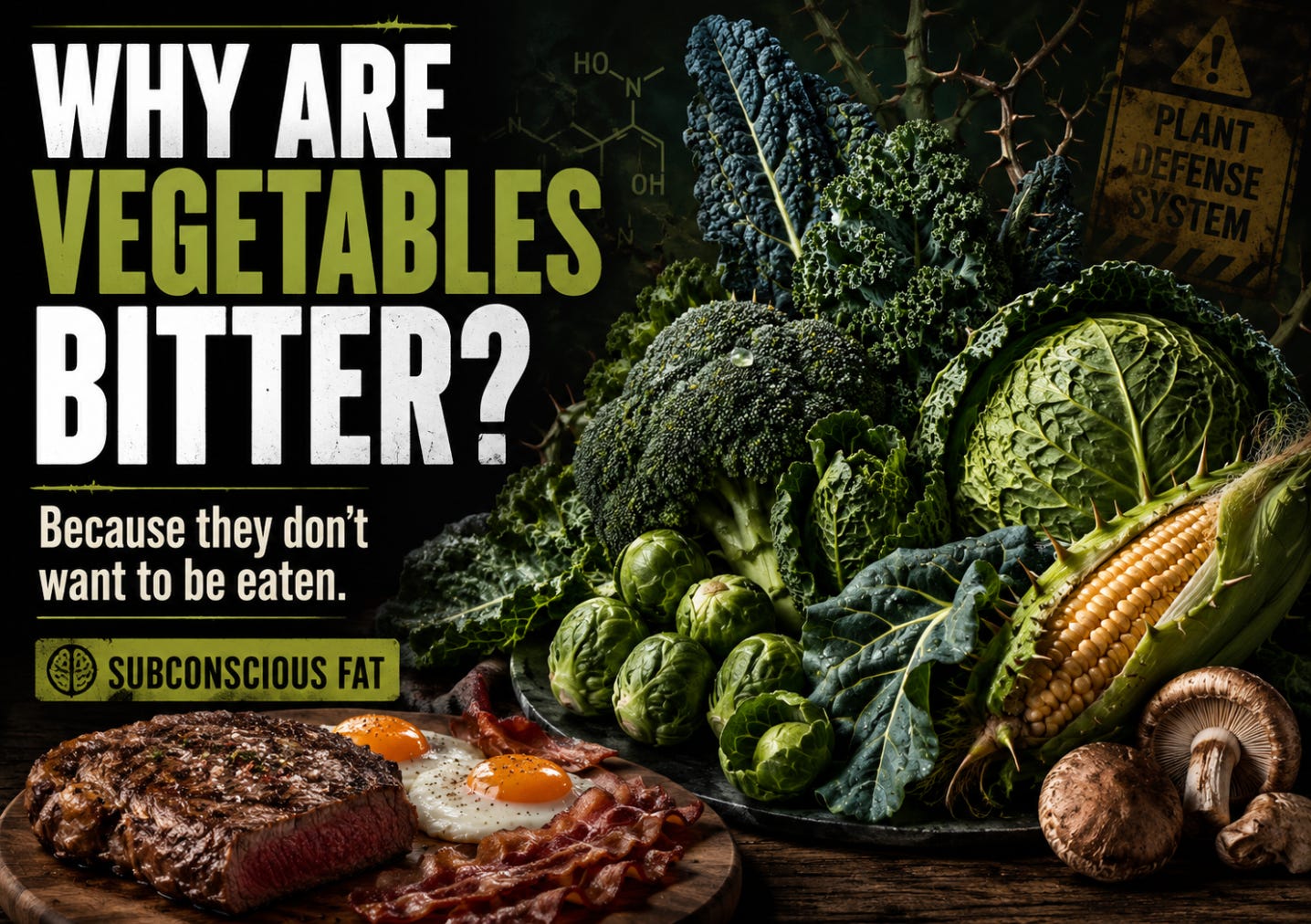
Why are vegetables bitter?
Because unlike a cow, a vegetable cannot run away.
It cannot kick you.
It cannot bite you.
It cannot sprint across a field and say, “Not today, salad boy.”

Jim Pehkonen helps men move through trauma, anger, and confusion so they can find peace, purpose, and strength again. With 20+ years of experience in trauma recovery, addiction recovery, leadership resilience, and personal growth, he brings an unconventional approach rooted in coaching, men’s work, and spiritual healing traditions. He is the founder of The Freedom Forge, a weekly online men’s group, and the author of three books. Learn more at www.AmazingLifeDesign.com.
🎙️Watch out for the podcast interview with guest Jim Pehkonen, which is coming out tomorrow at 11:57 AM Eastern.
Subconscious Fat at 30,000 feet
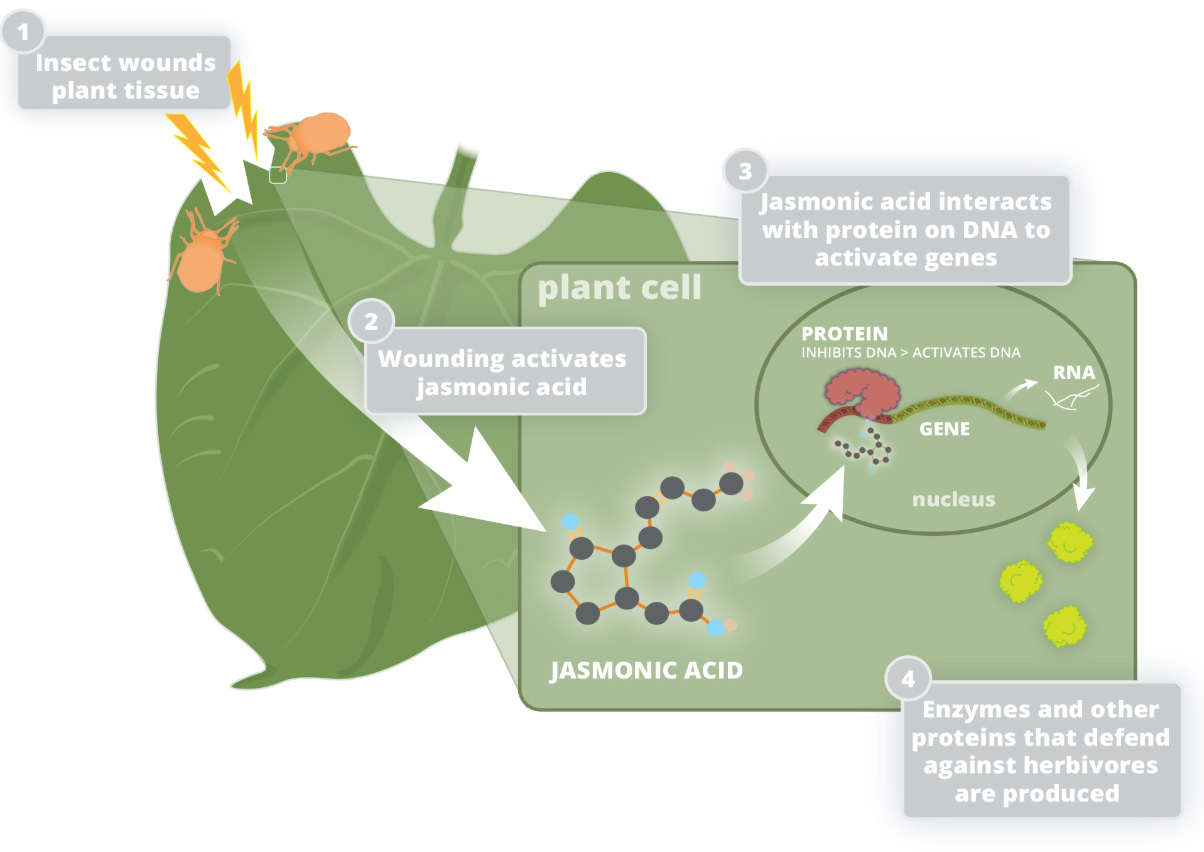
So plants developed other defenses.
Taste is one of them.
Bitterness is not an accident. In nature, bitterness often signals chemical defense. Many bitter compounds in plants exist because plants are trying to survive insects, fungi, animals, and yes, sometimes humans.
Mr. Skeptical raises his hand: “Wait. Are you saying my kale salad has a security system?”
Yes.
It just happens to be biochemical instead of electric.
Plants produce compounds like tannins, alkaloids, glucosinolates, lectins, oxalates, and other secondary metabolites. These chemicals can make them bitter, irritating, hard to digest, or even toxic in the wrong dose.
That does not mean every vegetable is poison.
But it does mean vegetables are not automatically “healthy” just because they came from the ground.
The ground also produces poison ivy.
The point is simple: plants are alive. They want to reproduce. They do not exist for the purpose of becoming your side dish.
Subconscious Fat at 10,000 feet
Modern nutrition often treats vegetables as nutritional saints.
Eat more vegetables.
Fill half your plate with vegetables.
Snack on vegetables.
Hide vegetables in smoothies.
Add vegetables to everything.
But we rarely ask the basic question:
Why do so many vegetables need cooking, seasoning, fermentation, butter, dressing, salt, cheese, or some other trick to make them enjoyable?
Because raw plant matter is often tough, bitter, fibrous, or chemically defended.
Mr. Skeptical leans forward: “But vegetables are whole foods.”
So are acorns, grass, and tree bark.
“Whole food” does not automatically mean “ideal human food.”
Humans have spent thousands of years manipulating plants to make them less bitter, less toxic, sweeter, bigger, softer, and easier to digest.
Take corn.
Modern corn does not look like its wild ancestor. Corn was domesticated from teosinte, a wild grass, through thousands of years of human selection. We took a small, hard, wild plant and turned it into the large, sweet, starchy crop people now eat at barbecues.
Broccoli is another example.
Broccoli, cabbage, cauliflower, Brussels sprouts, kale, and collard greens all come from the same species: Brassica oleracea. They are different human-selected versions of the same wild plant lineage.
In other words, many vegetables are not “nature’s perfect food.”
They are agricultural technology.
That does not make them evil.
But it should make us more honest.

Subconscious Fat at Eye-Level
This is where people get uncomfortable.
Because vegetables have been marketed as moral food.
Meat is suspicious.
Fat is dangerous.
Eggs need defending.
Butter gets interrogated.
But vegetables walk into the room wearing a halo.
Mr. Skeptical crosses his arms: “So now broccoli is the villain?”
No.
Broccoli is not the villain.
The villain is lazy thinking.
Some people tolerate vegetables well. Some people feel better with them. Some people enjoy them. Fine.
But some people get bloating, gas, reflux, joint pain, digestive problems, cravings, or gut irritation when they eat too many plant foods. And instead of considering that the vegetables might be part of the problem, they blame themselves.
Maybe they need more fiber.
Maybe they need more willpower.
Maybe they need a bigger salad.
Maybe they need to chew slower while pretending raw kale is delicious.
Or maybe their body is giving them useful feedback.
This is also why mushrooms are interesting.
I like mushrooms. A lot of people do. But in nature, mushrooms require respect. The issue is not that every mushroom is poisonous. The issue is that some wild mushrooms are dangerous enough to kill you, and they can resemble edible ones. That tells us something important: humans do not just walk through nature eating random “whole foods” because they look natural.
We select.
We test.
We cook.
We ferment.
We avoid.
We learn.
That is survival.
Practical Suggestions and Conclusions
So should you stop eating all vegetables?
Not necessarily.
But you should stop worshipping them.
Vegetables are not automatically superior to meat just because they are plants. A steak does not need a public relations campaign. Eggs do not need to be hidden under dressing. Beef does not need to be bred for thousands of years to stop tasting like punishment.
Animal foods are straightforward nutrition.
Protein.
Fat.
B vitamins.
Iron.
Zinc.
Choline.
Creatine.
Satiety.
Vegetables can have nutrients too, but they also come with defense chemicals, fiber, oxalates, lectins, bitter compounds, and individual tolerance issues.
That is why I like the term “filler foods.”
For many people, vegetables fill the plate more than they truly nourish the body.
They can make you feel full, but full is not the same as fed.
Mr. Skeptical nods: “So the question is not whether vegetables are good or bad?”
Exactly.
The better question is:
How do they affect you?
Do they improve your digestion or wreck it?
Do they help your energy or drain it?
Do they make you feel satisfied or just temporarily stuffed?
Are you eating them because they help you, or because someone told you every healthy person needs a pile of leaves?
My view is simple:
Protein first.
Animal foods first.
Vegetables optional.
Nature is not a grocery store designed around human health.
Nature is a battlefield.
Animals defend themselves with movement, teeth, claws, horns, and speed.
Plants defend themselves with chemistry.
So the next time someone tells you vegetables are bitter because they are “good for you,” maybe ask a different question:
What if they are bitter because they do not want to be eaten?
Be aware.
Other links related to this post:
PS Links on LinkedIn, Facebook, Instagram, X, and Notes.
Full disclosure: ChatGPT was used to research and enhance this post.
🎙️The Better Wealth & Health Podcast with guest Jim is coming out tomorrow at 11:57 AM Eastern.
10 Likes∙