

Subconscious Fat at 30,000 feet
It’s easy to assume that lean always wins.
In our modern world, the lean body is the hero of almost every health conversation. The fit guy on the beach. The Olympic sprinter. The CrossFit athlete with veins showing through his shoulders.
But every once in a while, a strange question pops into my head.
What if the fat guy actually had an advantage?
Mr. Skeptical tilts his head slightly.
“An advantage? In what world?”
The evolutionary one.
Because if you step back from Instagram fitness culture and look at the history of survival on Earth, the human body wasn’t designed for abundance.
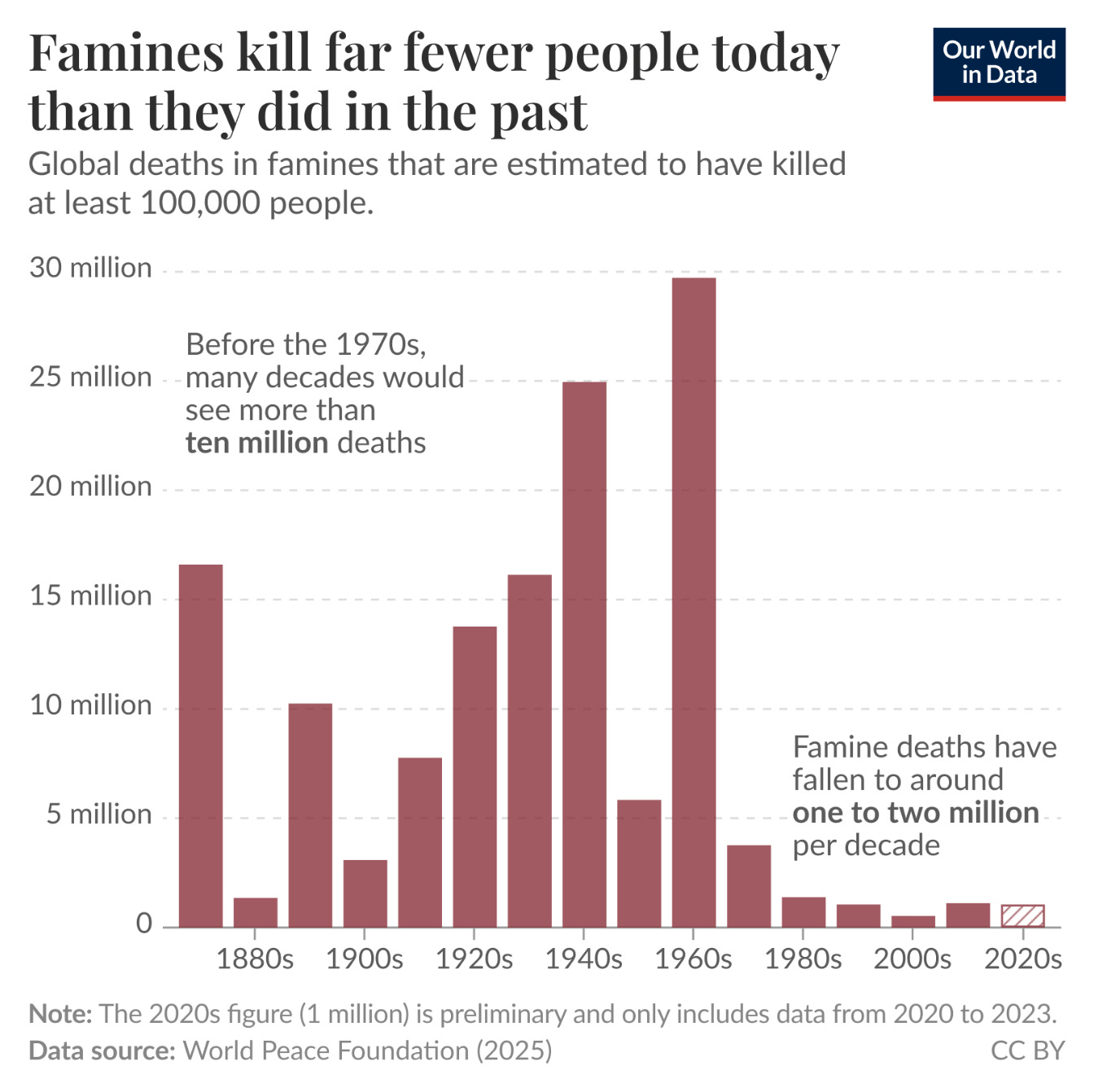
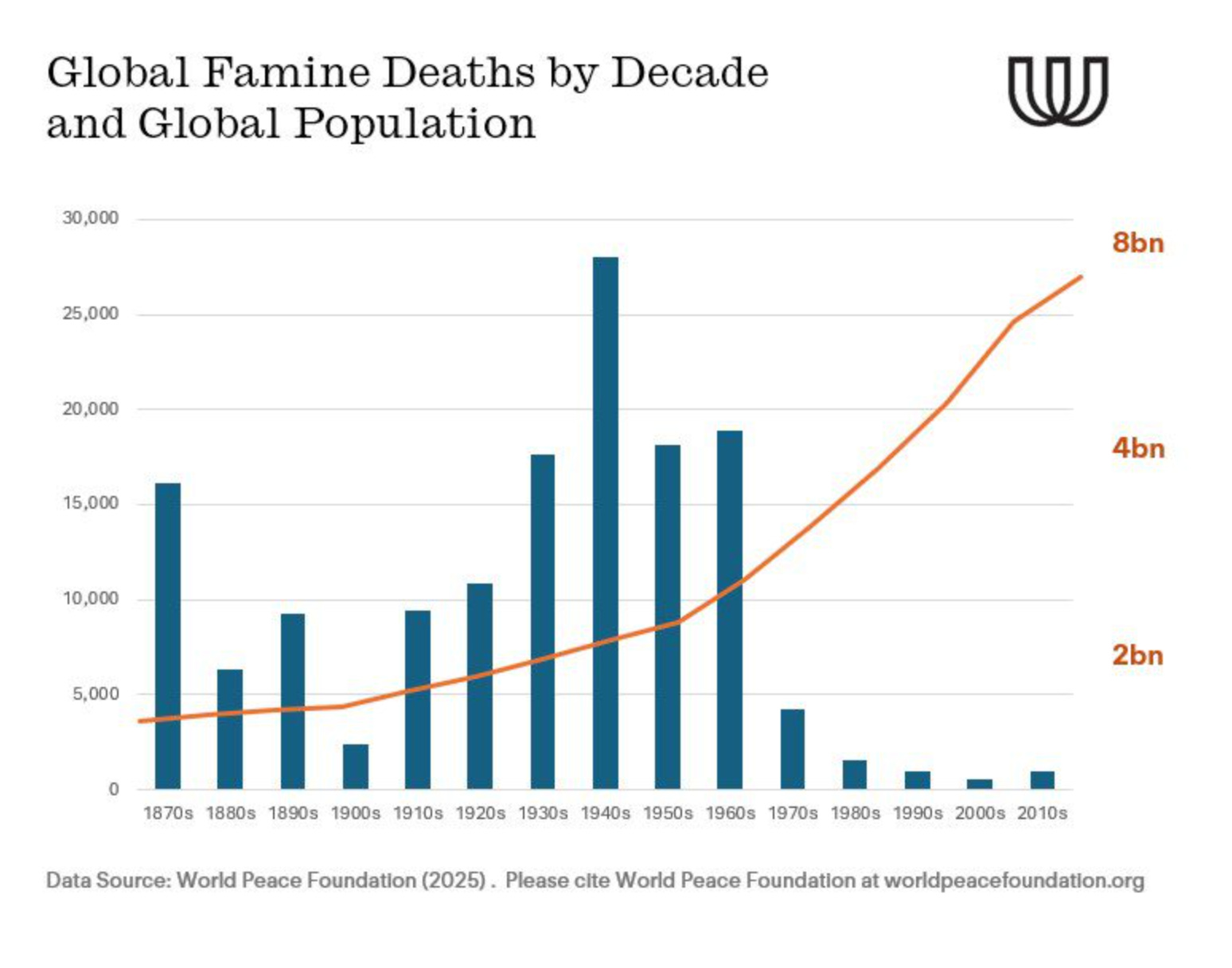
It was designed for famine.
For most of human history, food was not constant. It came in waves.
Summer brought fruit, berries, honey, and carbohydrates. Autumn brought harvests and animal fat. Winter brought scarcity.
And if your body could store excess calories as fat before winter arrived…
You might have had a better chance of surviving.
Which means the ability to gain fat easily might not be a biological defect.
It might be one of its most successful features.
Subconscious Fat at 10,000 feet
Think about animals preparing for winter.
Bears don’t enter hibernation shredded.
They enter it fat.
They intentionally overeat in the months leading up to winter, storing energy as body fat so they can survive long stretches without food.
Humans may not hibernate, but historically we faced similar challenges.
Long winters. Failed hunts. Droughts. Food shortages.
In that environment, a person with more stored energy had a metabolic insurance policy.
Mr. Skeptical raises an eyebrow.
“So the fat guy was basically walking around with a survival battery?”
Exactly.
Body fat is simply stored energy.
Roughly speaking, a pound of body fat contains about 3,500 calories. Someone carrying 40 extra pounds of fat is walking around with a massive energy reserve.
In an environment where food suddenly disappears, that reserve matters.
Which leads to an interesting thought experiment.
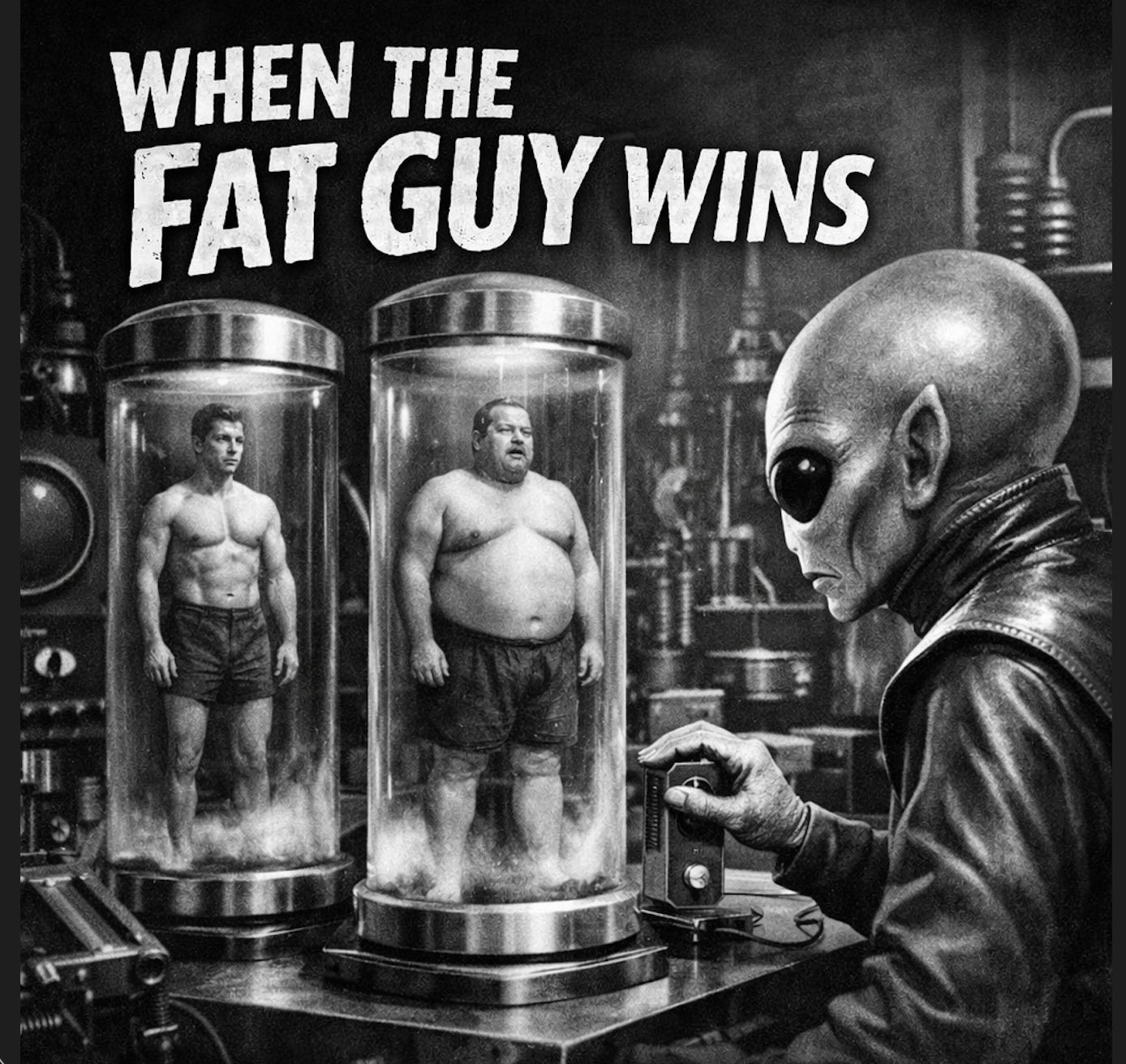
Imagine aliens arrive on Earth.
They capture two humans.
One is lean and muscular.
The other carries a large amount of body fat.
The aliens place both of them in identical test chambers with water but no food.
Which one lasts longer?

Subconscious Fat at Eye-Level
Reality television accidentally answered a version of this question.
On one episode of the survival show Naked and Afraid, two contestants were dropped into the wilderness with limited resources.
One participant was lean and active. She constantly attempted to hunt and forage.
The other was significantly overweight.
He took a very different approach.
He conserved energy.
He stayed near a water source.
He rested in the shade and minimized unnecessary activity.
Mr. Skeptical smirks.
“So the fat guy basically turned survival into a nap?”
More or less.
And it worked.
Because fat is not just weight.
It’s stored fuel.
If the body has access to water and electrolytes, it can metabolize stored fat for weeks.
That’s exactly what happens during prolonged fasting.
The body shifts to using stored fat as its primary energy source.
In this particular survival situation, the heavier contestant lasted longer, largely because his body already carried the energy reserves needed to survive without food.
Meanwhile, the leaner contestant struggled as energy stores ran out.

Practical Suggestions and Conclusions
So does that mean gaining fat is healthy?
Of course not.
Modern obesity comes with a long list of metabolic complications: insulin resistance, chronic inflammation, cardiovascular strain, and reduced mobility.
Mr. Skeptical folds his arms.
“So we’re not recommending people bulk up for winter like bears?”
Not quite.
But the story does reveal something interesting about human biology.
The ability to gain fat easily may have been an evolutionary advantage when food was unpredictable.
In a world of scarcity, fat storage improved survival odds.
In a world of constant food availability, the same mechanism can become a liability.
The biology hasn’t changed.
The environment has.
Our ancestors lived in cycles of feast and famine.
We live in an environment of permanent feast.
Which means the same survival mechanism that once protected us can now quietly work against us.
Fat storage was once insurance.
Today, it’sexcess.
Understanding that difference might be one of the most important steps in solving the puzzle of subconscious fat.
Be aware.
Other links related to this post:
Evolution: It Seeps Into Everything
I love the image AI made for me in this post. When I was a little kid, growing up in the 70s, I loved to see old Science Fiction movies from the 50s and 60s.