

Subconscious Fat at 30,000 Feet
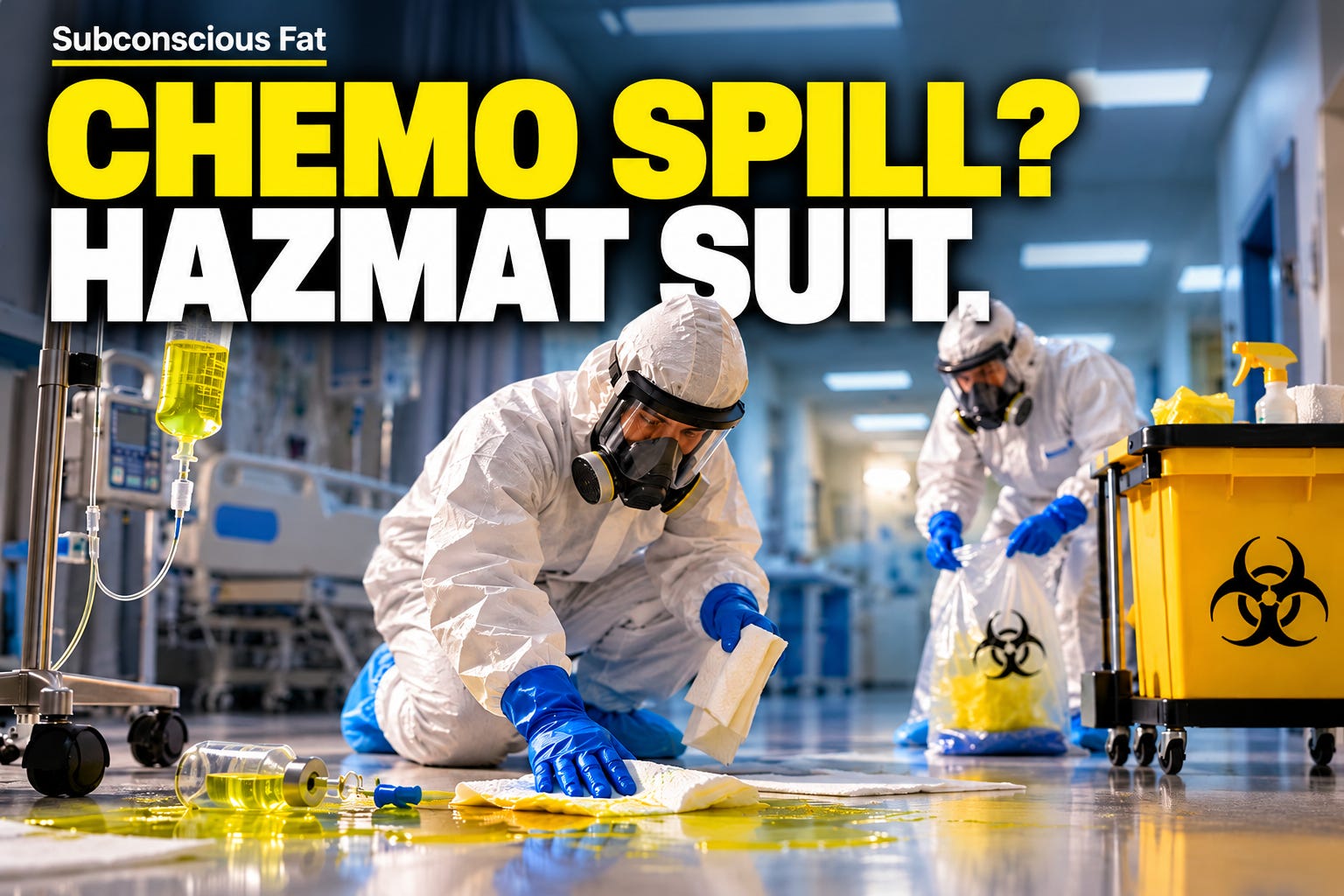
Imagine you’re walking through a hospital when a vial containing chemotherapy medication accidentally falls to the floor.
CRASH!
Glass shatters. Medication spills.
Suddenly, it’s not an ordinary cleanup.
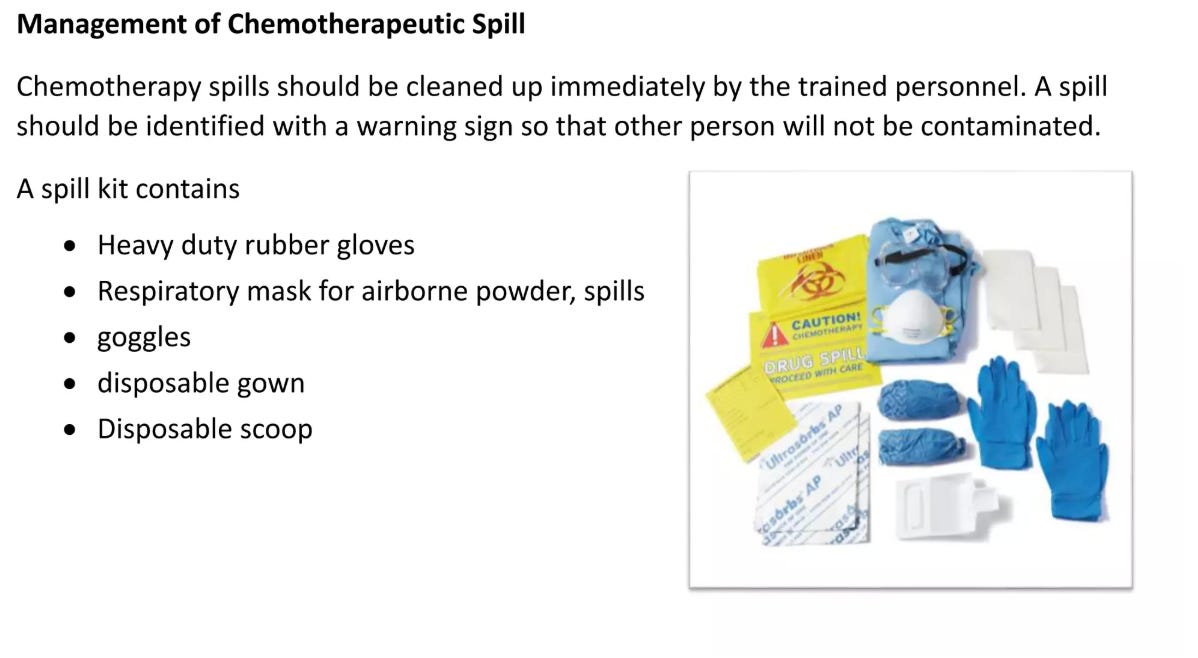
The area needs to be isolated. Specially trained personnel are called in. Depending on the drug and size of the spill, workers may need chemical-resistant protective clothing, double gloves, protective eyewear, and respirators.
In certain situations, the protective equipment can resemble a hazmat suit.
Yes, a HAZMAT SUIT!
Mr. Skeptical nearly falls out of his chair.
“Wait a minute, Hermann. You’re telling me that if chemotherapy spills on the floor, people might need a hazmat suit to clean it up, but we’re giving this stuff to people who are already seriously ill?”
That’s exactly the contradiction I want you to think about.
The substance is dangerous enough to require specialized hazardous-material cleanup procedures and is also being deliberately administered to people fighting cancer.
Now, there’s an important distinction between accidentally exposing a healthy hospital worker and carefully administering medication to a patient who may need treatment.
But still.
Doesn’t that image deserve a moment of serious reflection?
It made me reflect after my girlfriend told me this happens; I had no idea.
Subconscious Fat at 10,000 Feet
Here’s what makes this even more fascinating.
These aren’t precautions invented by some alternative-health guru.
They’re established occupational safety recommendations.
The Occupational Safety and Health Administration (OSHA) provides extensive guidance for handling hazardous chemotherapy drugs.
Hospital personnel may need chemotherapy-resistant gowns or coveralls, specialized gloves, protective eyewear, shoe coverings, and respiratory protection.
For larger spills, or when hazardous vapors or airborne particles may be present, more substantial respiratory protection may be required.
Not every broken vial triggers a full-blown hazmat response. But under certain conditions, workers can require the kind of protective equipment we associate with hazardous chemicals.
Mr. Skeptical jumps in.
“Okay, Hermann, then why in the world would doctors prescribe something that requires that level of protection?”
Because chemotherapy drugs are designed to interfere with biological processes that allow cancer cells to grow and multiply.
Unfortunately, those drugs can also damage healthy cells.
That’s why chemotherapy may cause hair loss, nausea, fatigue, low blood-cell counts, and sometimes serious long-term complications.
But there’s another side to this story.
For certain cancers, chemotherapy can sometimes save lives.
The fact that a substance is hazardous doesn’t automatically mean its medical use is unjustified.
What matters is whether the potential benefit outweighs the potential harm.
And that calculation deserves careful consideration.
Subconscious Fat at Eye Level
Here’s where I want to challenge the way we think about modern healthcare.
We spend enormous amounts of money treating serious diseases.
Yet how much attention do we give to the everyday habits that influence our chances of developing those diseases in the first place?
Mr. Skeptical interrupts again.
“Are you suggesting that exercising and eating better can prevent cancer?”
I’m suggesting we take prevention seriously.
No diet, exercise routine, supplement, or lifestyle guarantees that someone won’t develop cancer, but we know that sugar and carbohydrates often help it grow.
Yet, cancer is complicated. Genetics, environmental exposures, infections, aging, and other factors all contribute.
But research consistently associates certain lifestyle choices with a lower risk of several types of cancer.
Maintaining a healthy weight.
Exercising regularly.
Avoiding cigarettes and vaping.
Limiting alcohol.
Eating a nutritious diet and avoiding or limiting sugar.
These aren’t miraculous cures or guarantees.
They’re sensible ways to reduce some of the risks we actually have the power to influence.
And that’s the point.
Wouldn’t you rather invest in your health today than discover tomorrow that you’re facing treatment decisions you never imagined having to make?
Subconscious Fat: Practical Suggestions
Mr. Skeptical leans forward.
“So what should someone do if they’re told they need chemotherapy? Run for the hills?”
Not necessarily.
Cancer treatment decisions are far too important for blanket statements.
Here’s what I’d encourage everyone to consider.
1. Take prevention seriously—before there’s a problem.
Build muscle through resistance training. Stay physically active. Maintain a healthy body composition. Avoid tobacco and make thoughtful decisions about alcohol and sugar.
You can’t eliminate every cancer risk, but you can influence some of them.
2. If chemotherapy is recommended, ask questions.
What is the purpose of the treatment?
Is it intended to cure the cancer, lower the chance of recurrence, slow the disease, or relieve symptoms?
What are the expected benefits?
What are the possible short-term and long-term complications?
What other treatment options are available?
3. Consider getting a second opinion. Scratch that previous statement by ChatGPT; Definitely Get A Second Opinion.
For a serious diagnosis, another oncologist may provide valuable perspective. But also be aware that oncologists are all trained similarly. George Washington, the first US president, was basically bled to death by several medical doctors all doing the same procedure: bloodletting. I’d also look at alternative care treatments for cancer.
4. Remember that understanding risk is not the same as rejecting treatment.
Chemotherapy can be dangerous.
Cancer can be dangerous.
Both statements can be true simultaneously.
And both deserve to be understood.
Mr. Skeptical sits back.
“So you’re not saying chemotherapy is always wrong. You’re saying we should understand just how powerful these drugs are before making a decision.”
Exactly.
The image of hospital workers wearing hazmat-style protective equipment to clean up chemotherapy drugs is unsettling.
It should be.
Not because protective equipment proves chemotherapy shouldn’t be used.
But because it reminds us that we’re dealing with powerful substances, serious diseases, and decisions with potentially life-changing consequences.
Take cancer prevention seriously. Ask questions about treatment. And never underestimate the importance of the health decisions you’re making today.
Be aware.
Other links related to this post:
Does LOW Cholesterol Cause Cancer?
Did Steve Jobs Think Too Different About Cancer?
Dolly Parton Died of Cancer at 80. Should We Be Talking More About What Cancer Eats?
PS: Links on LinkedIn, Facebook, Instagram, X, and Notes.
Full disclosure: ChatGPT was used to research and enhance this post.
P.S. Free Outdoor Workout — Saturday, November 7th at Noon! Join me at Legion Memorial Park, 6447 NE 7th Avenue, Miami, for a FREE resistance band workout. Learn how to combine bands with the park’s outdoor bodyweight exercise equipment for an effective full-body workout. We’ll meet by the outdoor fitness equipment area. All fitness levels welcome!