

Subconscious Fat at 30,000 feet
We’ve been told for decades that cigarette smoking is one of the worst things you can do to your body.
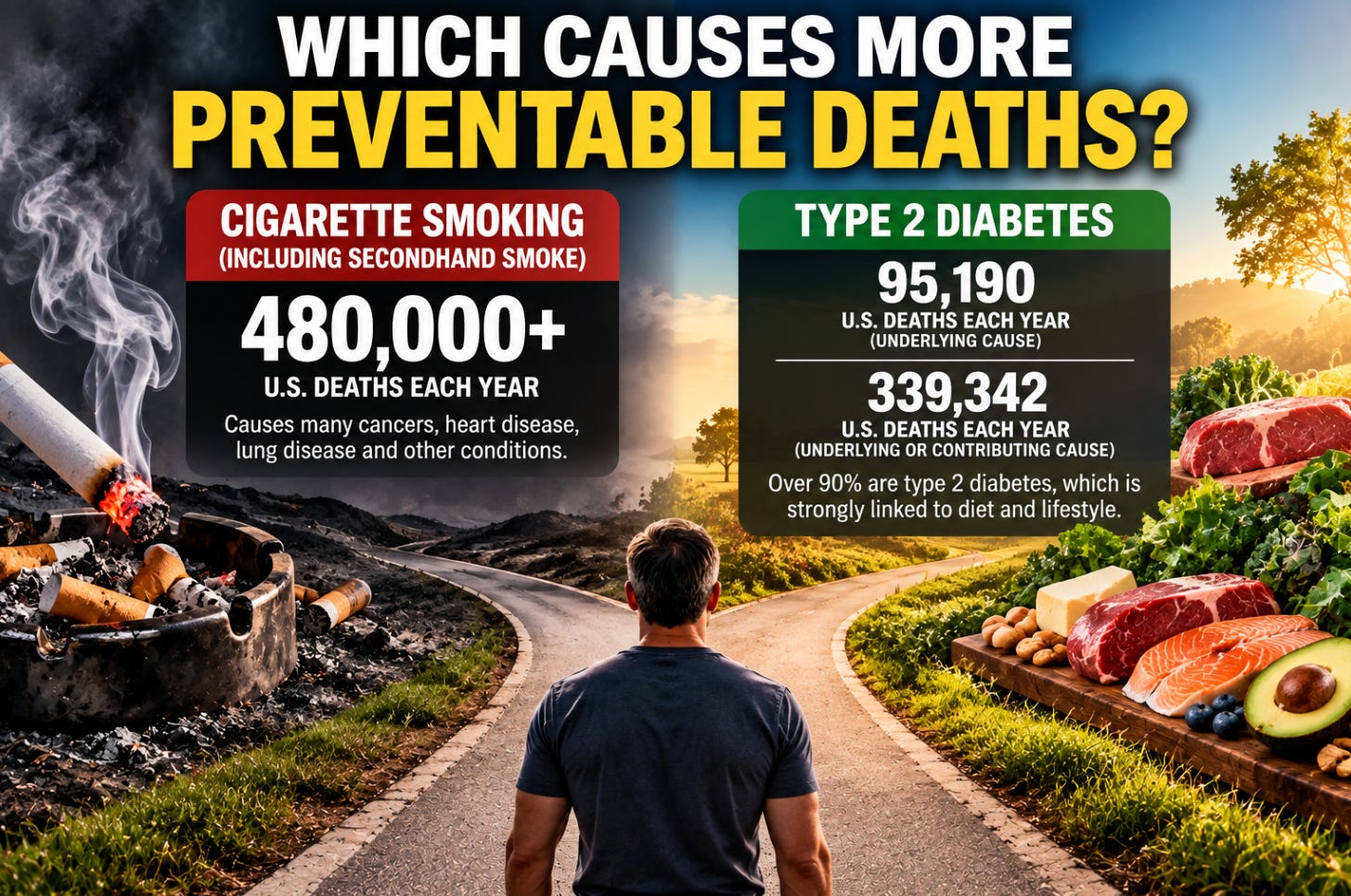
And there’s good reason for that. Cigarette smoke contains carcinogens and other toxic substances, and smoking dramatically increases the risk of cancer, cardiovascular disease and respiratory disease. The CDC estimates that smoking and secondhand smoke contribute to more than 480,000 American deaths every year.
I’m not here to tell you cigarettes are healthy.
I’m asking a different question:
What if we’ve spent so much time talking about the toxins entering our bodies that we’ve underestimated the importance of the raw materials we’re using to build those bodies?
Mr. Skeptical nearly chokes on his coffee.
“So now steak cancels cigarettes?”
No. Put down the Marlboros.
That’s not my argument.
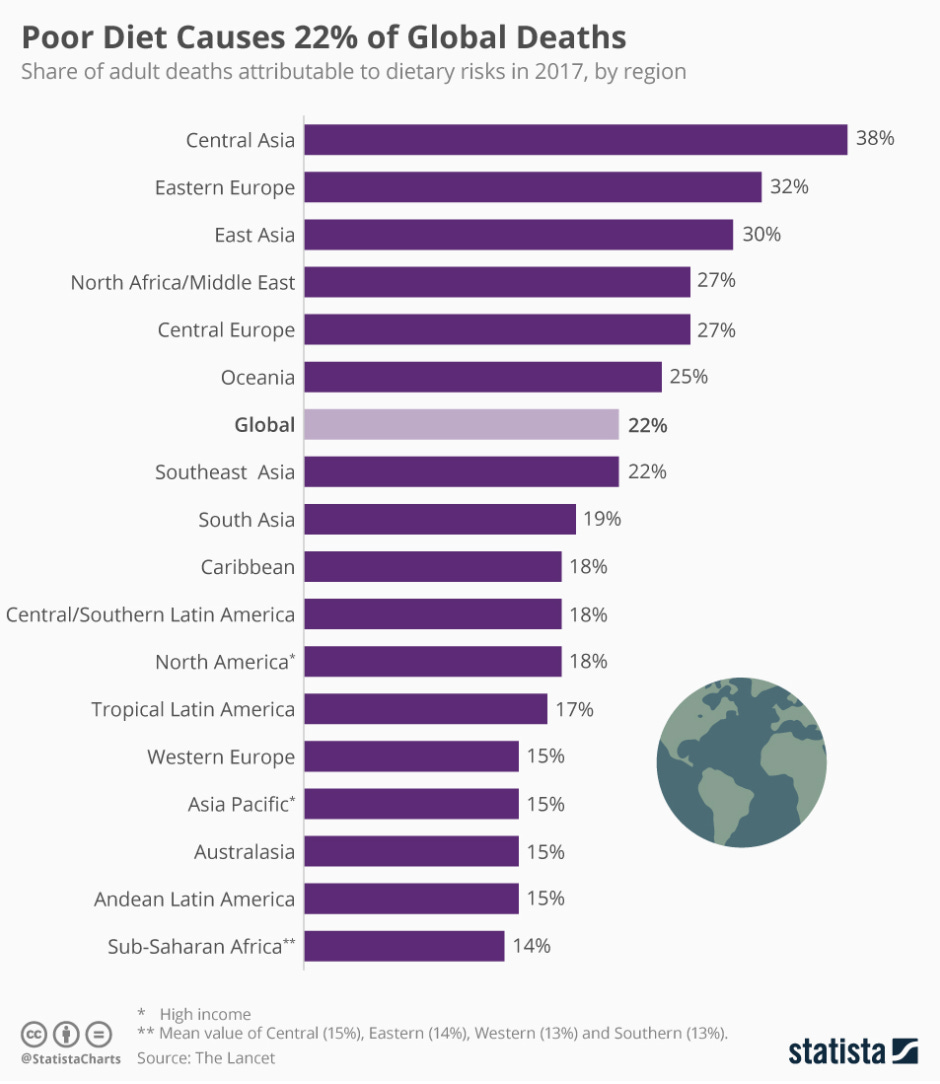
My argument is that diet deserves a much bigger place in our discussion about preventable disease.
Subconscious Fat at 10,000 feet
Your body isn’t a statue.
It’s constantly rebuilding itself.
Proteins become structural components of muscle and tissue. Dietary fats become parts of cell membranes and signaling molecules. Vitamins and minerals participate in thousands of biochemical reactions.
Food isn’t merely fuel.
Food is building material.
That’s why I find human history fascinating.
When many human populations transitioned from hunting and gathering to agriculture, something unexpected happened. Archaeological evidence shows that in numerous populations, average stature declined while nutritional deficiencies, dental disease and infectious disease increased. Greater population density and dependence on a narrower range of staple crops probably contributed substantially.
Agriculture allowed us to feed vastly more people.
It didn’t necessarily make every individual healthier.
Mr. Skeptical adjusts his imaginary bow tie.
“So agriculture ruined humanity. Should I sell my condo and start hunting antelope?”
The HOA would probably object.
Here’s an interesting comparison.
The CDC attributes more than 480,000 American deaths every year to cigarette smoking and secondhand smoke exposure.
That’s staggering.
But diabetes isn’t exactly playing in the minor leagues. In 2023, diabetes was listed as the underlying cause of 95,190 deaths—and as either an underlying or contributing cause on 339,342 death certificates.
And roughly 90–95% of Americans with diabetes have type 2 diabetes, a disease strongly connected to diet and metabolic health.
Mr. Skeptical clears his throat.
“Hold on. Smoking still wins your morbid little death contest.”
Fair point.
But I’m not arguing that diabetes alone kills more people than cigarettes.
I’m asking something bigger:
How much disease do we attribute to individual diagnoses when poor metabolic health and poor diet may be sitting upstream of several of them at once?
Type 2 diabetes isn’t destiny. Since keto and carnivore diets have become more popular, many have been able to reverse diabetes and get off medication.
And that’s precisely why I think diet belongs at the center of the preventable-disease conversation.
Subconscious Fat at Eye-Level
Here’s where my hypothesis becomes controversial.
We usually think about health by asking:
What dangerous thing should I avoid?
Don’t smoke cigarettes.
Don’t drink alcohol excessively.
Don’t expose yourself to carcinogens.
Fair enough.
But perhaps another question deserves equal billing:
What am I giving my body every single day with which to maintain and repair itself?
I believe we’ve underestimated that question.
That doesn’t mean good nutrition makes cigarette smoke harmless. It doesn’t. Smoking damages DNA, blood vessels and lung tissue, and quitting substantially reduces premature-death risk.
And secondhand smoke isn’t harmless either.
But diet operates every day, meal after meal, year after year.
My own bias is toward nutrient-dense animal foods — meat, eggs and seafood — while minimizing fruits and vegetables and especially refined sugar and ultra-processed junk.
Mr. Skeptical raises an eyebrow.
“So your revolutionary health advice is eat animals and don’t smoke?”
When you put it like that, apparently I could have saved myself 700 words.
Practical Suggestions and Conclusions
Here’s my Occam’s Razor version.
Don’t smoke cigarettes. Avoid secondhand smoke when reasonably possible. And don’t imagine that an otherwise healthy lifestyle gives you immunity from tobacco’s effects.
But don’t stop there.
Build a body that’s worth protecting.
Prioritize adequate protein. Eat nutrient-dense whole foods. Keep muscle on your frame. Realize fruits and vegetables still becomes sugar. and totally avoid ultra-processed foods and excessive refined sugar. Sleep better.
For me, that means putting animal-based nutrition at the center of the plate.
And perhaps the bigger lesson from human history isn’t that there was some perfect ancestral diet.
It’s that what we eat matters profoundly to what we become.
Cigarette smoke is something your body has to defend itself against.
Food is part of what your body has to defend itself with.
And that’s why I think the conversation about preventable disease shouldn’t end with what we need to stop putting into our bodies.
It should include what we’re building them from in the first place.
Be aware.
Other links related to this post:
You Can’t Heal a Body That Isn’t Built Right
PS Links on LinkedIn, Facebook, Instagram, X, and Notes.
Full disclosure: ChatGPT was used to research and enhance this post.
Doing a live banded workout event on Saturday, October 3rd at 11 AM at Legions Park in Miami, more details coming soon.