

Mr. Skeptical folds his arms and looks at me slant-eyed. “So you’re going to talk politics today?”
“No, I don’t like talking politics. And whether one is a Democrat or a Republican, they should still work on being healthy.”
Subconscious Fat at 30,000 feet
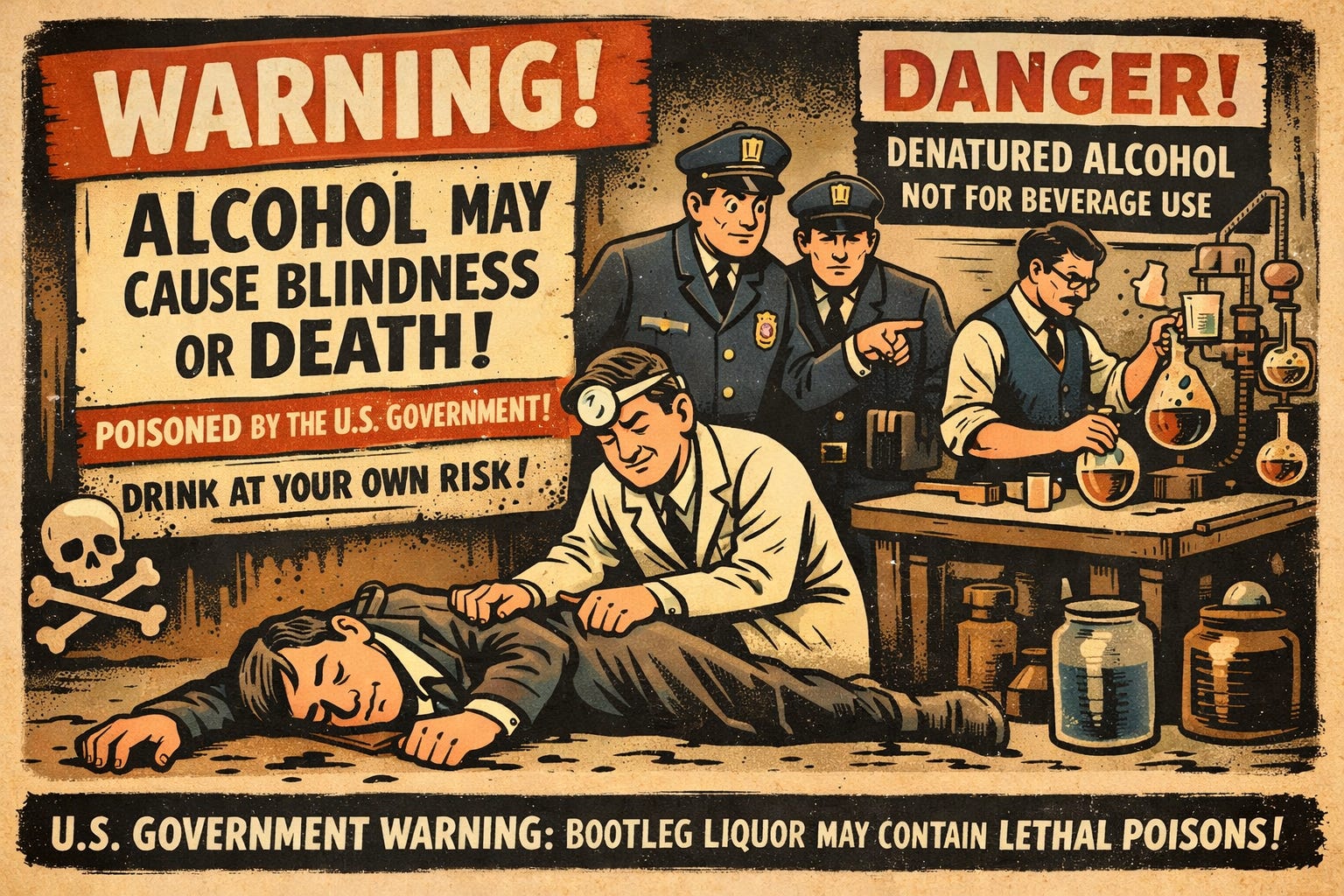
There was a time in American history when the U.S. government deliberately poisoned its own people.
Not by accident.
Not through negligence.
On purpose.
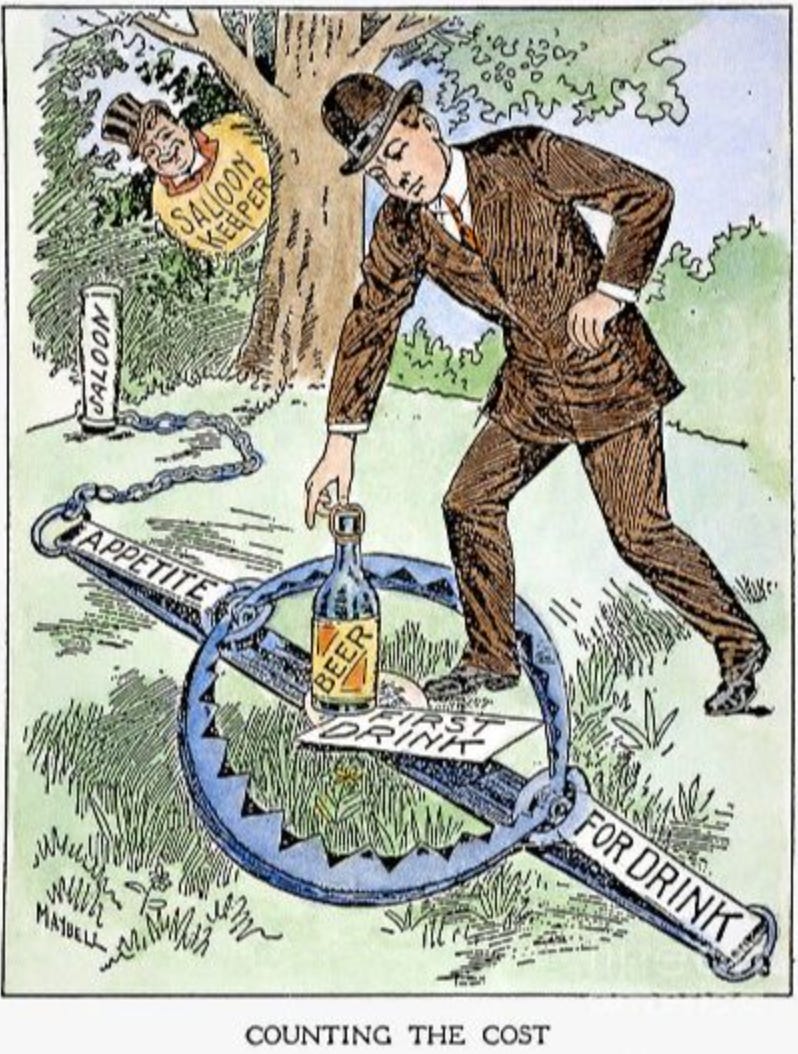
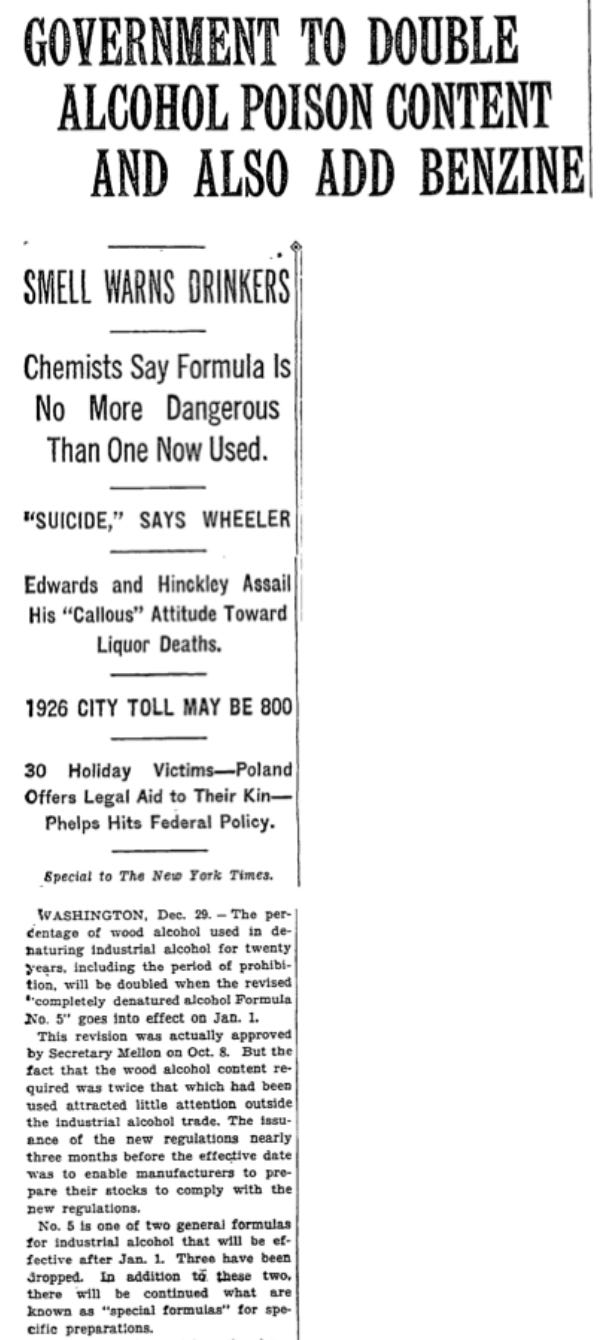
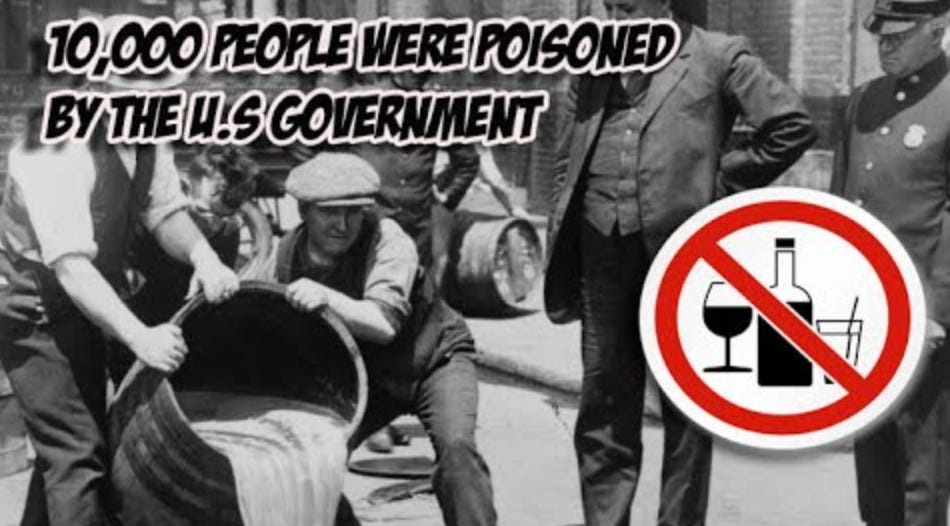
During Prohibition, alcohol was illegal—but people kept drinking anyway. So instead of accepting that reality, the government decided to make drinking more dangerous by mandating the addition of toxic chemicals to industrial alcohol, knowing full well that bootleggers would re-distill it and sell it to the public.
The thinking was simple:
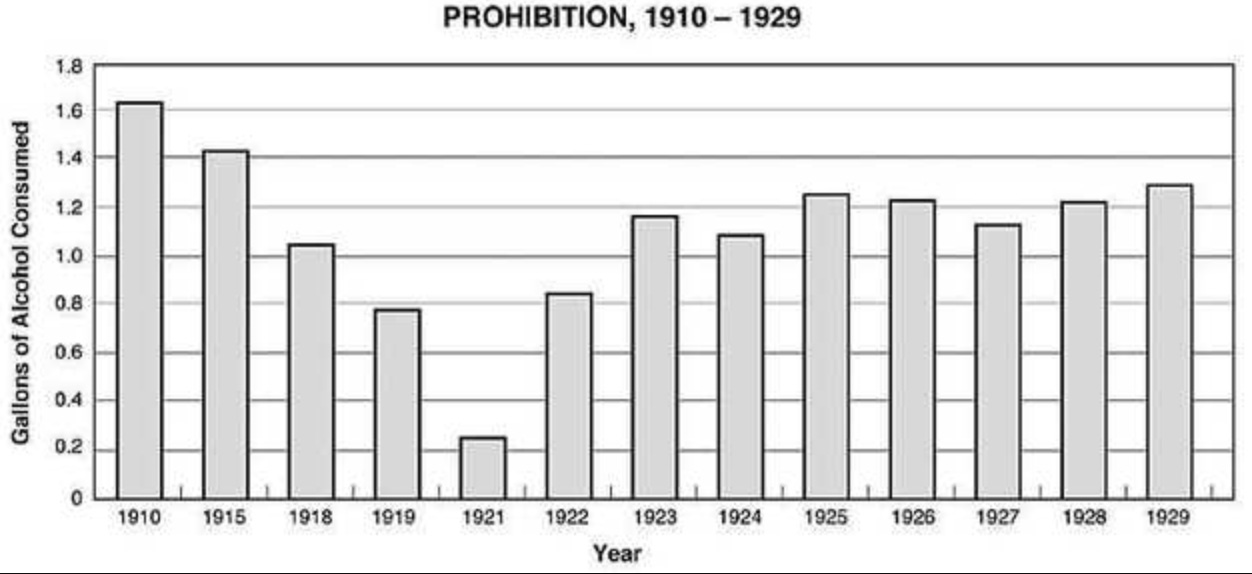
If alcohol became deadly enough, people would stop drinking.
They didn’t.
Thousands were poisoned. Many were permanently disabled. Historians estimate that during prohibition (1920-1933) there were about 10,000 deaths, give or take.
This isn’t a conspiracy theory. It’s documented history.
Mr. Skeptical shifts in his chair.
Subconscious Fat at 10,000 feet
One of the most infamous consequences of Prohibition poisoning was a condition nicknamed “Jake Leg.”
The formal name was Jamaica ginger paralysis.
People were drinking a product called Jamaica ginger extract—a legal alcohol substitute that contained a neurotoxin (tri-ortho-cresyl phosphate). The result?
Nerve damage
Muscle weakness
A distinctive limp
Permanent paralysis in some cases
Entire communities were affected. You could recognize victims by their walk.
The important detail isn’t just that this happened.
It’s why it happened.
The government knew poisoning alcohol would hurt people. That was the point. The harm was justified as a moral intervention.
Mr. Skeptical raises an eyebrow.
“This really happened?”
Yes. It did.
Subconscious Fat at Eye-Level
Here’s where the discomfort kicks in.
If a government was willing—within living memory—to poison citizens to enforce moral behavior…
…why would we assume it is hyper-vigilant, uncompromising, and protective when it comes to food ingredients?
Mr. Skeptical leans forward.
“So you’re saying they’d do it again?”
No. Not like that.
This isn’t about intent. It’s about incentives.
During Prohibition:
The goal wasn’t health
It was compliance
Today:
The goal isn’t optimal health
It’s regulation, profitability, and convenience
Food companies are allowed to add substances not because they are ideal for human biology—but because they are:
Shelf-stable
Cheap
Flavor-enhancing
Legally permissible
And oversight doesn’t mean protection. It means minimum standards.
Mr. Skeptical pauses.
“So ‘approved’ doesn’t mean ‘good’?”
Exactly.
Practical Suggestions and Conclusions
The lesson here isn’t paranoia.
It’s pattern recognition.
History shows us three uncomfortable truths:
Governments are willing to trade individual health for broader goals
Regulatory approval lags behind biological reality
Once something is normalized, questioning it feels radical
During Prohibition, poisoned alcohol was framed as a deterrent.
Today, questionable food additives are framed as safe because they’re legal.
Different era. Same logic.
Mr. Skeptical exhales.
“So what’s the move?”
The move isn’t to panic.
The move is to stop outsourcing judgment.
Read ingredient labels.
Notice patterns.
Ask why something exists in food at all.
Because history is very clear on one thing:
If harm is seen as acceptable collateral in pursuit of a higher objective—whether moral, economic, or political—it usually arrives quietly, wrapped in authority, and explained after the fact.
Jake Leg victims didn’t think they were rebels.
They thought they were drinking something normal.
That’s the real warning.
Not that someone is out to get you.
But that systems don’t prioritize you the way you think they do.
Mr. Skeptical nods slowly.
“That… actually makes sense.”
And that’s usually how Subconscious Fat works once it’s realized.
Be aware.
Other links related to this post:

The Genetic Component of Addiction

Know Your Addictions

Alcohol and Carnivorism PS Links on LinkedIn, Facebook, Instagram, X, and Notes. Full disclosure: ChatGPT was used to research and enhance this post.
Damn, the Jake Leg detail is chilling tbh. The paralell to GRAS substances is spot on. I remember reading FDA regs where approval basically meant not acutely toxic in standard doses, but longterm metabolic effects were kinda handwaved. When complicance costs matter more than health outcomes the system optimizes for liability minimization not wellness.