

Subconscious Fat at 30,000 feet
Every once in a while you hear a phrase that seems almost too simple to carry any real wisdom.
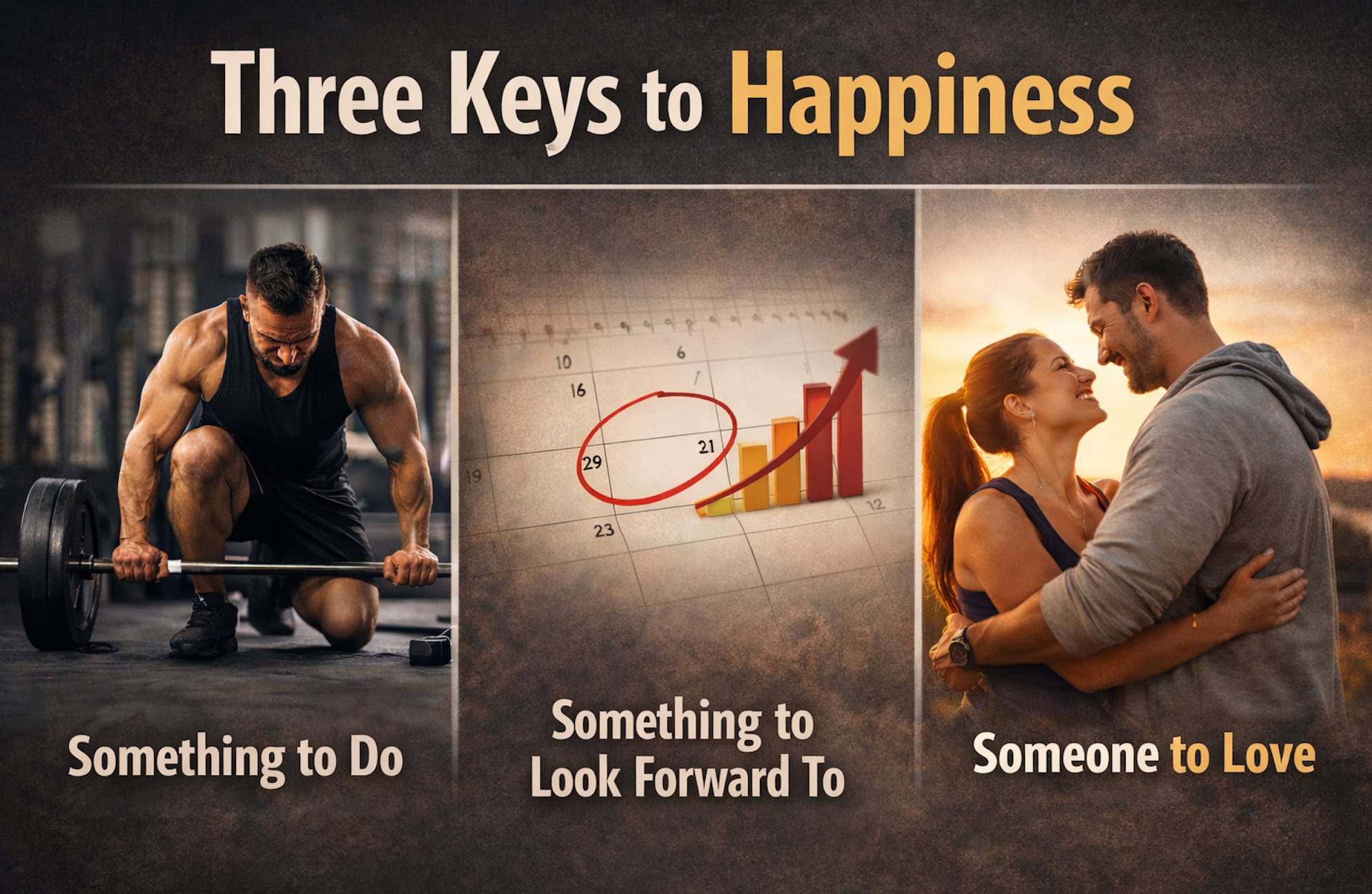
Three things make people happy:
Something to do.
Something to look forward to.
Someone to love.
It sounds like something you’d see printed on a greeting card. But versions of this idea have circulated for a long time, often attributed to philosophers like Immanuel Kant, who spoke about the importance of having something to do, something to love, and something to hope for.

Over time the wording shifted slightly. “Hope for” became “look forward to.” But the structure stayed the same.
Three pillars.
Three directions that give life a sense of balance.
Mr. Skeptical leans back in his chair.
“So happiness is basically a checklist?”
Not exactly.
But it may be closer to a framework than most people realize.
Because each of those three things points to a different dimension of human life.
Something to do — that anchors us in the present.
Something to look forward to — that pulls us into the future.
Someone to love — that connects us to other people.
Remove one of those, and life begins to wobble.
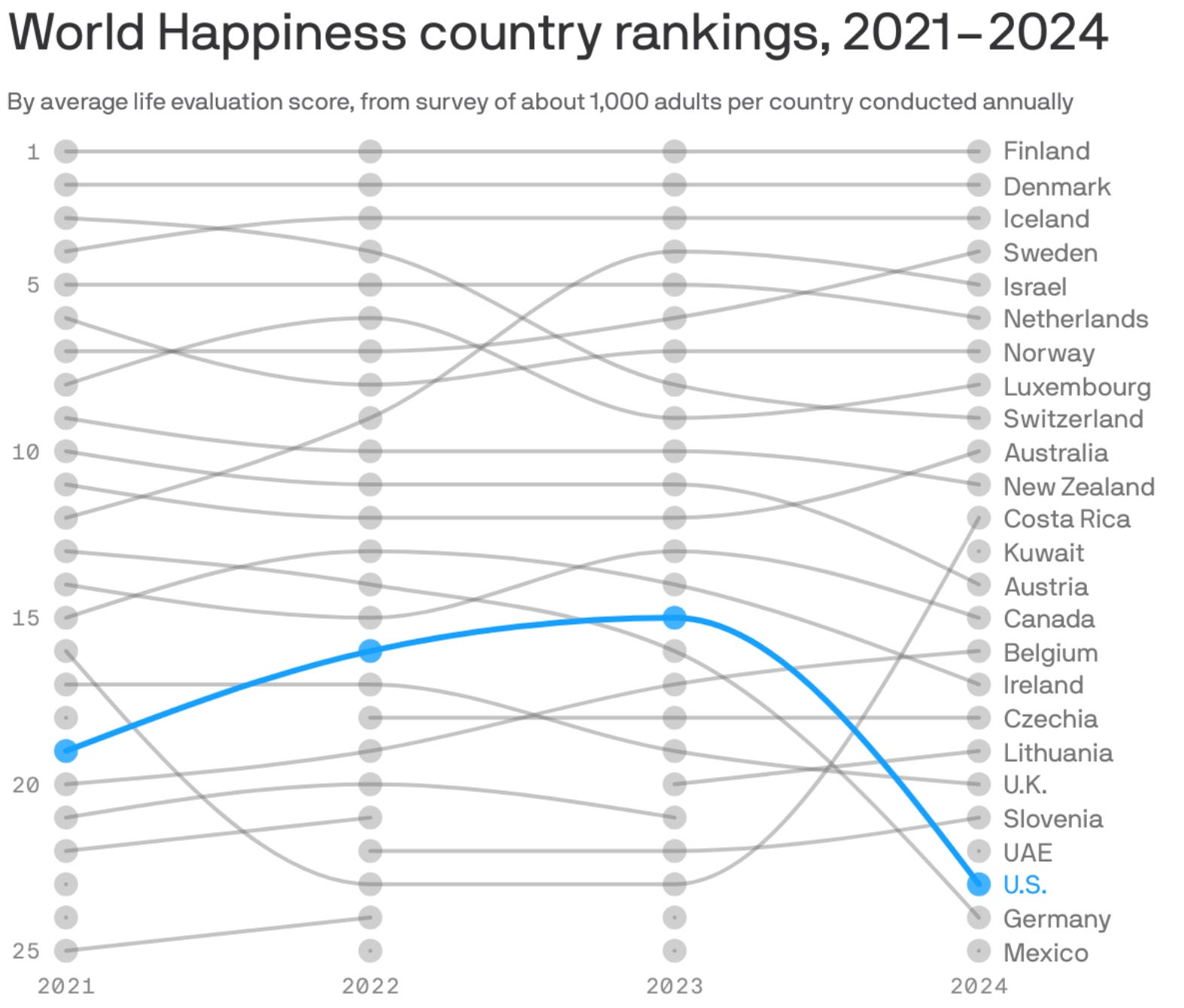
Subconscious Fat at 10,000 feet
What’s interesting is that one habit can quietly satisfy two — and sometimes even three — of those pillars.
Working out.
At first glance, exercise seems purely physical.
Lift weights, pull on some bands.
Push and pull a sled.
Repeat.
But psychologically, it does something deeper.
It gives you something to do.
A structured activity that demands effort, attention, and discipline.
Mr. Skeptical raises an eyebrow.
“You mean sweating counts as philosophy now?”
In a way, yes.
Because humans are wired to engage in effort. Without some form of purposeful activity, the mind drifts into boredom and stagnation.
A workout solves that immediately.
There’s a task.
There’s a challenge.
There’s a small daily mission.
But exercise also creates the second pillar: something to look forward to.
A good workout session is often one of the few moments in the day where the mind clears and the body wakes up.
Many people finish a workout already thinking about the next one.
The next improvement.
The next increase in strength.
The next small victory.
Suddenly tomorrow has a purpose.
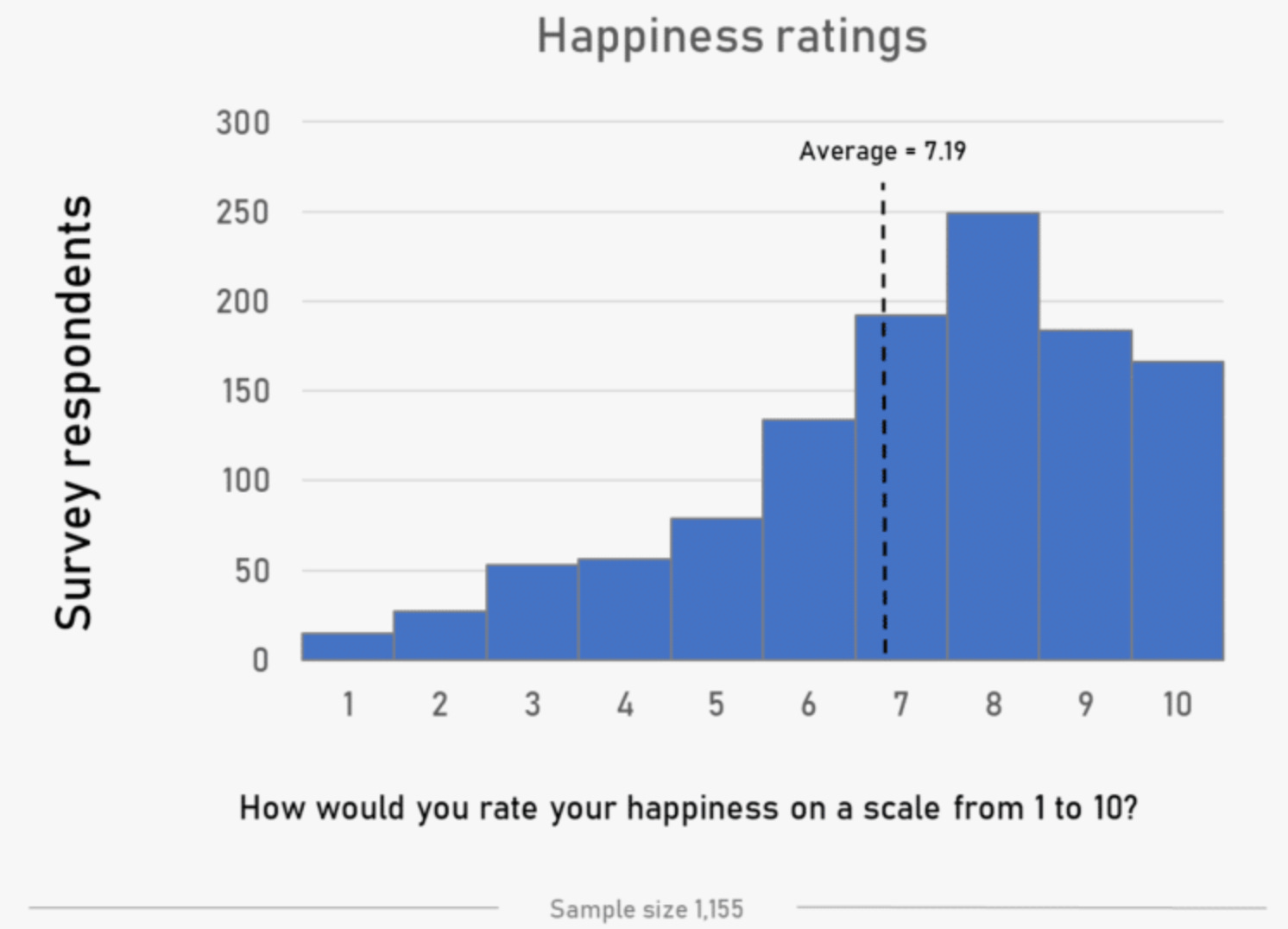
Subconscious Fat at Eye-Level
Then there’s the third pillar: someone to love.
At first glance, fitness seems unrelated to relationships.
But look a little closer.
Exercise improves energy.
Confidence.
Posture.
Physical capability.
And perhaps most importantly, it keeps the body functioning well enough to participate fully in life.
Mr. Skeptical smirks.
“So you’re saying pull-ups are romantic now?”
Not exactly.
But staying physically capable, healthy, and energetic dramatically improves the way we show up for the people we care about.
It’s easier to be present for someone you love when your body isn’t constantly fighting fatigue, pain, or metabolic problems.
And let’s be honest — maintaining physical fitness also helps people remain attractive to the partners they already have, and to the partners they may meet.
Health, energy, and vitality are not just biological advantages.
They’re relational advantages.
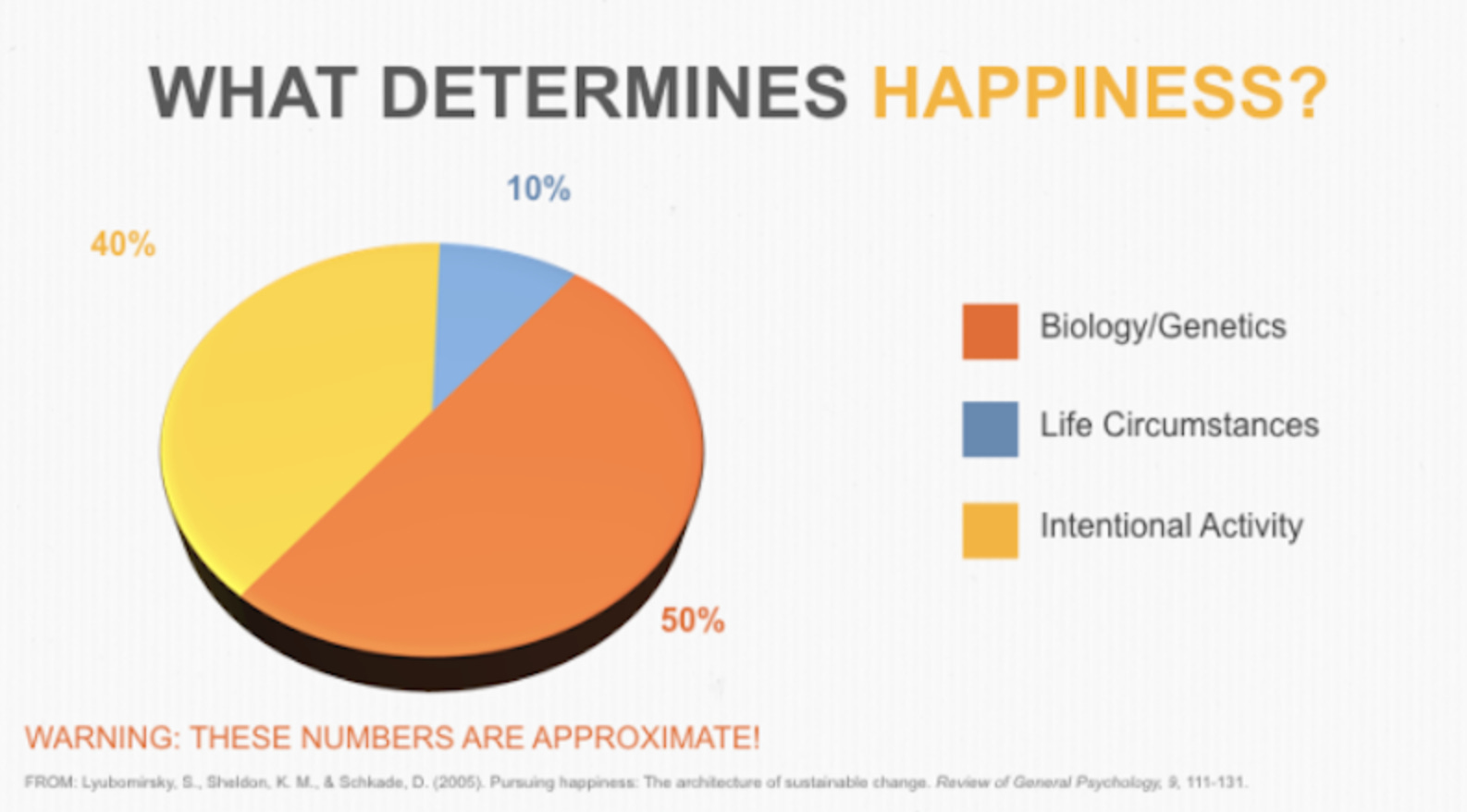
Practical Suggestions and Conclusions
That simple three-part idea about happiness may be more practical than it first appears.
Something to do.
Something to look forward to.
Someone to love.
A consistent fitness habit quietly touches all three.
A workout gives structure to the day.
It creates anticipation for tomorrow’s effort.
And it keeps the body strong, energetic, and capable of sharing life with the people who matter most.
Mr. Skeptical folds his arms.
“So the gym is basically emotional infrastructure?”
You could put it that way.
We often think of exercise purely as a tool for burning calories or building muscle.
But it might also be something more subtle.
A daily activity that helps reinforce purpose, anticipation, and connection — the same three ingredients philosophers have been talking about for centuries.
And if that old framework is right, happiness might not be something mysterious or accidental at all.
It might simply be the natural result of building the right habits into everyday life.
Be aware.