

Subconscious Fat at 30,000 Feet
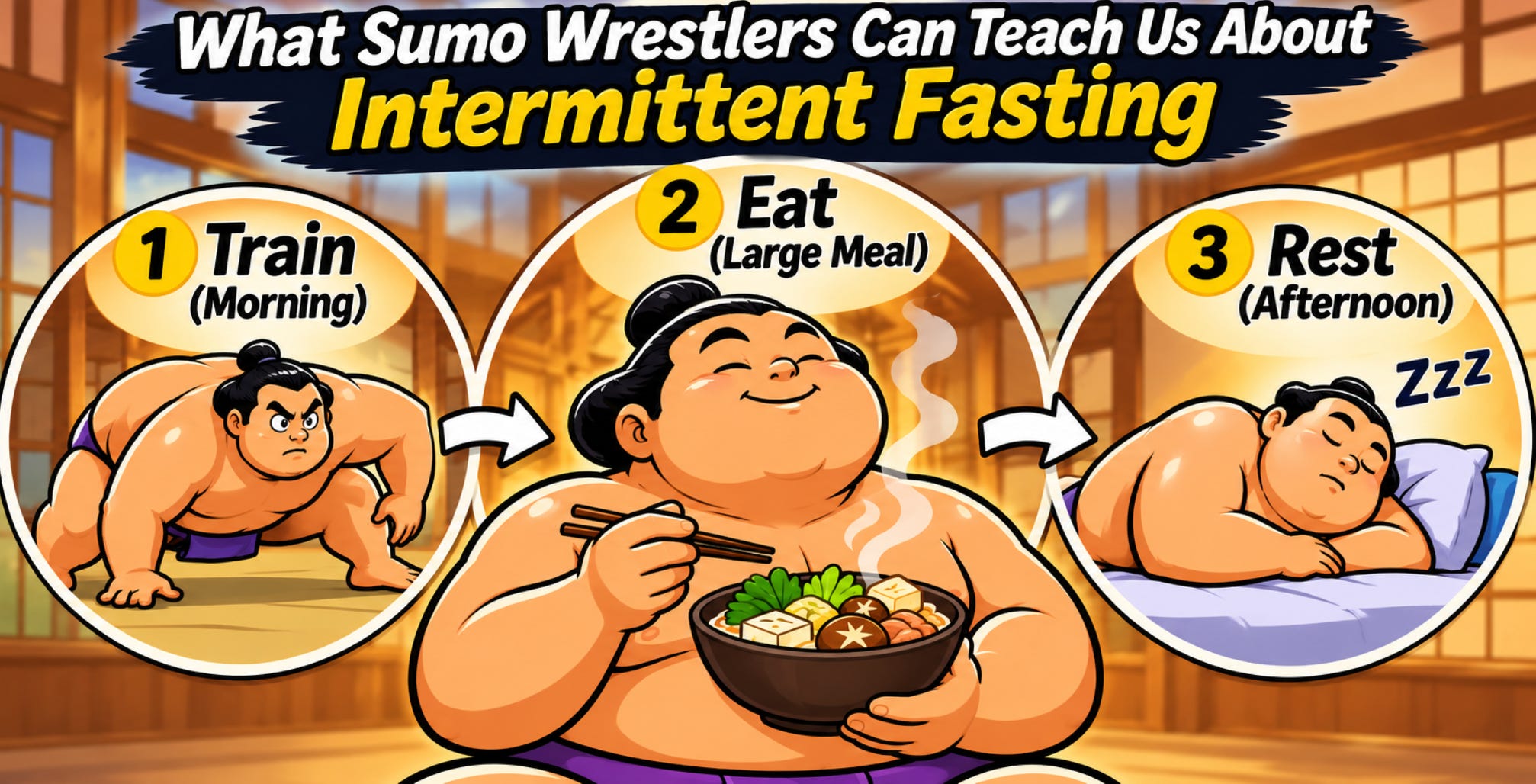
Imagine waking up at 5 a.m., skipping breakfast, and exercising intensely for hours.
Then sitting down to an enormous meal, taking a long afternoon nap, and eating another massive meal before bedtime.
Sounds like an unusual intermittent fasting routine, doesn’t it?
Except there’s a twist.
This is essentially the traditional routine of a professional sumo wrestler.
Mr. Skeptical raises an eyebrow.
“Wait. These enormous guys skip breakfast, exercise for hours, and only eat twice a day?”
That’s right.
“And they’re trying to GAIN weight?”
Exactly.
“So they’re intermittent fasting their way to 350 pounds?”
Now you’re asking the right questions.
Here’s the mystery: If fasting and exercising automatically make people thin, why are sumo wrestlers so enormous?
Subconscious Fat at 10,000 Feet
Traditional sumo training often begins early in the morning, sometimes around 5 or 6 a.m.
Wrestlers train for several hours without breakfast, performing demanding strength, balance, and wrestling exercises.
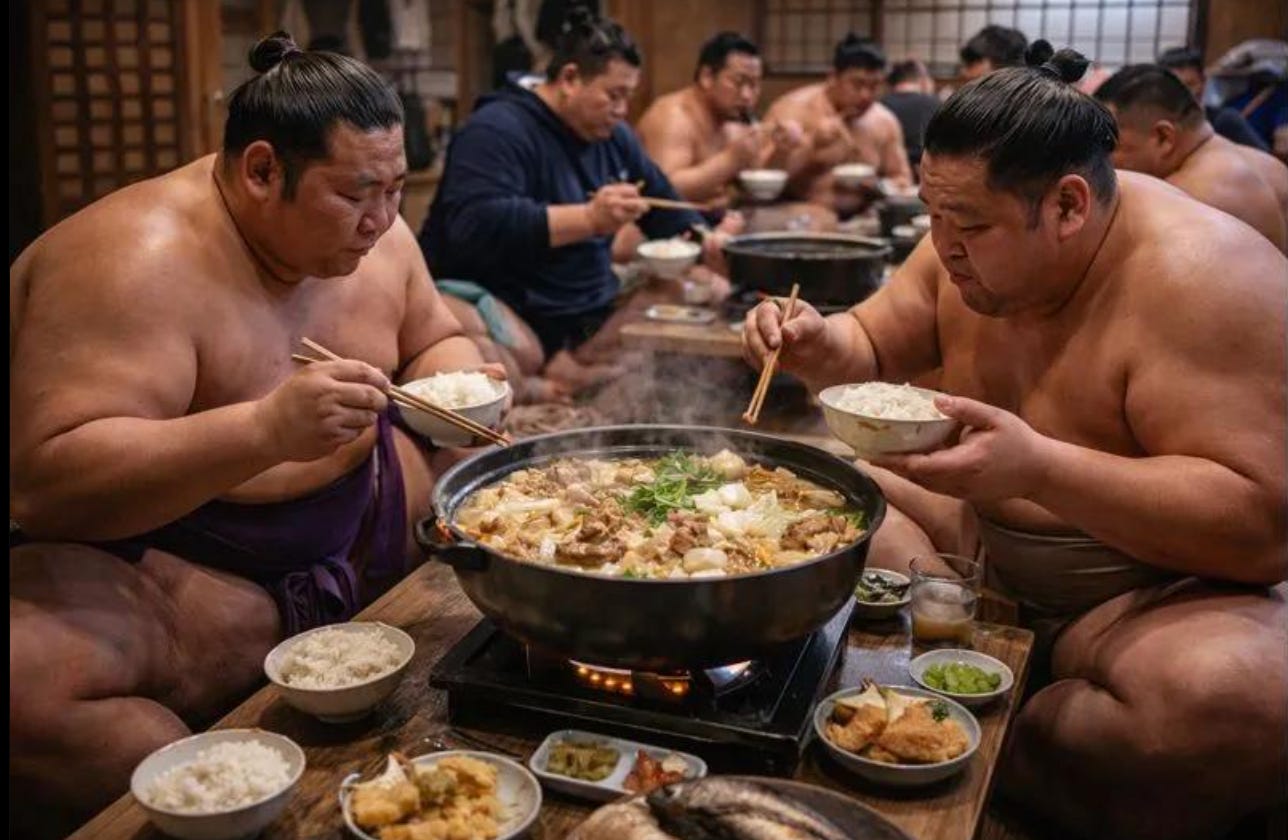
Their first major meal typically comes around midday.
And we’re not talking about a small chicken salad.
We’re talking about enormous portions of chanko-nabe, a traditional Japanese hot pot containing meat, fish, tofu, and vegetables, frequently accompanied by substantial amounts of rice.
A Japanese study examining nine sumo wrestlers documented a traditional two-meal pattern, with average daily consumption of approximately 4,000–4,500 calories. Some wrestlers also consumed snacks.
And for some sumo wrestlers, the physical activity doesn’t end with their morning training.
After their afternoon nap, they may return for additional exercises or wrestling practice before sitting down to their second substantial meal.
Think about that.
Some of these enormous athletes train for hours in the morning, occasionally train again in the afternoon, and still maintain their massive body weight while eating only two main meals a day.
Mr. Skeptical scratches his head.
“Wait. Some of these guys work out twice a day, skip breakfast, and they’re still enormous?”
Exactly.
“Well, there goes my theory that skipping breakfast and exercising more automatically makes you skinny.”
That’s precisely the point. Fasting and exercise don’t override the amount of energy you’re consuming.
“But aren’t they going into starvation mode?”
Excellent question.
The scientific term often associated with starvation mode is metabolic adaptation, sometimes called adaptive thermogenesis.
When you consistently restrict calories and lose weight, your body can respond by conserving energy.
Your resting metabolism may slow, hunger may increase, and you might unconsciously move less throughout the day.
It’s an evolutionary survival mechanism.
But here’s what starvation mode DOESN’T mean.
Your body cannot manufacture fat out of nothing.
Skipping breakfast doesn’t automatically make you fat.
And there’s no convincing evidence that sumo wrestlers become enormous because they’re in starvation mode.
They intentionally consume tremendous amounts of food to maintain their size.
Mr. Skeptical shakes his head.
“So eating twice a day doesn’t guarantee weight loss?”
Not if those two meals resemble Thanksgiving dinner.
“Twice a day?”
Twice a day.
“Where do I sign up?”
Subconscious Fat at Eye-Level
I had a client who experimented with fasting and lost approximately 10 pounds.
Naturally, he was thrilled.
But then he broke his fast with pizza.
And shortly afterward, much of the weight returned.
Mr. Skeptical practically jumps out of his chair.
“You’re telling me pizza can make someone gain ten pounds of fat overnight?”
No. And that’s the important distinction.
During fasting, your body uses stored glycogen, particularly when carbohydrate intake is reduced.
Glycogen is stored glucose, primarily in your muscles and liver.
And here’s something fascinating.
Each gram of glycogen is associated with approximately three grams of water.
When glycogen decreases, you can lose substantial water weight.
When you eat carbohydrates again, your body replenishes those stores, bringing water along with them.
Pizza also contains plenty of sodium, potentially increasing temporary water retention.
So some of that dramatic weight regain may have been water, glycogen, and food weight—not newly accumulated body fat.
Mr. Skeptical looks relieved.
“So the pizza didn’t magically create ten pounds of fat?”
Exactly.
“Good. Because I was about to report Domino’s to the authorities.”
But there’s another lesson.
If fasting leads to extreme hunger followed by repeated overeating, maintaining your progress becomes considerably harder.
The goal isn’t simply to lose weight quickly. It’s to lose body fat while preserving muscle—and keep the fat off.
Practical Suggestions and Conclusions
So what can we learn from sumo wrestlers, starvation mode, and my client’s pizza adventure?
1. Fasting isn’t magic. Eating twice daily doesn’t guarantee fat loss. Total food intake still matters.
2. Don’t mistake water loss for fat loss. Rapid changes on the scale often reflect glycogen and fluid shifts.
3. Break your fast intelligently. Consider a protein-rich meal rather than immediately overeating highly palatable foods.
4. Protect your muscles. Especially after 40, prioritize adequate protein and resistance training during weight loss.
5. Be consistent. Extreme restriction followed by overeating is rarely a sustainable strategy.
Mr. Skeptical folds his arms.
“So what’s the big lesson here?”
That fasting can be useful, but you still need a sensible nutritional strategy.
“And skipping breakfast won’t automatically make me thin?”
No.
“And pizza isn’t responsible for every pound I gain?”
Correct. Yet I avoid pizza in the USA because of my concerns about wheat and gluten. See my article below: Why I Avoid Wheat.
Sumo wrestlers demonstrate something fascinating.
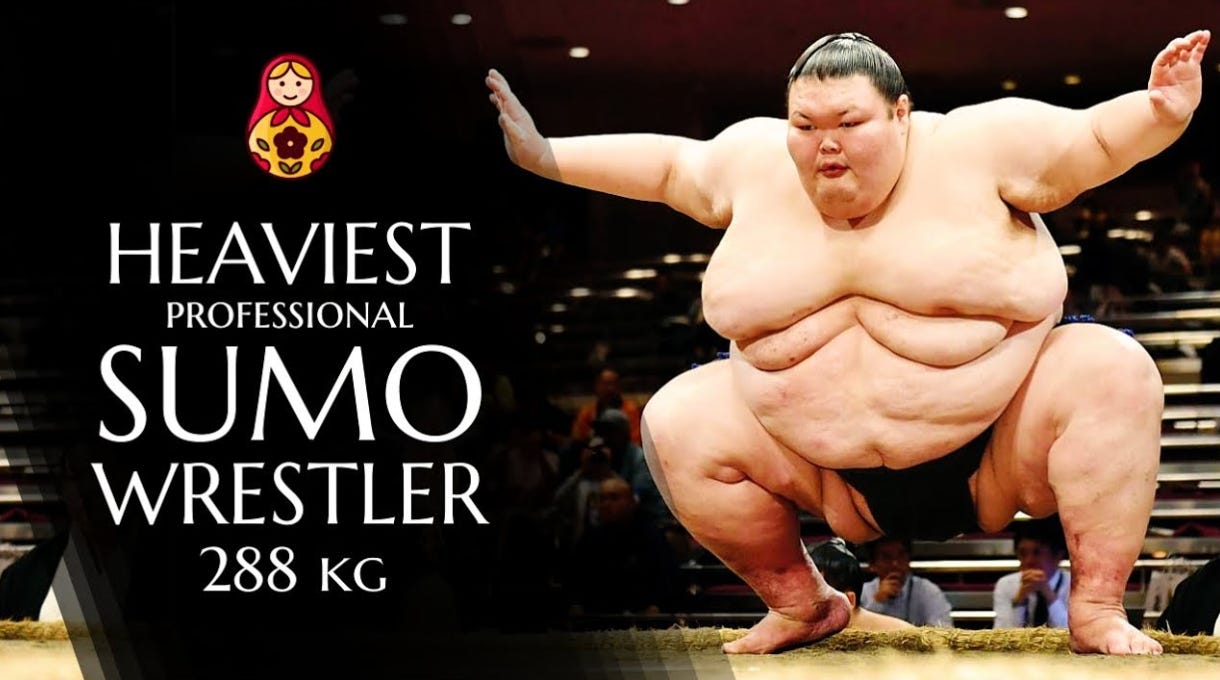
You can exercise intensely, skip breakfast, and eat only twice a day while maintaining enormous body mass.
Their lifestyle challenges the assumption that meal frequency alone determines body weight.
And my client’s experience reminds us that rapid weight changes don’t always represent changes in body fat.
Fasting can be a powerful tool when used appropriately.
But the real objective is building a healthier, stronger body that you can maintain for life.
Especially after 40.
Simple IS King.
Be aware.
PS: Links on LinkedIn, Facebook, Instagram, X, and Notes.
P.S. Full disclosure: ChatGPT was used to research and enhance this post.
P.S. Free Outdoor Workout — Saturday, November 7th at Noon! Join me at Legion Memorial Park, 6447 NE 7th Avenue, Miami, for a FREE resistance band workout. Learn how to combine bands with the park’s outdoor bodyweight exercise equipment for an effective full-body workout. We’ll meet by the outdoor fitness equipment area. All fitness levels welcome!