

Subconscious Fat at 30,000 Feet
I had a theory.
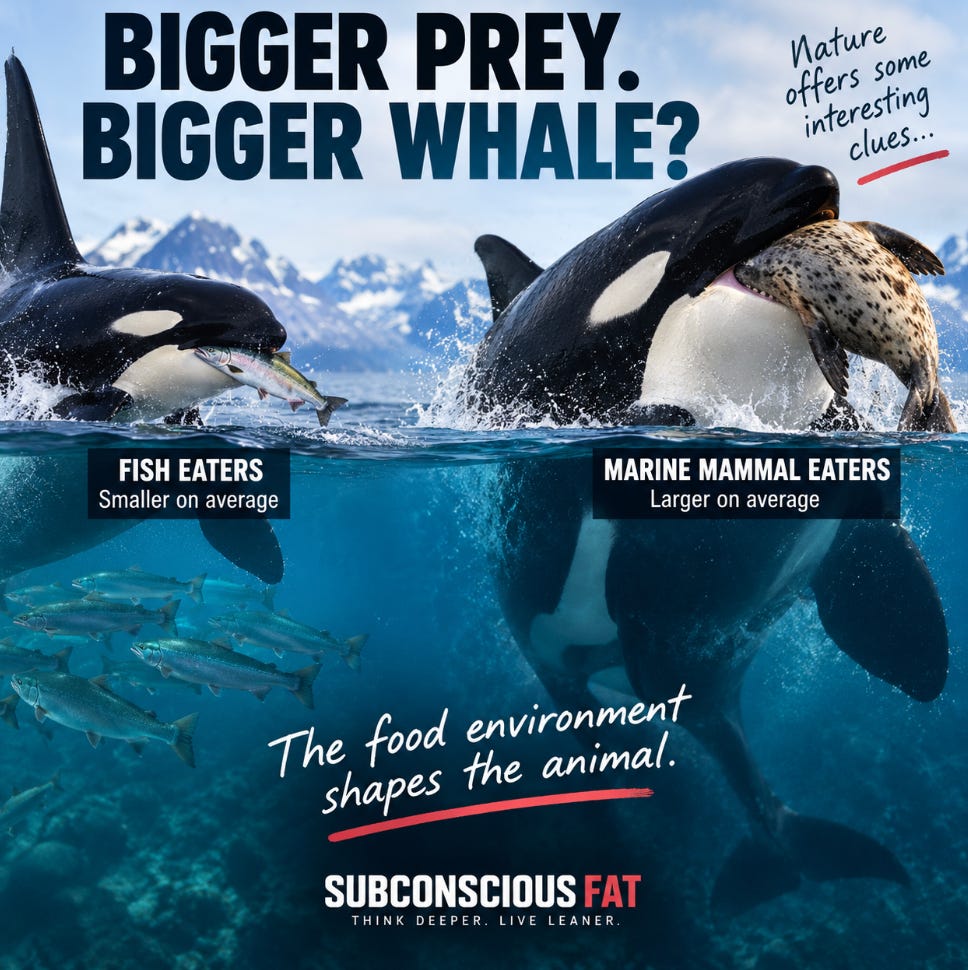
Killer whales don’t all eat the same thing. Some populations specialize heavily in fish. Others hunt seals, sea lions, dolphins—even other whales.
So I wondered:
Are the killer whales that hunt the bigger, fattier marine mammals also bigger themselves?
I hadn’t looked it up yet. It just made sense in my head.
Mr. Skeptical adjusts his imaginary lab coat.
“So now we’re doing marine biology based on whatever pops into your head?”
Fair criticism.
So I went looking.
And things got interesting.

Ovadia Hayat is the founder of Act II NOW and a Houston-based career advisor who helps experienced professionals 40+ successfully navigate the second act of their careers. A former recruiter with more than 200 placements across technology, defense and sales, Ovadia now helps professionals reposition their experience, overcome age-related career obstacles, and confidently pursue their next opportunity.
act-ii-now.dubb.com info@actiinow.com Ph. 845-499-1770
Join Ovadia and me for another conversation with Stand-Up Energy on The Better Wealth and Health Podcast.
🎙️ New episode drops tomorrow, Friday, at 11:57 a.m. ET
Subconscious Fat at 10,000 Feet
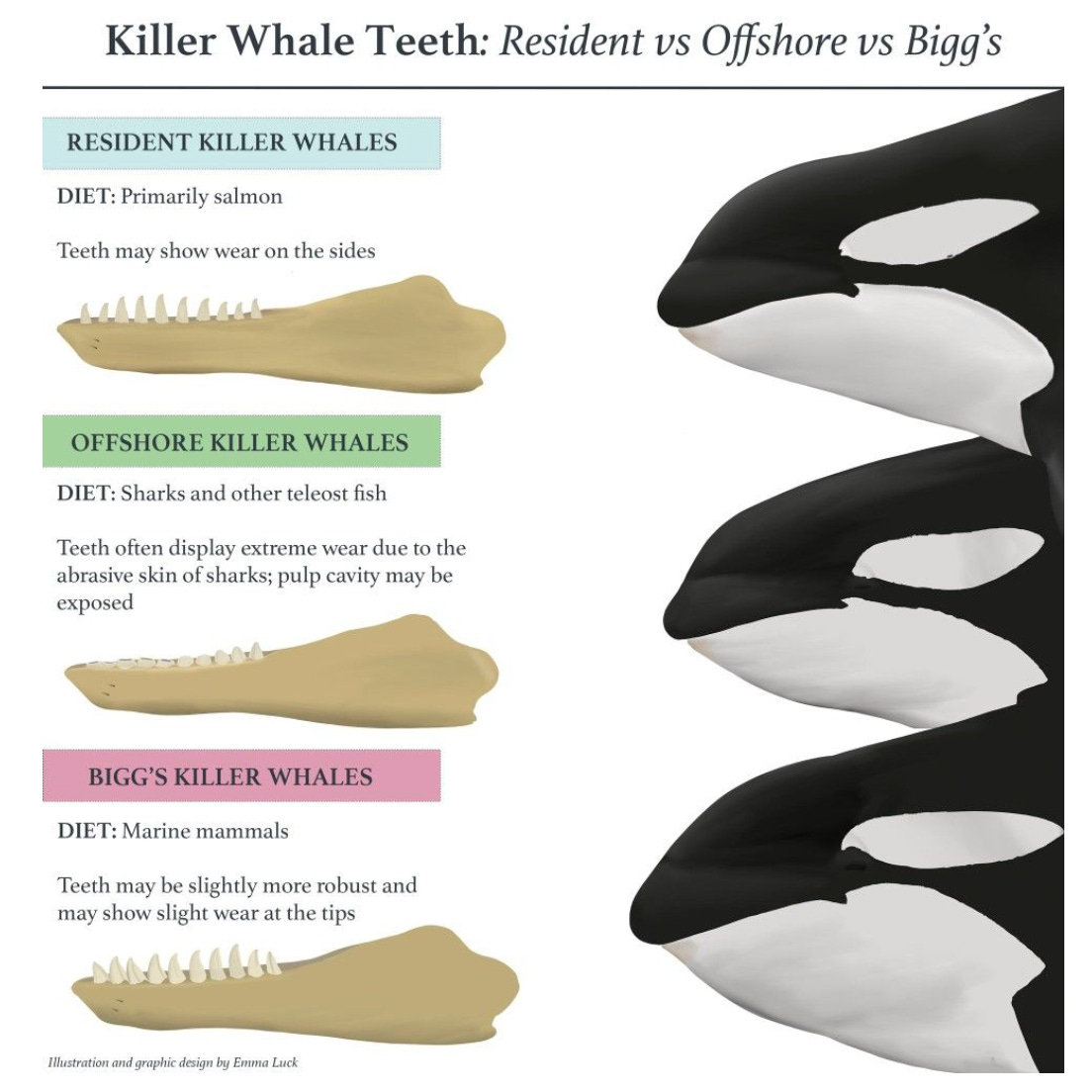
In the North Pacific, researchers recognize dramatically different killer-whale ecotypes.
Resident killer whales primarily eat fish—particularly salmon.
Bigg’s killer whales, historically called transients, specialize in marine mammals: seals, sea lions, porpoises, dolphins and even whales. NOAA describes these ecotypes as differing not only in diet, but also in behavior, genetics and physical characteristics.
And here’s where my little theory survived its first encounter with reality.
Bigg’s killer whales are generally larger than resident killer whales. Researchers have suggested those different body types may be related to their very different lifestyles—one pursuing fish, the other tackling large marine mammals.
Mr. Skeptical raises an eyebrow.
“Congratulations. You discovered that the whale wrestling seals is bigger than the whale chasing salmon.”
Hey, I’ll take the win.
But it gets better.
Subconscious Fat at Eye-Level
Look toward Antarctica and the pattern becomes even more interesting.
The Ross Sea Type C killer whale is the smallest known killer-whale form. Adult males reach only around 20 feet.
What does it primarily eat?
Fish.
Meanwhile, some of the larger killer-whale forms specialize in marine mammals, including seals and other whales.
Researchers examining killer-whale populations across different oceans have noted a recurring ecological pattern: smaller fish-eating forms existing alongside larger mammal-eating forms.
Mr. Skeptical folds his arms.
“So eating seals turns you into a giant?”
Well, more fatty meat definitely has an impact.
This does not prove that eating fattier prey causes an individual killer whale to grow larger, but it does support my original theory.
These populations differ genetically, behaviorally and physically. Their hunting strategies and bodies developed across generations.
Different food environments exist alongside different body designs and hunting strategies.
Chasing salmon creates different demands than attacking a seal or another whale. And across several killer-whale populations, the mammal hunters tend to be among the larger forms.
Mr. Skeptical sighs.
“So your theory was right, but you can’t say it’s true all the time.”
Exactly.
Science ruins all the good slogans.
Practical Suggestions and Conclusions
Mr. Skeptical looks relieved.
“Great. So unless I’m planning to become a killer whale, what does any of this have to do with me?”
More than you might think.
Humans aren’t killer whales, and nutrition isn’t destiny.
Genetics has an enormous influence on height. So do childhood illness, living conditions, total calorie intake and overall nutrition.
But genes don’t grow a body without raw materials.
Across human populations, improvements in childhood nutrition, health and living conditions have accompanied dramatic increases in average height. Our World in Data’s overview of human height
And animal foods enter the picture too.
Research has found associations between childhood consumption of animal protein and dairy products and growth. Milk consumption in particular has repeatedly been associated with greater childhood height, although studies don’t establish that simply drinking more milk will make every child taller. PubMed research on animal protein and growth
Why might animal foods matter?
Protein supplies the amino acids needed to build tissue. Meat, eggs and dairy can also provide highly bioavailable protein and important micronutrients during periods when the body is growing.
Mr. Skeptical interrupts.
“So steak makes you tall?”
It’s not going to hurt.
Inadequate nutrition can absolutely prevent a growing human from reaching the body that his or her genetics might otherwise have allowed.
And that’s what fascinated me about the killer whales.
I started with a simple question about seals, salmon and body size. I discovered that the relationship is considerably more complicated than fatty food makes a bigger animal.
But the underlying idea survived:
The food environment and the body that must survive in that environment are connected.
Nature doesn’t separate nutrition from physiology.
Maybe the lesson from the killer whale isn’t that fatty prey makes you bigger.
Maybe it’s something more fundamental:
You can’t separate the animal from its food.
Mr. Skeptical pauses.
“So we’re having steak tonight?”
Now you’re getting it.
Be aware.
Other links related to this post:
From Geese to Great Whites: The Fat-Fuel Lesson Every Man Over 40 Needs to Hear
PS Links on LinkedIn, Facebook, Instagram, X, and Notes.
Full disclosure: ChatGPT was used to research and enhance this post.
Doing a live banded workout event on Saturday, October 3rd at Legions Park in Miami, details coming soon.
🎙️The Better Wealth & Health Podcast with guest Ovadia Hayat is dropping tomorrow at 11:57 AM Eastern.