


Subconscious Fat at 30,000 Feet
Somewhere along the way, we decided that one of nature’s most nutrient-dense foods needed an upgrade.
We took the egg, removed its golden center, and declared what remained the healthier option.
Egg-white omelets. Egg-white smoothies. Egg-white breakfast sandwiches.
Apparently, the yolk became public enemy number one.
Mr. Skeptical raises an eyebrow.
“Hold on, Hermann. Everybody knows egg whites are healthier. They’re pure protein, practically no fat, and no cholesterol. Isn’t that exactly what we want?”
Not necessarily, Mr. Skeptical.
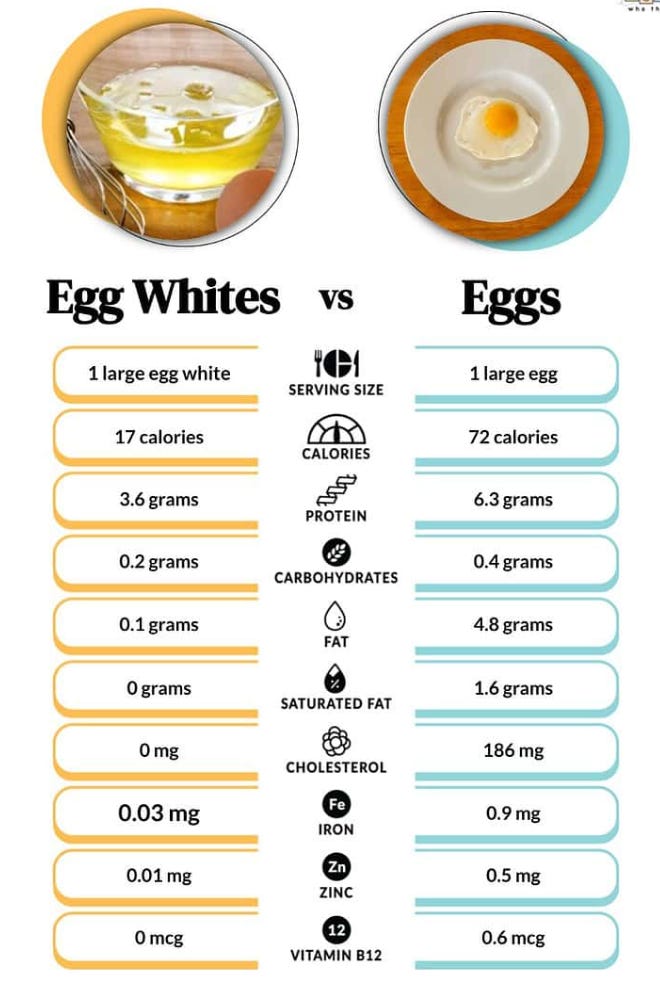
The white provides excellent protein. But the yolk contains important vitamins, minerals, fats, and other nutrients that the white largely lacks.
Think about what an egg actually is.
When fertilized and incubated, it contains the materials necessary to support the development of a baby chick. The yolk serves as a concentrated nutritional reservoir for that development. It’s the best part of the egg!
Nature didn’t accidentally put those nutrients there.
So why are we so eager to throw them away?

Dr. Ken Martz is a psychologist, author of the international bestseller Manage My Emotions, and a nationally recognized speaker on emotional mastery, leadership, and anxiety in high-performing professionals. With more than 30 years of experience in mental health and addiction treatment, and past service in leadership at the Pennsylvania Department of Drug and Alcohol Programs. His work has been featured in major media outlets including TIME, NPR, CBS, NBC, and Business Insider.
Join Dr. Ken and me for another conversation with Stand-Up Energy on The Better Wealth and Health Podcast.🎙️ New episode drops tomorrow, Friday, at 11:57 a.m. ET
Subconscious Fat at 10,000 Feet
Let’s examine what we’re actually getting.
One large whole egg provides approximately six grams of high-quality protein, along with important micronutrients.
But the nutritional distribution is fascinating.
The white provides most of its calories from protein. The yolk supplies much of the egg’s:
Choline: Important for brain function, cell membranes, and the production of acetylcholine, a neurotransmitter involved in memory and muscle activation.
Vitamin B12: Essential for neurological function and red blood cell formation.
Vitamin A: Supports vision and immune function.
Vitamin D: Supports calcium metabolism and bone health.
Lutein and zeaxanthin: Carotenoids associated with retinal health.
Healthy unsaturated fats: Alongside saturated fat, these contribute to the egg’s nutritional profile.
Mr. Skeptical interrupts.
“Fine, but what about the cholesterol? Isn’t that why nutritionists tell us to eat the whites?”
That’s the interesting part.
Your body manufactures most of its own cholesterol!
Estimates suggest that roughly 75% of the cholesterol entering the body’s cholesterol pool comes from internal production. Yes, your body produces about 75% of the cholesterol it needs, and if you eat more cholesterol, it produces less.
To me, coming from my chiropractic background, this just makes sense; the body is smart. It has an innate intelligence, and cholesterol is essential for cell membranes, hormone production, and numerous other biological functions.
And I had to find that information on my own; ChatGPT didn’t tell me until I searched for it. But the good news is that after I told ChatGPT this, it gave me the following study.
In a study published in the Journal of Clinical Investigation, researchers found that participants compensated for increased dietary cholesterol through reduced absorption, reduced internal synthesis, or both in 69% of the study periods.
Think about that!
Your body doesn’t simply ignore what you eat. It adjusts its own production.
The yolk isn’t automatically the villain we’ve been taught to fear.

Subconscious Fat at Eye-Level
Now here’s where things get particularly interesting for men over 40.
We lose muscle as we age. Preserving it requires adequate protein, resistance training, and good overall nutrition.
And researchers have actually compared whole eggs with egg whites.
A 2017 study published in the American Journal of Clinical Nutrition examined ten resistance-trained young men.
After exercise, participants consumed either whole eggs or egg whites containing the same amount of protein.
The result?
The whole-egg group experienced a greater stimulation of muscle protein synthesis during the five-hour recovery period.
Same protein. Different response.
Mr. Skeptical leans forward.
“Wait a minute. You’re telling me eating the yolk actually helped stimulate more muscle protein synthesis?”
In that study, yes.
And here’s another surprising finding.
The yolk may also influence your insulin response.
In a 1996 study published in Annals of Nutrition and Metabolism, researchers examined how whole eggs, egg whites, and egg yolks influenced digestion, blood glucose, and hormones in twelve healthy men.
The researchers found that whole eggs and yolks delayed gastric emptying. Yolks also reduced the blood-glucose and insulin peaks measured after a standard breakfast.
The above was another fact ChatGPT hid from me at first.
And that makes sense: the fat and other components of the yolk influence digestion.
Mr. Skeptical scratches his head.
“So removing the fat doesn’t necessarily improve the metabolic response?”
Exactly! I’ve always said natural fats are healthier and help the body burn fat for fuel, which then helps you burn your own body fat.
The insulin response depends on the complete meal, not simply whether a food contains fat.
And remember, insulin itself isn’t the enemy. It’s an essential hormone that helps regulate blood glucose and supports muscle metabolism.
I personally prefer my eggs boiled or sunny-side up. I like preserving the yolk rather than cooking it excessively.
Practical Suggestions and Conclusions
Mr. Skeptical crosses his arms.
“So you’re telling me I should stop ordering egg-white omelets?”
I’m telling you to stop assuming that removing the yolk automatically makes an egg healthier.
For healthy people who want a nutrient-rich breakfast, eating the whole egg makes excellent nutritional sense.
Here are my suggestions:
Consider the whole egg first. Don’t discard its most micronutrient-rich component without a reason.
Prioritize sufficient protein. Particularly after 40, protein intake and resistance training become increasingly important.
Understand cholesterol regulation. Your body manufactures cholesterol and adjusts production in response to dietary intake.
Think beyond insulin spikes. The fat and nutrients in a yolk can influence digestion and the metabolic response to a meal. Eating the whole egg reduces the insulin spike.
Question nutrition marketing. A product labeled “fat-free” or “egg-white only” isn’t nutritionally superior; in fact, it’s inferior.
We spend enormous amounts of money looking for the next superfood.
Meanwhile, one of the most convenient, affordable, nutrient-dense foods has been sitting in our refrigerators for generations.
And we’ve been throwing half of it away.
The lesson? Don’t confuse removing fat with improving nutrition.
Sometimes the simplest answer is staring back at you from the breakfast plate.
And sometimes it’s bright yellow.
Mr. Skeptical looks down at his egg-white omelet.
“Well, Hermann, I guess I’ve got some egg on my face.”
Exactly.
Just make sure it’s the whole egg.
Stay strong, stay curious, and keep questioning the noise.
Be aware.
Other links related to this post:
PS Links on LinkedIn, Facebook, Instagram, X, and Notes.
Full disclosure: ChatGPT was used to research and enhance this post.
Doing a live banded workout event on Saturday, 11:30 AM, October 3rd at Legions Park in Miami, Florida.
🎙️The Better Wealth & Health Podcast with guest Dr. Ken is dropping tomorrow at 11:57 AM Eastern.