

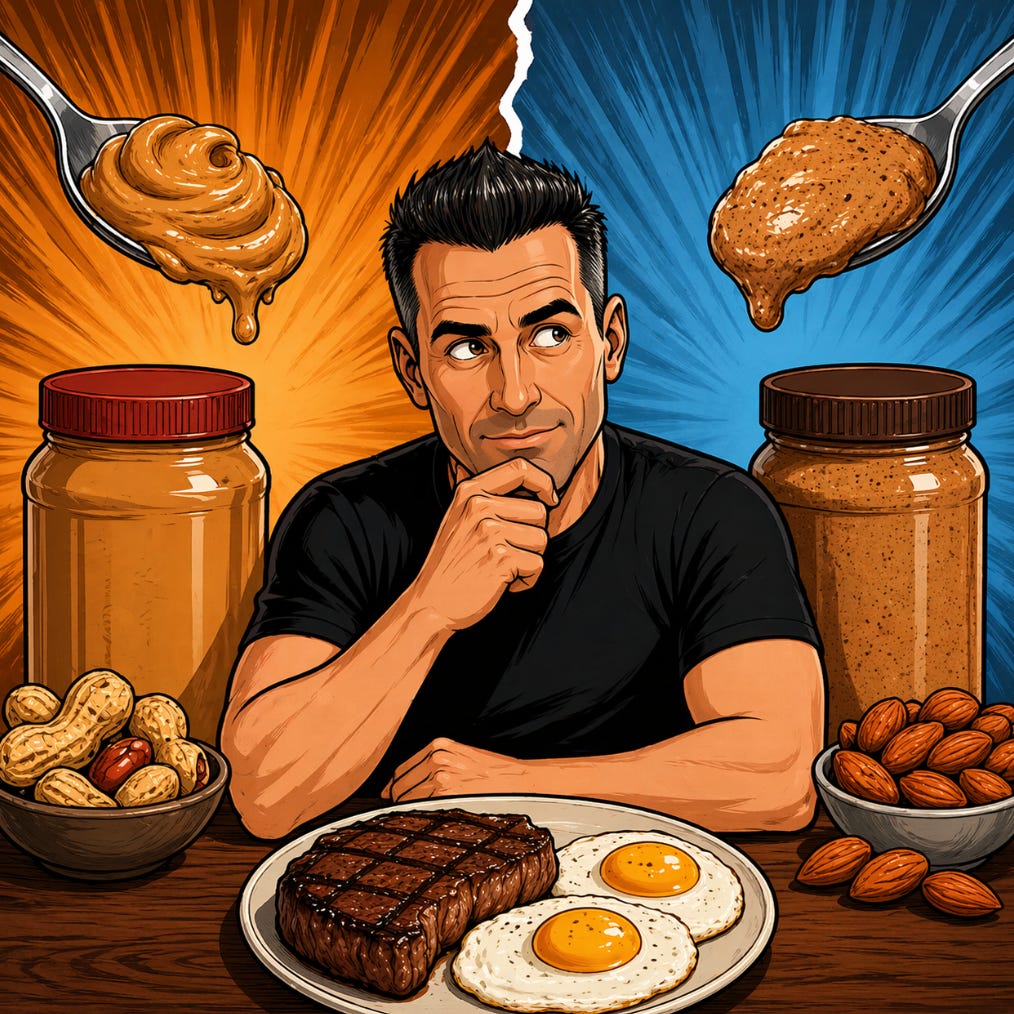
Mr. Skeptical walks in and sees the title for this post.
I say, There was a time in my life when I ate an incredible amount of peanut butter every single day.
Mr. Skeptical says, “I’m going to guess that was when you were in federal prison.”
I tilt my head, wondering how he knows this.
He shrugs. “Yeah, I’ve seen enough prison documentaries. Peanut butter’s basically currency in there—cheap, calorie-dense, decent protein, plus some carbs to keep you going. When good quality meat isn’t exactly on the menu, and guys are working out all the time, it ends up being one of the better options available.
Subconscious Fat at 30,000 feet
Peanut butter versus almond butter sounds like one of those “healthy swap” debates people love to have when they’re trying to clean things up… without actually changing much.
But if you zoom out, both of these foods come from the same category: ground-up plants that are calorie-dense, easy to overeat, and very easy to justify.
And that’s where the real issue lives—not in which one is slightly “better,” but in how both of them quietly keep people stuck.
Mr. Skeptical smirks, “I’m pretty sure you didn’t have the almond butter option in prison.”
I shake my head. No, no almond butter. Just straight peanut butter… and at that point, you’re not picking foods because they’re optimal—you’re picking them because they’re available, affordable, and get the job done. There’s a big difference between eating for survival and eating for optimization.
Subconscious Fat at 10,000 feet
Let’s get something straight first.
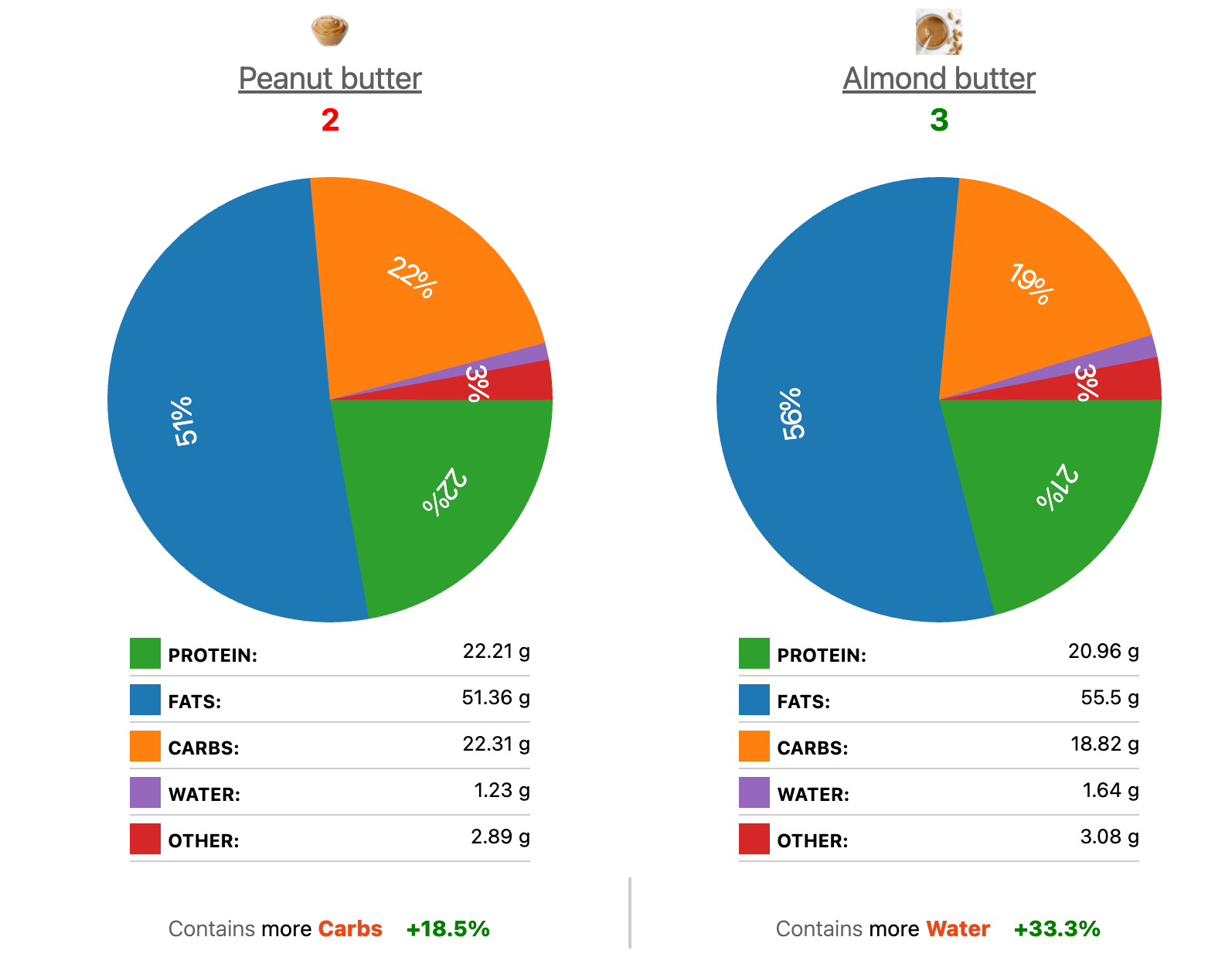
If you put peanut butter and almond butter side by side and forced me to choose, almond butter usually comes out slightly ahead.
Why?
Almond butter tends to have:
A better fat profile (more monounsaturated fats)
Slightly fewer inflammatory compounds than peanuts
Less likelihood of mold contamination compared to peanuts (which are technically legumes, not nuts)
But let’s not pretend this is a huge win. This is like arguing whether walking into a wall or a door is better. One might hurt less… but neither is the direction you actually want to go.
From a carnivore or low-carb standpoint, both have issues:
They contain carbohydrates (yes, even if “low,” they add up fast)
They’re extremely easy to overeat
They don’t provide the same nutrient density as animal-based foods
They can interfere with staying in ketosis if portions creep up
Mr. Skeptical chimes in: “But it’s natural. It’s just ground-up nuts. That’s healthy.”
That’s exactly the trap. “Natural” doesn’t mean “optimal.” It just means it came from somewhere other than a lab.
Mr. Skeptical folds his arms. “So did you gain weight in prison, eating so much peanut butter?”
I shake my head. Not really… but that’s because I was training like a maniac. I was doing CrossFit-style workouts constantly—not because I was chasing a six-pack, but because I needed it.
Working out was my release. It was the only thing that kept me sane in there. So between the intensity and the frequency, I could get away with eating a lot of peanut butter without putting on much weight.
That said… I didn’t have a six-pack as I do now. There’s a difference between managing damage… and actually optimizing your body.
Subconscious Fat at Eye-Level
Here’s where it actually matters in the real world.
Peanut butter—and almond butter too—are what I’d call “bridge foods.”
They feel like you’re doing something right. You’re not eating cookies. You’re not eating chips. You’re eating something with protein and fat.
But they come with a few hidden problems:
First, they’re incredibly easy to overeat. Nobody eats one tablespoon of peanut butter. That’s a fairy tale. It’s two… then four… then half the jar is mysteriously gone while standing in the kitchen.
Second, they’re not very satiating compared to animal foods. A steak shuts things down. Eggs shut things down. Peanut butter? It keeps the door open.
Third, they can quietly stall progress. If your goal is fat loss, energy, or getting into ketosis, those extra carbs—plus the sheer calorie density—can slow things down more than you realize.
Mr. Skeptical pushes back: “But I’ve seen people get in shape eating peanut butter.”
Sure. You can make progress with it. Especially if you’re training hard, controlling calories, or don’t have better options available, as I did in prison. The best time to eat peanut butter is right before or after a workout.
But that doesn’t mean it’s the best tool—it just means it’s a tool that didn’t completely derail things.
There’s a difference.
And for men over 40, recovery, inflammation, and hormonal balance matter more than they did at 25. Foods that are “fine” in your 20s can quietly work against you later on.

Practical Suggestions and Conclusions
If you absolutely had to choose:
Almond butter is the better option.
But the more honest answer?
Neither one should be a staple if your goal is optimal health, fat loss, and long-term performance.
Think of them as occasional extras, not daily foundations.
If you’re trying to simplify things, then prioritize:
Meat, fish, chicken, pork, lamb, and buffalo
Eggs
Animal fats
Those foods are harder to overeat, more nutrient-dense, and far more aligned with what your body actually needs.
And if you’re using peanut butter or almond butter regularly, it’s worth asking a simple question:
Is this helping me get where I want to go… or just making me feel like I’m trying?
Mr. Skeptical pauses for a second: “So you’re saying the problem isn’t peanut butter?”
Exactly.
The problem is when something feels “healthy enough” that you stop questioning it… while it quietly keeps you stuck.
Be aware.
Other links related to this post:
PS Links on LinkedIn, Facebook, Instagram, X, and Notes. Full disclosure: ChatGPT was used to research and enhance this post.
Fascinating read! I'm a big PB fan.