

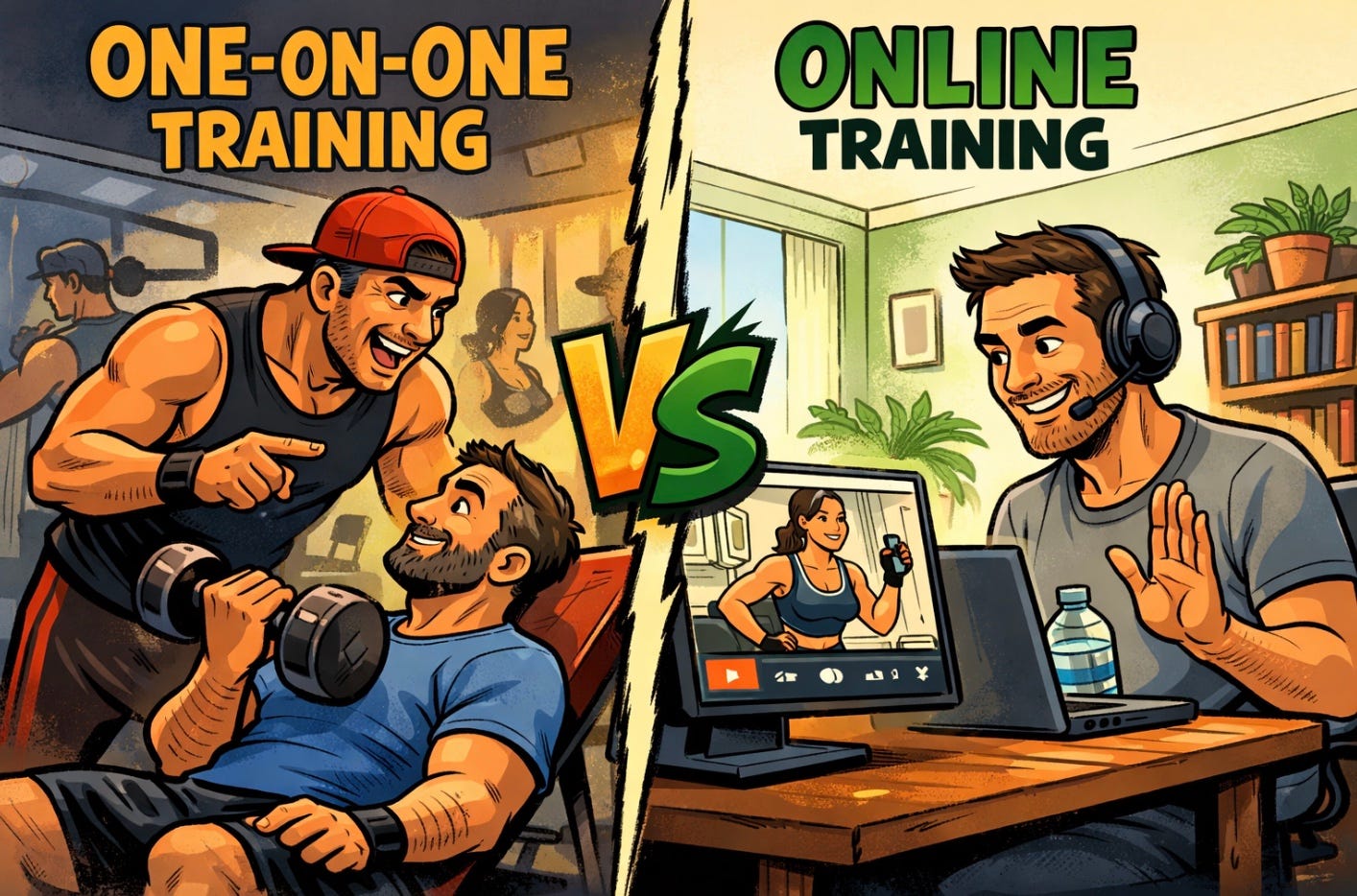
Mr. Skeptical squints at me. “So let me guess — now that you quit the gym, suddenly online training is superior.”
I smile. “I was waiting for that.”
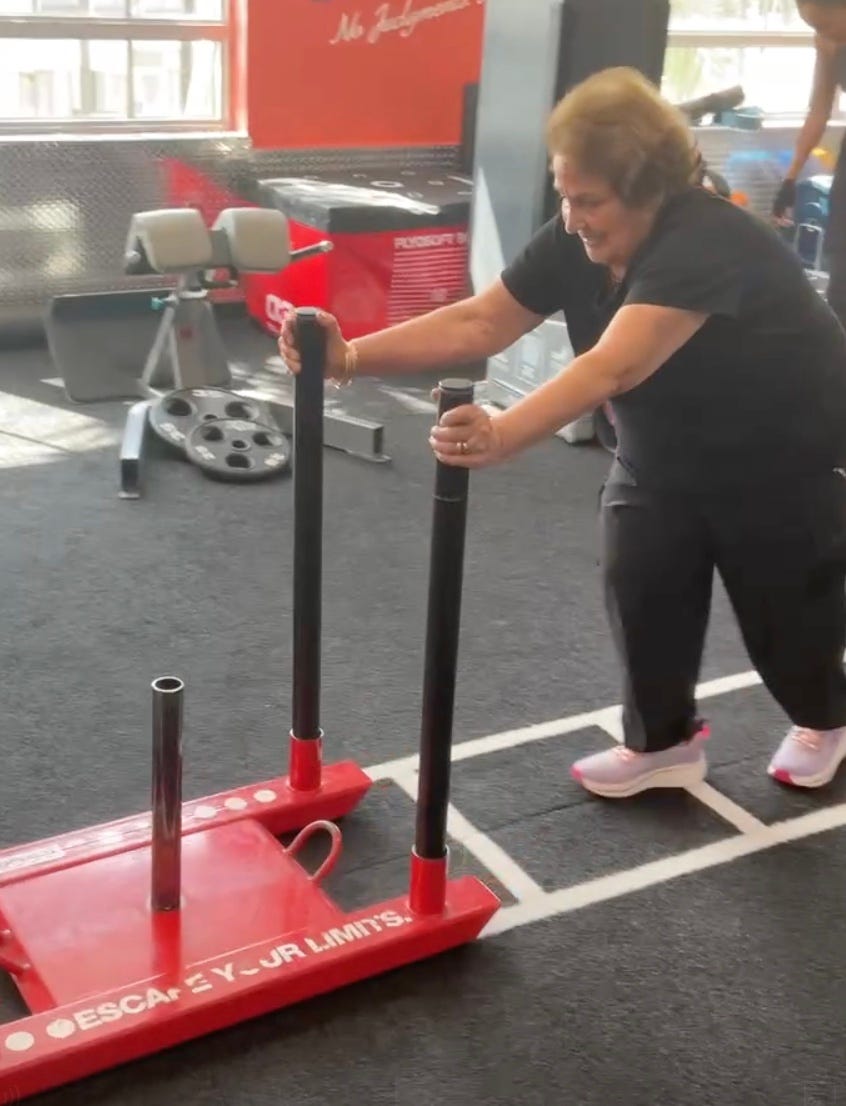
Subconscious Fat at 30,000 Feet
After five years working inside Crunch gym in South Beach, I’ve seen one-on-one training from every angle — as a trainer, as a business model, and through the lives of many of my clients.
One-on-one training can absolutely work.
It provides structure.
It creates accountability.
You show up because you already paid.
Mr. Skeptical interrupts. “So what’s the problem?”
“The problem,” I say, “is that it gives people the illusion of transformation.”
Traditional one-on-one training is like giving someone a fish. They’re fed — but only when you’re there. Online training, when done correctly, teaches someone how to fish.
And once you learn how to fish, you’re no longer dependent.
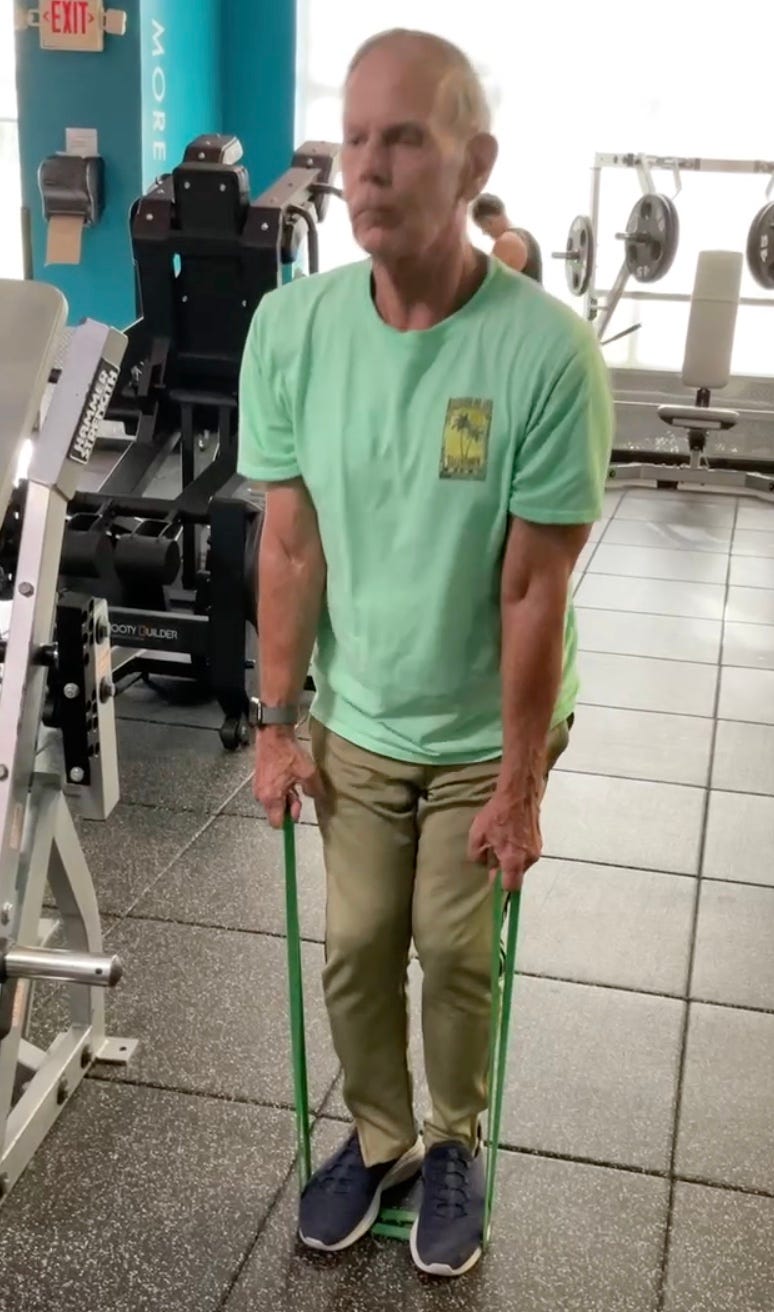
Subconscious Fat at 10,000 Feet
Here’s the uncomfortable truth most people don’t want to hear:
As we get older, 75–80% of what you look like is driven by what you eat, not how hard you train.
You can train someone three times a week with perfect programming and still watch them stall for years — because the real drivers of body composition happen outside the gym.
Mr. Skeptical scoffs. “So all those workouts didn’t matter?”
“They mattered,” I say. “They just didn’t matter enough.”
One-on-one training creates short-term compliance. You show up, you work, you leave. But no one is there when you’re ordering dinner, snacking late at night, traveling, stressed, or staring into the fridge at 9 p.m.
Mr. Skeptical smirks. “So what, you expect a trainer to follow you around all day?”
“Unless you’re Elon Musk,” I reply, “that’s not happening.”
And yet, those moments are where transformation actually lives.
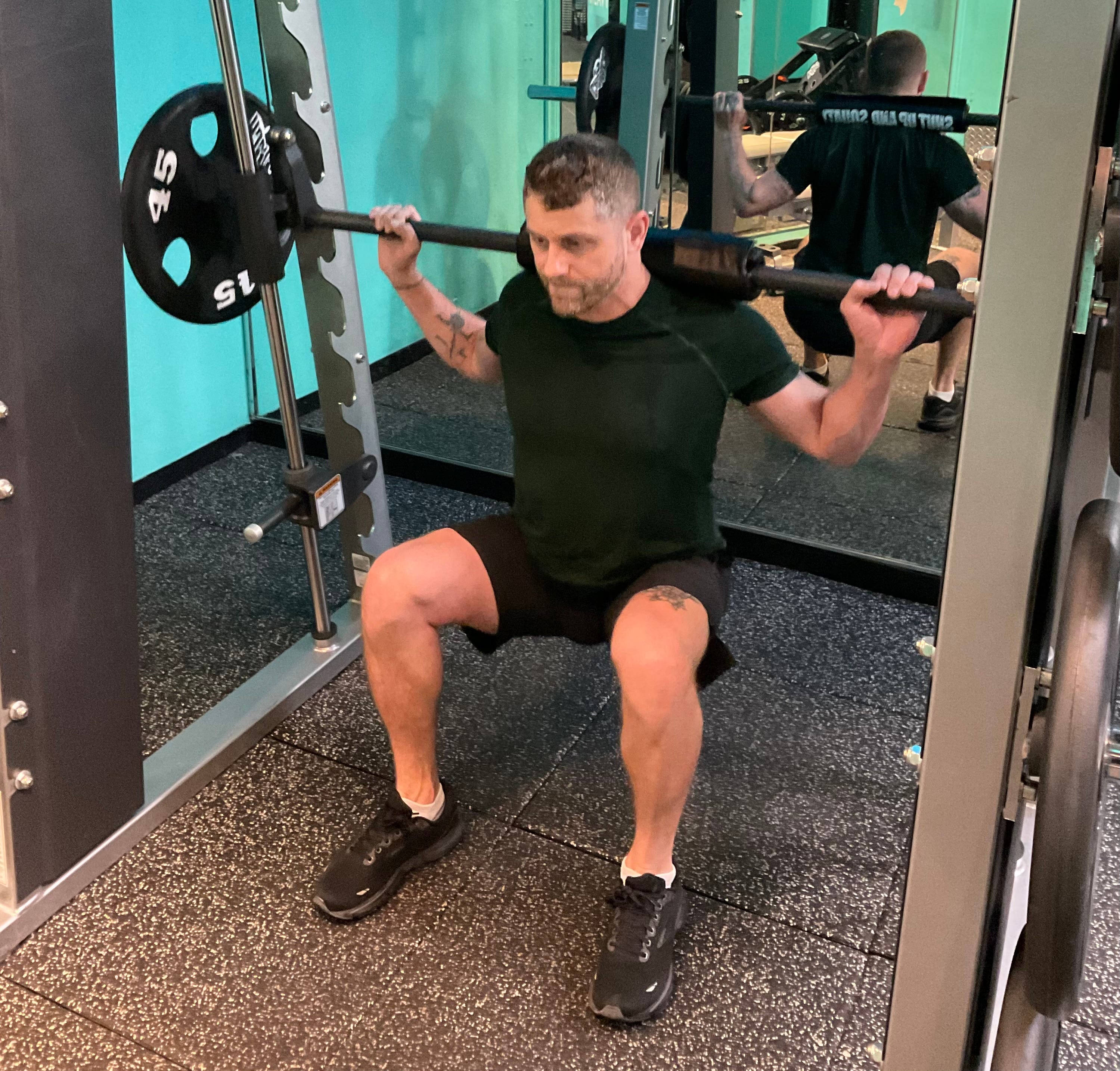
Subconscious Fat at Eye-Level
One-on-one training has limits no one likes to talk about.
It’s expensive.
It’s time-bound.
It’s location-dependent.
And it rarely addresses eating in real time.
You’re paying someone to watch you move for an hour — not to teach you how to think, eat, and self-correct for the other 23 hours of the day.
What most people miss is that online training no longer means “hands-off.”
With Zoom or FaceTime, I can watch someone train in real time — cue form, adjust tempo, change exercises, and coach effort just like I would on a gym floor. Whether a client is in New York, Miami, or traveling, the coaching doesn’t stop.
Mr. Skeptical raises an eyebrow. “So what’s the advantage of being in the same room?”
“That’s the point,” I say. “For most people, there isn’t one anymore.”
Online coaching flips the model.
Instead of paying for presence, you’re paying for education. Systems. Decision-making skills. Pattern recognition. Accountability that follows you outside the gym.
You’re not just told what to do — you learn why you’re doing it.
Mr. Skeptical folds his arms. “So you’re trying to work yourself out of a job.”
I nod. “That’s exactly the point.”
The goal isn’t to need a trainer forever.
The goal is to become someone who no longer needs one.
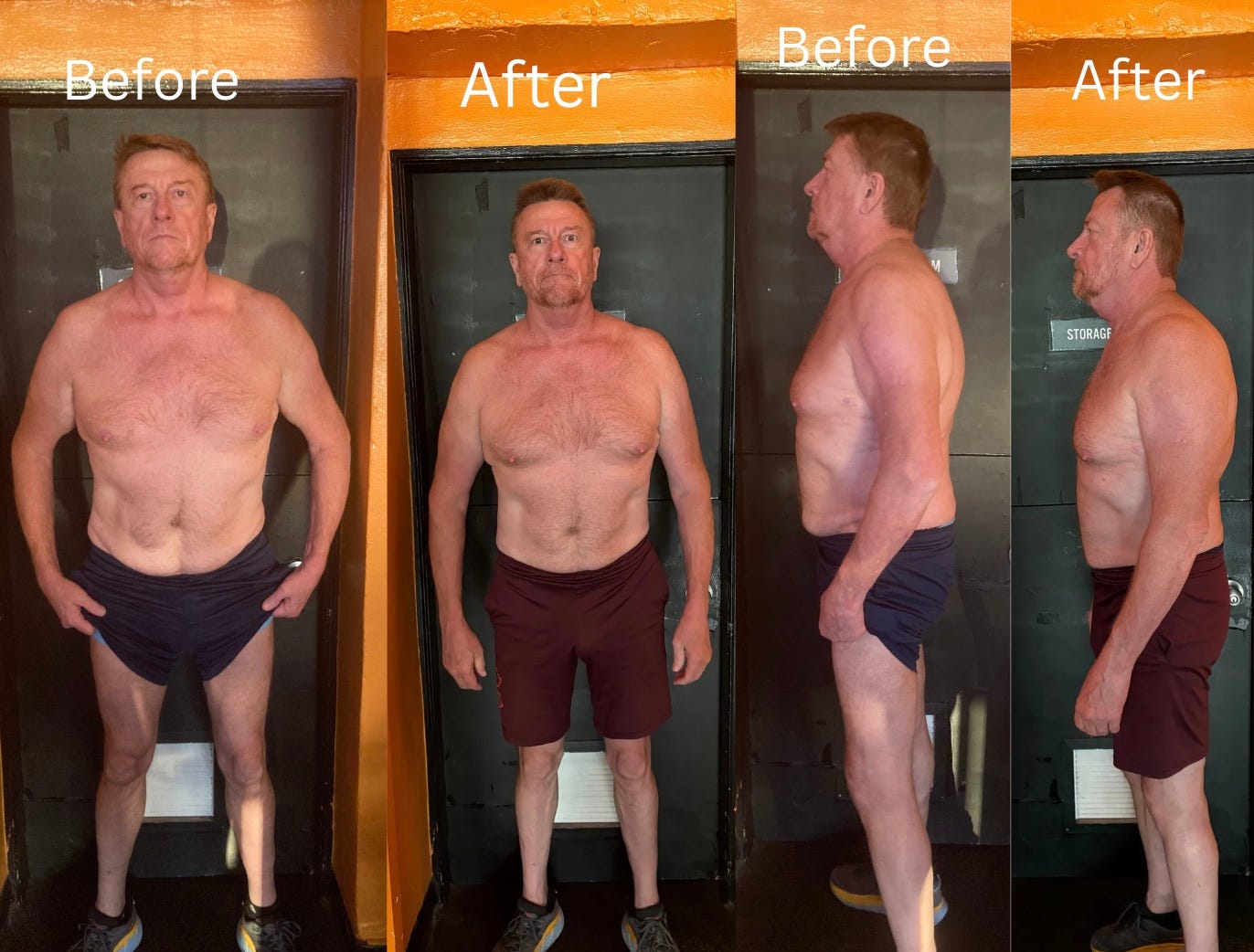
Practical Suggestions and Conclusions
There’s nothing wrong with one-on-one training. It can be helpful, especially early on.
But if you’re over 40 and still relying on someone else to tell you when to train, what to eat, and how to think about food, the system failed you.
Online coaching isn’t about convenience.
It’s about ownership.
One-on-one training rents discipline.
Online coaching builds it.
Teaching someone how to fish takes longer. It requires responsibility. But once they learn, they’re free.
Mr. Skeptical exhales. “So what you’re really saying…”
I finish his sentence.
“Real change doesn’t happen in the gym.
It happens in the choices you make when no one is watching.”
He nods slowly.
“Annoying,” he says. “But fair.”
Be aware.
A quick personal note before I close this out.

Last month, I officially stepped away from Crunch after five years.

I walked into that gym not knowing how long I’d be there, and I walked out having worked with people for years. That kind of consistency changes you as a coach and as a person.

I’m genuinely grateful for the opportunity I was given back then — especially to Tanya Savage, who took a chance on me when I was first brought on and at a low point in my life—special thanks to my last fitness manager, Lyndsey Crofoot, who was the best fitness manager ever.

Crunch was a chapter where I learned how real progress actually happens: not through intensity or novelty, but through showing up, week after week, when motivation fades, and life gets busy.

That lesson still shapes everything I do now — just in a different format.PS Links on LinkedIn, Facebook, and Instagram. ChatGPT was used to research and enhance this post.