

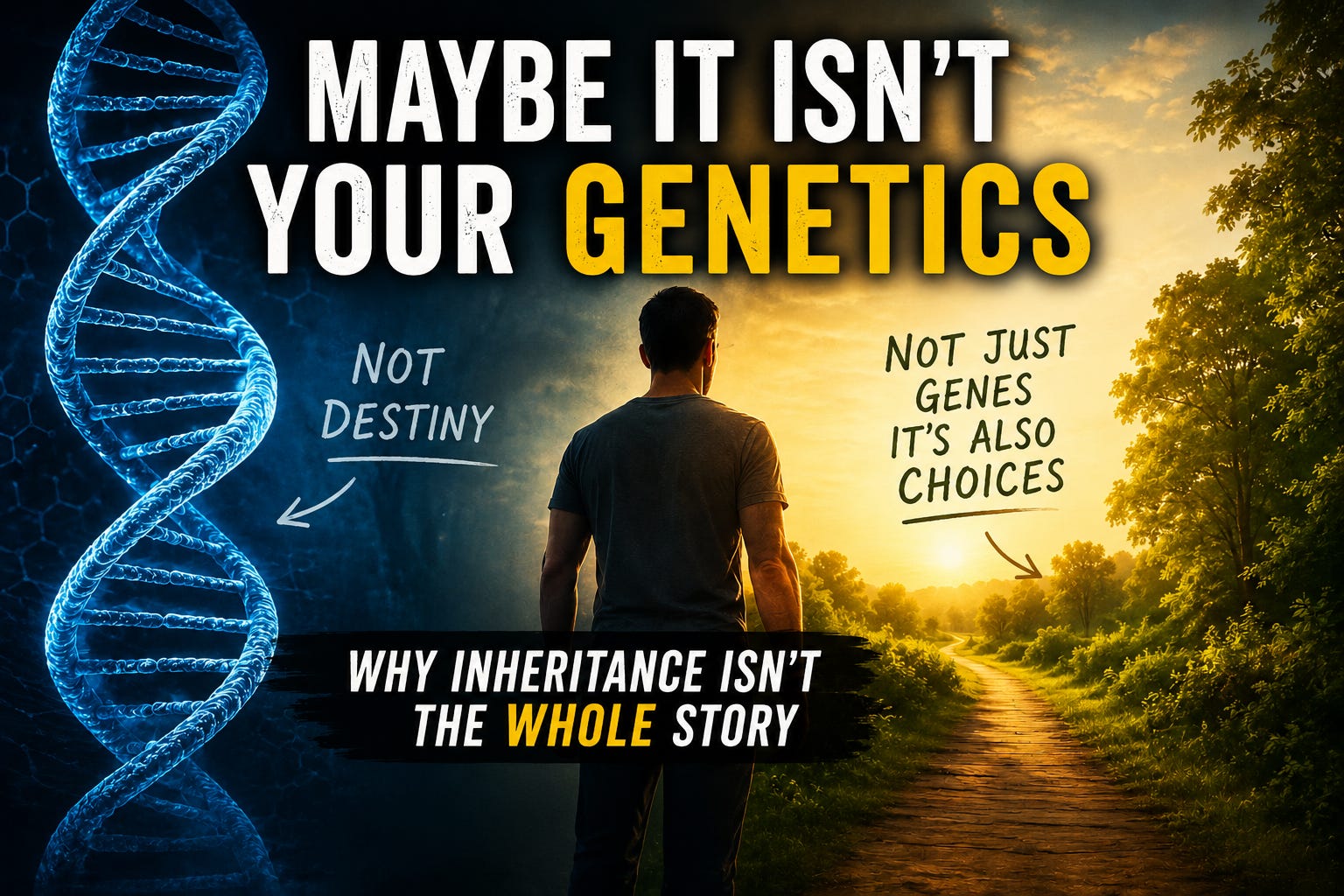
Mr. Skeptical squints at the title suspiciously.
“Okay, let me save everyone some time. You’re going to tell us that genetics are fake, doctors are wrong, and everything can be fixed with a ribeye.”
That’s not what I’m saying.
What I am saying is that inheritance may be a lot more complicated—and a lot more empowering—than most people realize.
🎙️ Tomorrow, I’m launching the very first episode of my new podcast:
The Better Wealth & Health Podcast
My first guest is Brad Glassman, a financial educator, former college professor, and licensed financial professional who helps individuals, families, and business owners make smarter decisions about retirement, taxes, asset protection, and long-term wealth planning.
In this conversation, we discuss financial education, decision-making, wealth building, and some of the biggest mistakes people make when planning for their future.
📅 Episode #1 drops tomorrow at 11:57 a.m.
I hope you’ll join me as we kick off this new journey.

Learn more about Brad at BradGFinancial.com.
Subconscious Fat at 30,000 Feet
One of the most powerful words in modern health is genetics.
It’s also one of the most dangerous.
Why?
Because genetics often sounds like destiny.
Your parents had diabetes.
Your parents had heart disease.
Your parents were overweight.
Therefore, you assume you’ll be the same.
Case closed.
But what if genetics isn’t the final verdict we once thought it was?
What if inheritance matters, but not nearly as much as we assume?
Mr. Skeptical folds his arms.
“So you’re saying genes don’t matter?”
No.
Genes absolutely matter.
But they may not matter in the way we’ve been taught.
The real question isn’t whether genes exist.
The real question is how much control they actually have.
Subconscious Fat at 10,000 Feet
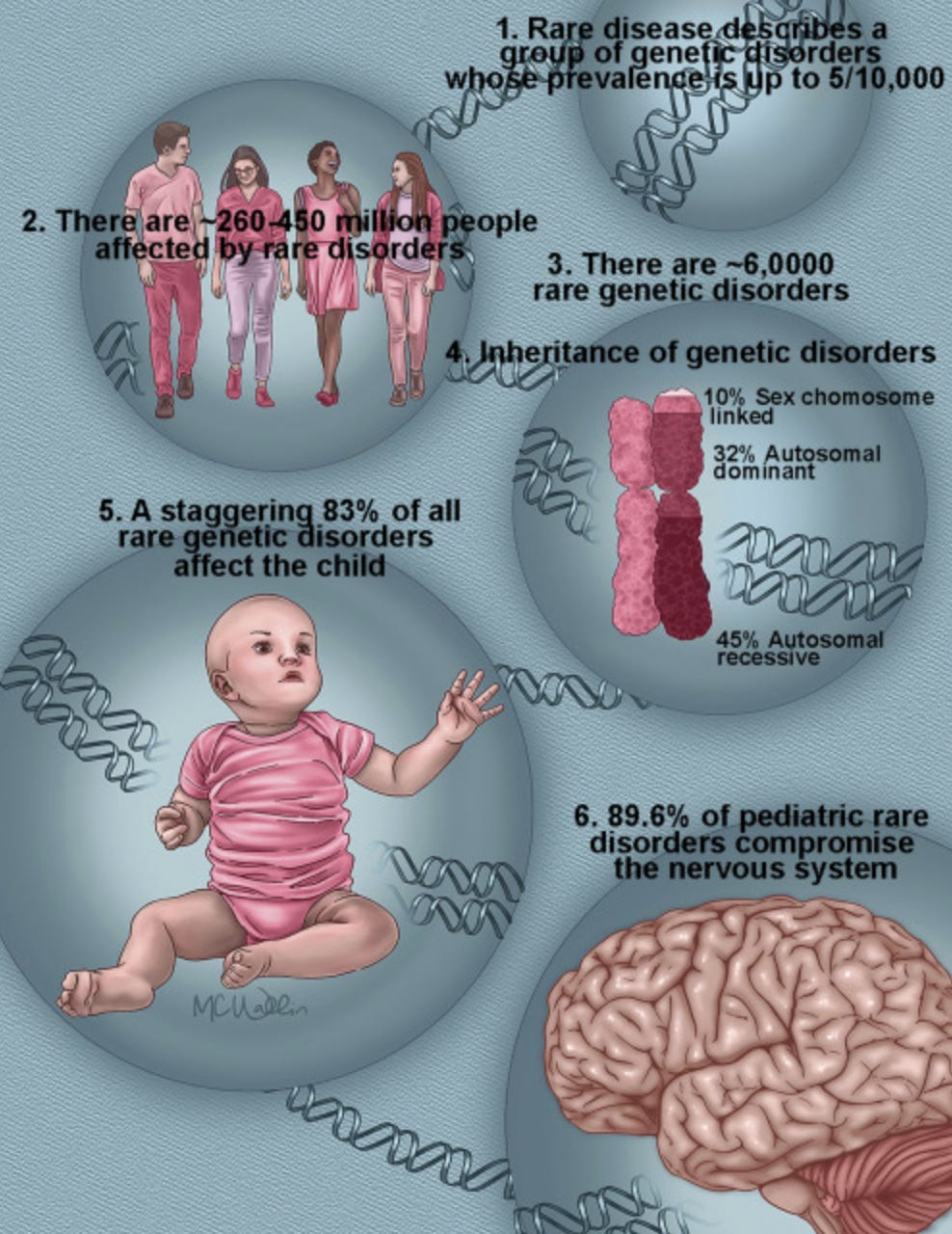
For years, scientists assumed many conditions were almost entirely inherited.
Then reality became more complicated.
One example discussed in the book Beyond Inheritance by Roxanne Khamsi involves Long QT Syndrome, a heart rhythm disorder that was long viewed primarily as an inherited condition.
But researchers found cases where individuals developed the disorder despite not inheriting the mutation from either parent.
The genetic change occurred during early development.
In other words, the story wasn’t simply:
Parent passes gene to child.
Case closed.
Instead, biology turned out to be more dynamic than expected.
Mr. Skeptical scratches his head.
“Wait. So even genetic conditions aren’t always inherited?”
Exactly.
Which raises an uncomfortable question.
If inheritance isn’t always as straightforward as we thought, what else might we be oversimplifying?
Subconscious Fat at Eye Level
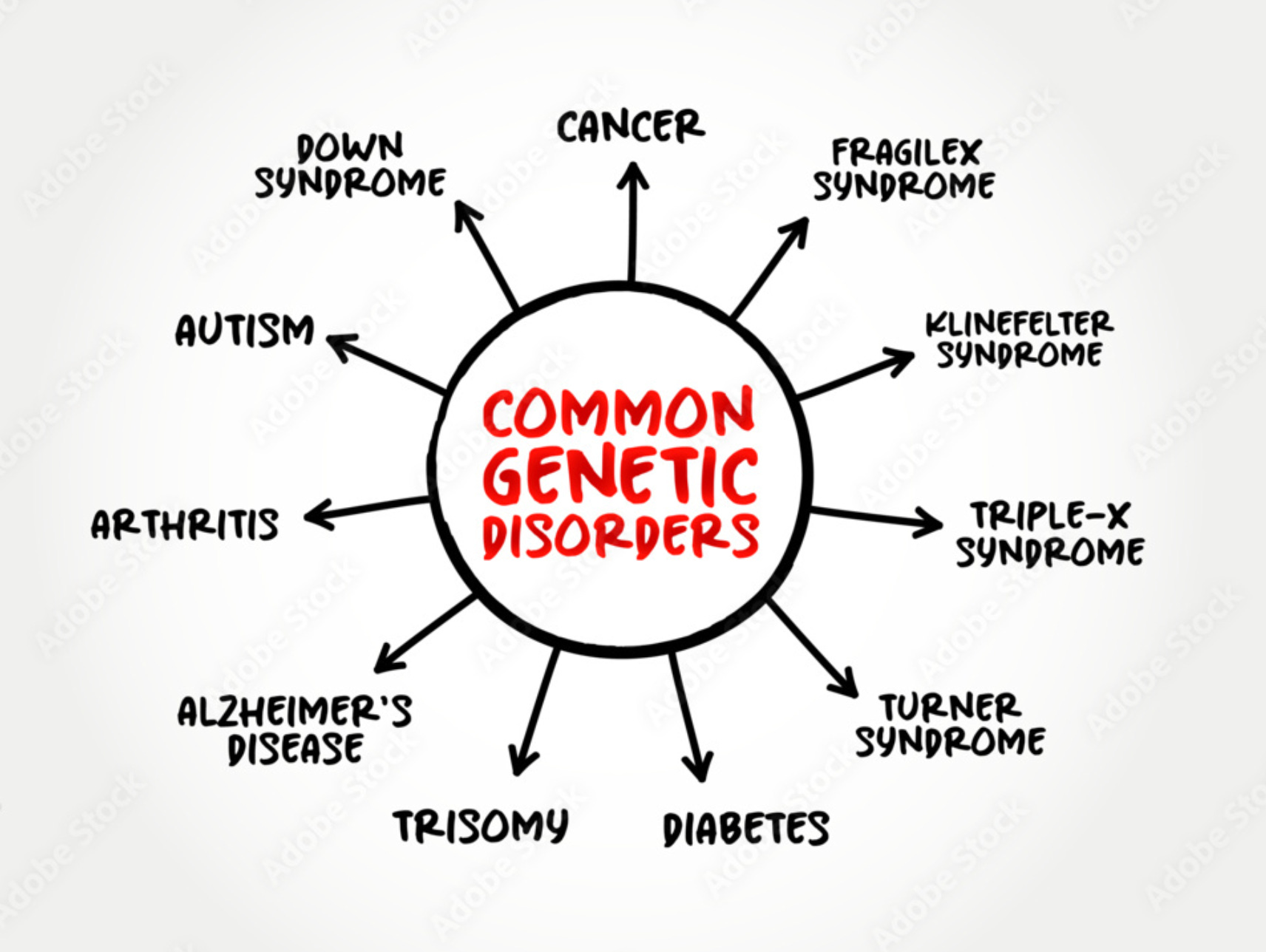
This matters because many people use genetics as an explanation for almost everything.
“My family has high blood pressure.”
“My family has obesity.”
“My family has diabetes.”
“My family has heart disease.”
Sometimes that’s true.
But families don’t merely share genes.
They also share habits.
They share meals.
They share beliefs.
They share traditions.
They share lifestyles.
A child raised in a family that eats a particular way often continues eating that way as an adult.
A family that normalizes processed food tends to produce more people who eat processed food.
A family that rarely exercises often produces more people who rarely exercise.
Mr. Skeptical leans forward.
“So maybe what gets inherited isn’t just DNA?”
Exactly.
Sometimes what gets inherited is behavior.
And behavior can look a lot like genetics.
Consider my own family.
My mother and grandmother both had their gallbladders removed.
I almost had mine removed too.
But instead, I changed my behavior.
I used fasting.
I adjusted my eating habits.
And eventually, I avoided surgery altogether.
Does that prove genetics played no role?
Of course not.
But it does suggest genetics wasn’t the entire story.
The same thing applies to blood pressure, diabetes, obesity, and countless other conditions.
The environment matters.
The choices matter.
The habits matter.
And increasingly, research suggests that gene expression—the way genes are activated or suppressed—may be influenced by those factors.
Practical Suggestions and Conclusions
The problem with believing everything is genetic is that it removes responsibility.
And while that may feel comforting, it’s often disempowering.
Because if your future is already written into your DNA, why bother changing anything?
Why improve your diet?
Why exercise?
Why sleep better?
Why lose weight?
Why manage stress?
Mr. Skeptical shrugs.
“Because maybe it won’t matter anyway.”
Exactly.
And that’s the trap.
The opposite view isn’t that genetics don’t matter.
The opposite view is that genetics are only part of the equation.
Your genes may load the gun.
Your environment often pulls the trigger.
That idea is far more empowering.
Because it means your choices still matter.
A lot.
Maybe more than we’ve been led to believe.
The next time someone says:
“It’s genetic.”
Pause for a moment.
Maybe they’re right.
But maybe they’re only telling part of the story.
And sometimes the part of the story we control is the part that matters most.
Be aware.
Other links related to this post:
PS Links on LinkedIn, Facebook, Instagram, X, and Notes.
Full disclosure: ChatGPT was used to research and enhance this post.
Watch your email tomorrow, The Better Wealth & Health Podcast will drop at 11:57 AM Eastern.