

Mr. Skeptical sees the title of this post and rolls his eyes.
He’s so predictable, always the Negative Nancy.

José “Pepe” Dávila is the Vice President of Operations at Dabrico, a company specializing in automated inspection systems for pharmaceutical manufacturing.
Dabrico has spent more than four decades building inspection machines used around the world, and Pepe helps lead the company as it continues evolving into AI-based inspection technology.
Pepe brings a unique mix of operations, technology, leadership, and family-business experience. In this conversation, we discuss artificial intelligence, innovation, leadership, health, and lifelong learning.
🎙️Watch out for the podcast interview coming out tomorrow at 11:57 AM.
Subconscious Fat at 30,000 feet
My recent LinkedIn poll asked a simple question:
Do you believe fiber is truly essential for good health?
So far, the answer has been almost unanimous.
Most people believe fiber is absolutely necessary.
And I get it.
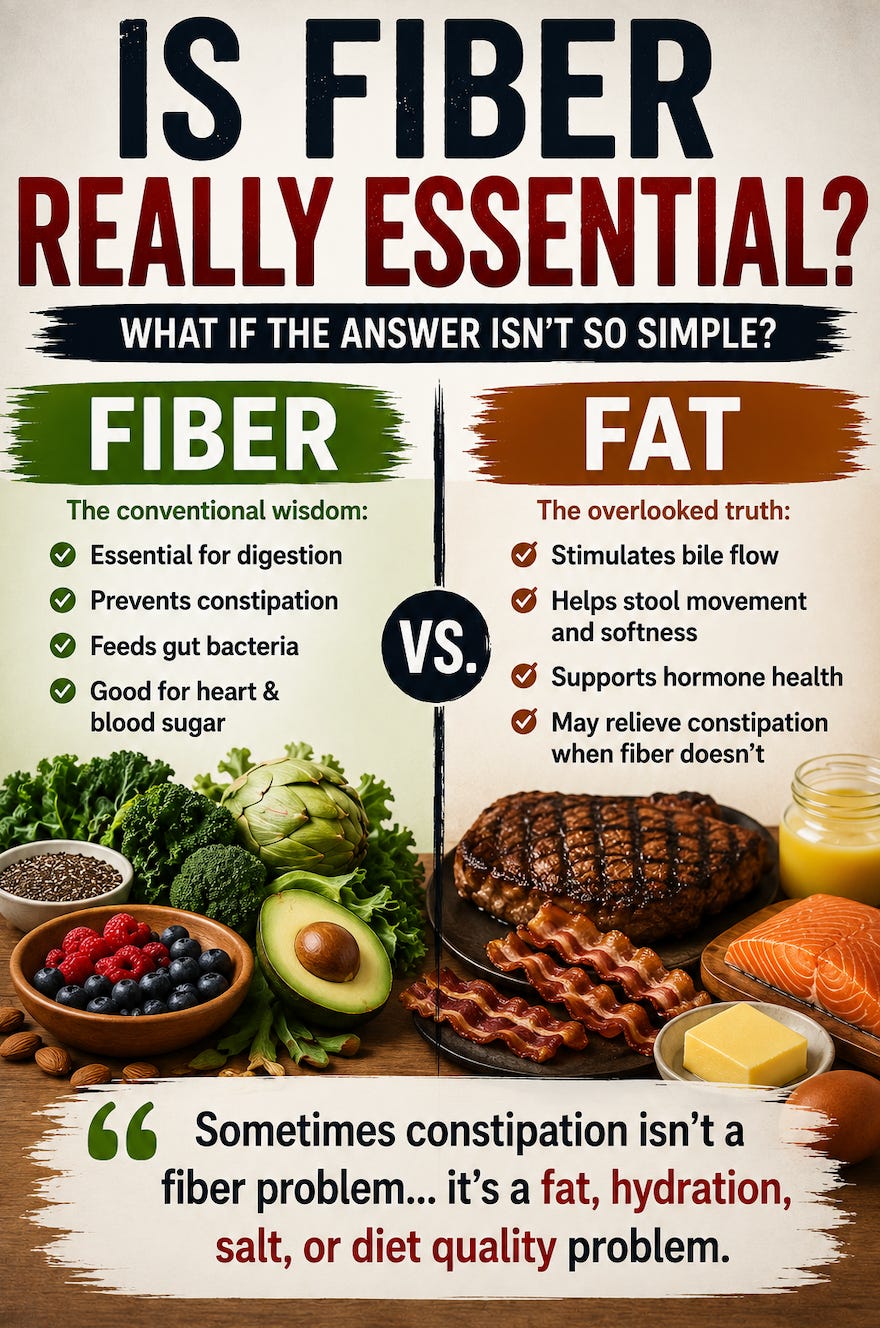
That is what we have been told for decades. Fiber helps digestion. Fiber helps constipation. Fiber feeds the gut bacteria. Fiber is good for the heart. Fiber is good for blood sugar. Fiber is basically treated like the holy roughage of nutrition.
But is that completely true?
Or have we turned fiber into another nutrition religion?
Mr. Skeptical leans forward and says, “Wait a minute. Are you really going after fiber now? What’s next, water?”
No. I am not saying fiber is bad for everyone.
I am saying we need to ask a better question:
Is fiber essential, or is fiber useful in certain situations for certain people eating certain diets?
That is a very different conversation.
Subconscious Fat at 10,000 feet
From a carnivore or low-carb perspective, the fiber conversation changes.
If someone is eating a high-carb, processed-food diet, full of bread, pasta, cereal, snacks, and low-quality fats, then yes, fiber may help slow digestion, improve fullness, and make that diet less damaging.
But what if the diet changes completely?
What if someone removes processed carbohydrates, eats more animal protein, adds healthy fats, improves hydration, and increases salt?
Do they still need fiber in the same way?
Many carnivore-leaning doctors and advocates, including doctors like Dr. Anthony Chaffee, argue that people often confuse “needing fiber” with needing better digestion, more fat, more fluids, more salt, and fewer irritating foods.
Mr. Skeptical raises his hand: “But doesn’t fiber prevent constipation?”
Sometimes.
But not always.
That is where the conversation gets interesting.
There are people who add more fiber and feel better. But there are also people who add more fiber and get more bloating, more gas, more pressure, and worse constipation.
If the digestive system is already backed up, adding more bulk is not always the magic answer.
Sometimes it is like adding more cars to a traffic jam.
Subconscious Fat at Eye-Level
This is where the fat conversation matters.
Fiber and fat help digestion in very different ways.
Fiber works mostly by adding bulk. It brings more material into the digestive tract, holds water, and can increase stool volume. For some people, that helps move things along. But if someone is already bloated, backed up, or eating foods that irritate their gut, adding more bulk can sometimes make the problem worse.
Fat works differently, especially on a low-carb or carnivore-style diet. Fat stimulates bile release from the gallbladder. Bile helps break down fat, but it can also help stool stay softer and move more easily through the digestive tract. In plain English, fiber adds bulk, while fat can help with lubrication and flow.
That does not mean everyone should just eat sticks of butter and call it a digestive plan. But it does mean constipation is not always a “not enough fiber” problem. Sometimes the issue is too much lean protein without enough fat to balance it.
On a very low-fat diet, stool can become dry, hard, and difficult to pass. Fat stimulates bile. Bile helps with fat digestion and can also influence stool movement and looseness.
This is one reason some people on carnivore or low-carb diets do better when they stop eating only lean meat and start adding enough fat.
Ribeye instead of only chicken breast.
Egg yolks instead of only egg whites.
Butter, tallow, ghee, or fatty cuts of meat instead of dry, low-fat, high-protein meals.
Mr. Skeptical squints and says, “So you’re saying butter fixes constipation?”
No. Do not turn this into a butter commercial.
I am saying constipation is not always a fiber deficiency.
It can be a hydration issue.
It can be a salt issue.
It can be a low-fat issue.
It can be a stress issue.
It can be a medication issue.
It can be a gut motility issue.
It can be a sign that the diet is too low in total food volume or too low in electrolytes.
And yes, sometimes fiber helps.
But sometimes fiber makes things worse.
That is the part most people never hear.
Practical Suggestions and Conclusions
Here is the practical point:
Fiber is not evil.
But fiber is also not magic.
If you eat fruit, vegetables, beans, or some grains and you digest them well, fine. I am not here to kick the broccoli out of your house.
But if you are a man over 40 trying to lose fat, reduce inflammation, improve blood pressure, stabilize blood sugar, and simplify your diet, then you may not need to “fiber max” as if it were a competitive sport.
The goal is not to hit an arbitrary fiber number.
The goal is to have good digestion, good energy, good body composition, and good health markers.
Mr. Skeptical nods and says, “So what should someone actually do?”
Start with the basics.
Eat enough protein.
Do not fear healthy animal fat.
Stay hydrated.
Get enough salt, especially if eating low carb.
Pay attention to your digestion.
And do not assume that constipation automatically means “eat more fiber.”
If more fiber helps you, great.
If more fiber makes you bloated and miserable, maybe your body is telling you something.
The larger lesson is this:
Nutrition advice often gets turned into commandments.
Eat more fiber.
Eat less fat.
Avoid red meat.
Count calories.
Do more cardio.
But the human body is not a slogan machine.
It is a biological system.
And sometimes the simplest answer is not more roughage.
Sometimes the answer is more fat, more salt, more water, fewer processed foods, and a diet that finally matches the body you are trying to build.
Fiber may be useful.
But essential?
That question is not as settled as most people think.
Be aware.
PS Links on LinkedIn, Facebook, Instagram, X, and Notes.
Full disclosure: ChatGPT was used to research and enhance this post.
🎙️The Better Wealth & Health Podcast with Pepe Davila is coming out tomorrow at 11:57 AM Eastern.