

Subconscious Fat at 30,000 Feet
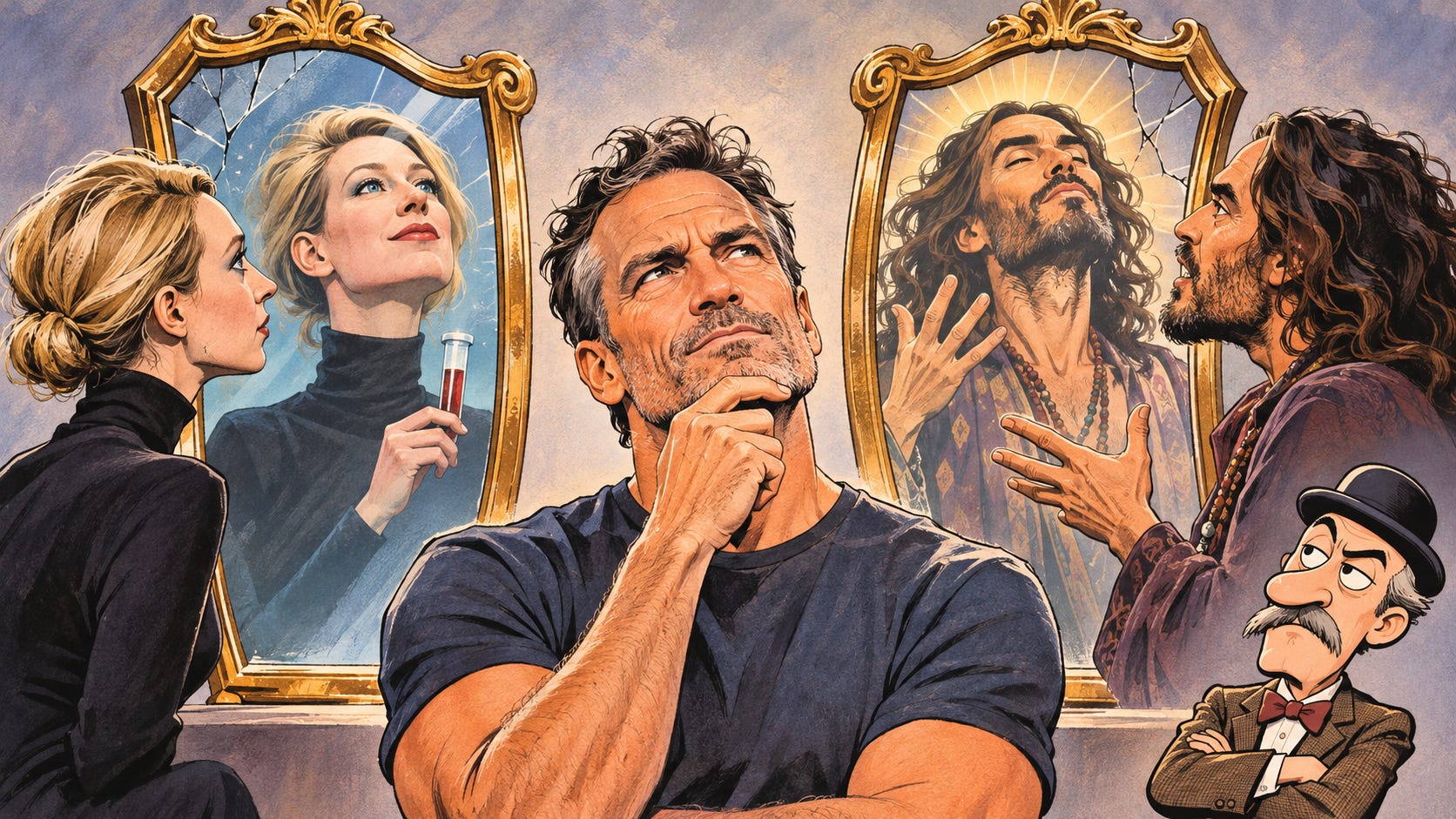
Last Saturday, I watched You Can See Everything, the new documentary about Elizabeth Holmes, the disgraced founder of Theranos, whose revolutionary blood-testing technology turned out to be more fiction than science.
What fascinated me wasn’t simply that Holmes had been convicted of defrauding investors. It was her apparent inability to acknowledge that she’d done anything wrong.
Facing federal prison, Holmes seemed remarkably convinced of her own innocence.
And in one respect, I can relate. After going through my own federal trial, I also believed I was innocent. Looking back, I can see how my thinking and rationalizations shaped how I viewed my actions.
That doesn’t mean our circumstances were the same. But it does make me wonder how easily we can convince ourselves that our version of events is the truth.
Then there’s Russell Brand.
The British comedian, who publicly embraced Christianity in 2024, was just sentenced to 10½ years in prison after being convicted of rape and sexual assault involving four women.
Two very different people. Two very different stories.
But both raise a fascinating question:
Can we become so convincing at telling ourselves a story that we eventually believe it, regardless of the evidence?
Mr. Skeptical leans forward, eyebrows raised.
“Wait a minute, Hermann. Are you suggesting people can actually deceive themselves?”
Absolutely. And I have a rather unusual personal experience that might help explain why.

This Friday on The Better Wealth & Health Podcast
My guest is Chehad Nouraï, founder and president of My Private Jet Guy, a New York-based private aviation company. With 22 years of experience as an Air Force pilot and extensive private aviation experience, Chehad brings a fascinating perspective on how private jet travel works, who benefits, and why it isn’t always just about luxury.
We explore the business of private aviation and how flying privately can sometimes be a practical investment in saving time and increasing productivity. Linkedin. Ph# 347-684-9013
🎙️ Watch for the full episode dropping tomorrow, Friday at 11:57 a.m. ET
Subconscious Fat at 10,000 Feet
Psychologists call it cognitive dissonance.
When our actions conflict with our beliefs or self-image, we experience psychological discomfort. Rather than changing our behavior, we sometimes change the story we tell ourselves.
We rationalize. We justify. We reinterpret reality.
Consider Holmes. Did she deliberately deceive everyone while knowing the truth? Or did she become so emotionally invested in her vision that she began believing her own extraordinary claims?
We can’t know exactly what was happening inside her mind.
Then there’s Brand, who became a highly visible Christian after allegations of sexual misconduct had already surfaced.
Was his conversion sincere? Was he seeking forgiveness? Was he preparing psychologically for the possibility of prison?
Perhaps several things were happening simultaneously. Only Brand knows his motivations.
And let’s be clear: Religious faith can provide genuine meaning and hope. I respect that.
But human behavior is complicated. Sometimes our conscious explanations don’t tell the whole story.
Mr. Skeptical scratches his chin.
“So you’re saying someone might believe they’re acting for noble reasons when there’s actually something else motivating them?”
Precisely.
And speaking of religion, let me tell you what happened when I was in federal prison.
Subconscious Fat at Eye-Level
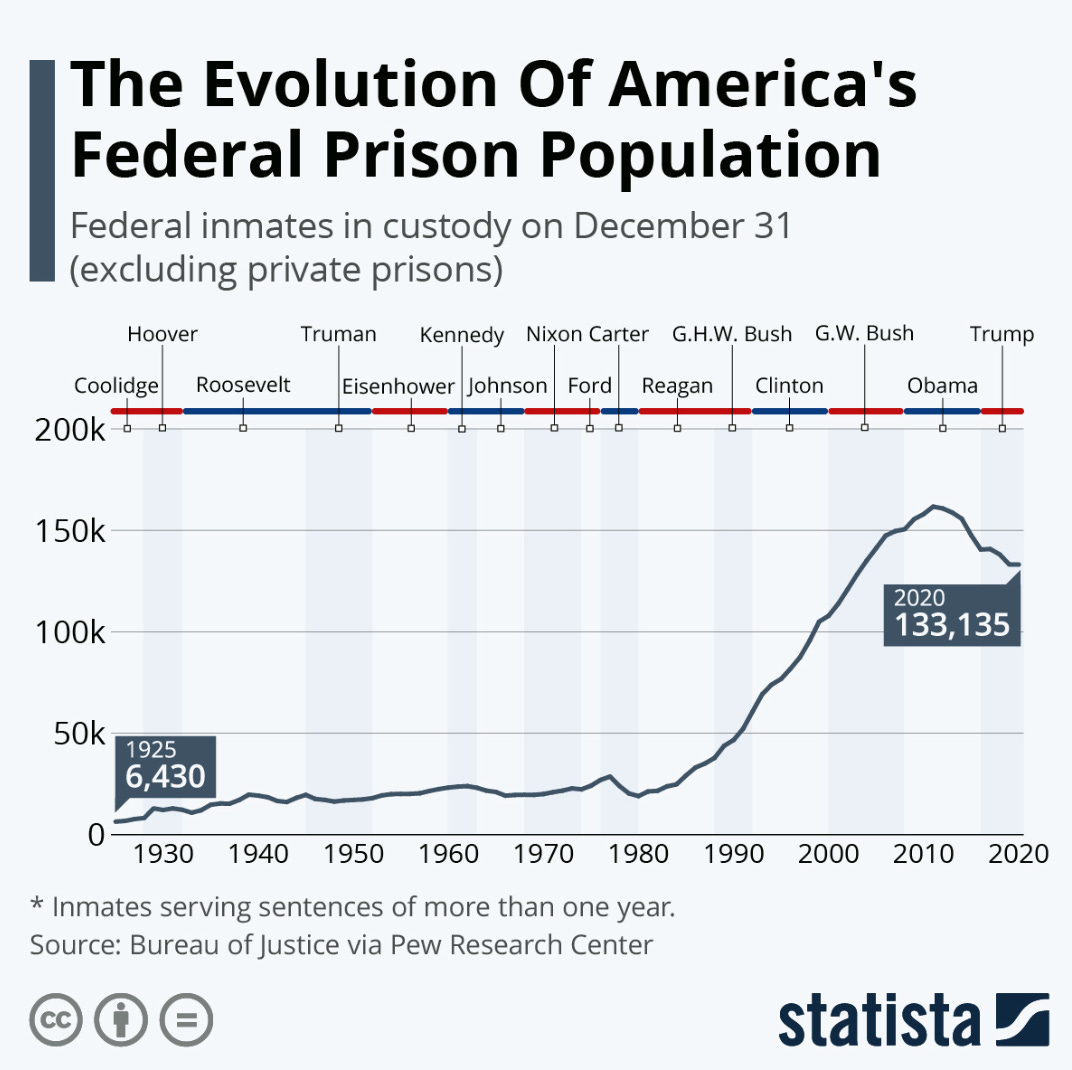
During my time in federal prison, I discovered something interesting.
Religion came with benefits.
When the entire prison camp was locked down, inmates participating in approved religious activities could sometimes leave their housing areas to attend services.
Suddenly, religion became attractive.
I started out participating in Christian services.
Later, I became involved in Native American religious ceremonies . We gathered around fires, participated in sweats, and were even allowed to smoke from a pipe and experience something completely different from the usual prison routine.
Then a Jewish friend told me about another opportunity.
During certain Jewish holidays, participants could receive special meals, often better than the regular prison food, and watch a newer movie.
Well, wouldn’t you know it? I suddenly developed an interest in Judaism!
Mr. Skeptical nearly spits out his coffee.
“Hold on! You changed religions THREE times?”
Well, who was I to argue with a better meal and a movie?.
"You were Christian, Native American, AND Jewish?"
And I’ll freely admit that the practical benefits influenced my participation.
I witnessed how powerful incentives could be in shaping our behavior.
And here’s the interesting part.
When we repeatedly behave a certain way, we sometimes begin constructing explanations that make those behaviors fit our preferred image of ourselves.
Mr. Skeptical suddenly stops smiling and leans forward.
“Hold on, Hermann. You’ve been talking about Elizabeth Holmes and Russell Brand deceiving themselves. But what about you? Do you believe you were innocent of the crimes that sent you to prison?”
Fair question. And my answer is no.
I made some foolish decisions, and I should have known better.
At the time, I was going through a divorce, facing financial pressures, and trying to make a lot of money. Looking back, I allowed greed and poor judgment to influence decisions I never should have made.
I never set out with the intention of defrauding anyone. But regardless of my intentions, I made those decisions, and I take responsibility for them.
Mr. Skeptical nods slowly.
“So you’re saying there’s a difference between explaining why you did something and making excuses for it?”
Exactly.
Understanding why we made a bad decision doesn’t excuse the decision itself.
And perhaps that’s the most important lesson I learned from my experience.

Practical Suggestions and Conclusions
Now, what does any of this have to do with health, fitness, or the extra 30 pounds around your waist?
More than you might think.
How often have you heard someone say:
“I’m eating pretty healthy.”
“I just don’t have time to exercise.”
“My metabolism slowed down after 40.”
Or my personal favorite:
“I barely eat anything, but I still can’t lose weight.”
Sometimes these statements are accurate. Other times, they’re explanations we’ve repeated so frequently that we’ve stopped questioning them.
Our minds are remarkably good at protecting our self-image, even when doing so prevents us from making meaningful changes.
So here’s my suggestion.
The next time you catch yourself explaining why you can’t change something in your life, ask yourself three questions:
Is this objectively true, or simply something I’ve convinced myself to believe?
What evidence would make me reconsider my position?
Am I protecting my health, or protecting my ego?
Mr. Skeptical folds his arms and gives me a suspicious look.
“And how do I know you’re not deceiving yourself right now, Hermann?”
Fair question.
Maybe I am.
After all, I’m the guy who managed to find three religions in federal prison!
The most dangerous lies aren’t necessarily the ones we tell other people. They’re the ones we tell ourselves so convincingly that we stop recognizing them as lies.
Be aware.
PS Links on LinkedIn, Facebook, Instagram, X, and Notes.
Full disclosure: ChatGPT was used to research and enhance this post.
🎙️ The Better Wealth & Health Podcast with guest Chehad Nourai drops tomorrow at 11:57 AM Eastern.
"Understanding why we made a bad decision doesn't excuse the decision itself" — that distinction is the hinge of the whole piece, and it's rarer than it should be. Most accounts of prison pick one: the explanation that quietly becomes an excuse, or the confession that refuses to ask why. We publish women writing from inside a federal prison (Jailbirds in Flight), and the pages that hold up are the ones that do both at once: here is how I got here, and no, that doesn't make it fine. The three-religions story is funny, but it's also honest in a way the Holmes documentary never manages. You caught yourself in the act, which is the only place self-deception can actually be seen.