


Mr. Skeptical is glaring at me with enough heat to roast a turkey. His jaw is clenched, his nostrils flare, and he points at my title like it just insulted his mother. “Are you seriously the Thanksgiving Grinch?”
I decide to ignore his comment, maybe…and I hate to admit it…he may have a point.
Subconscious Fat at 30,000 Feet
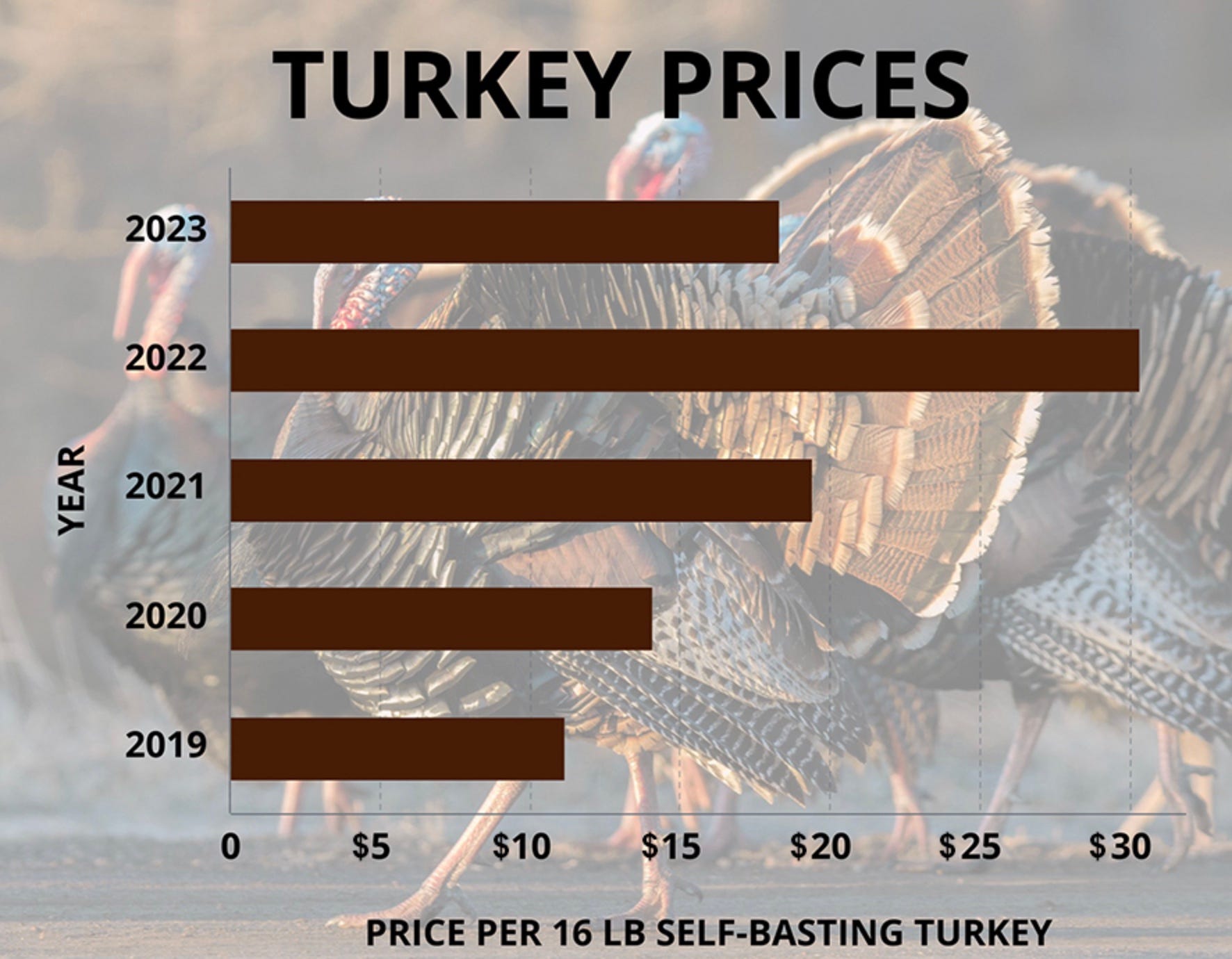
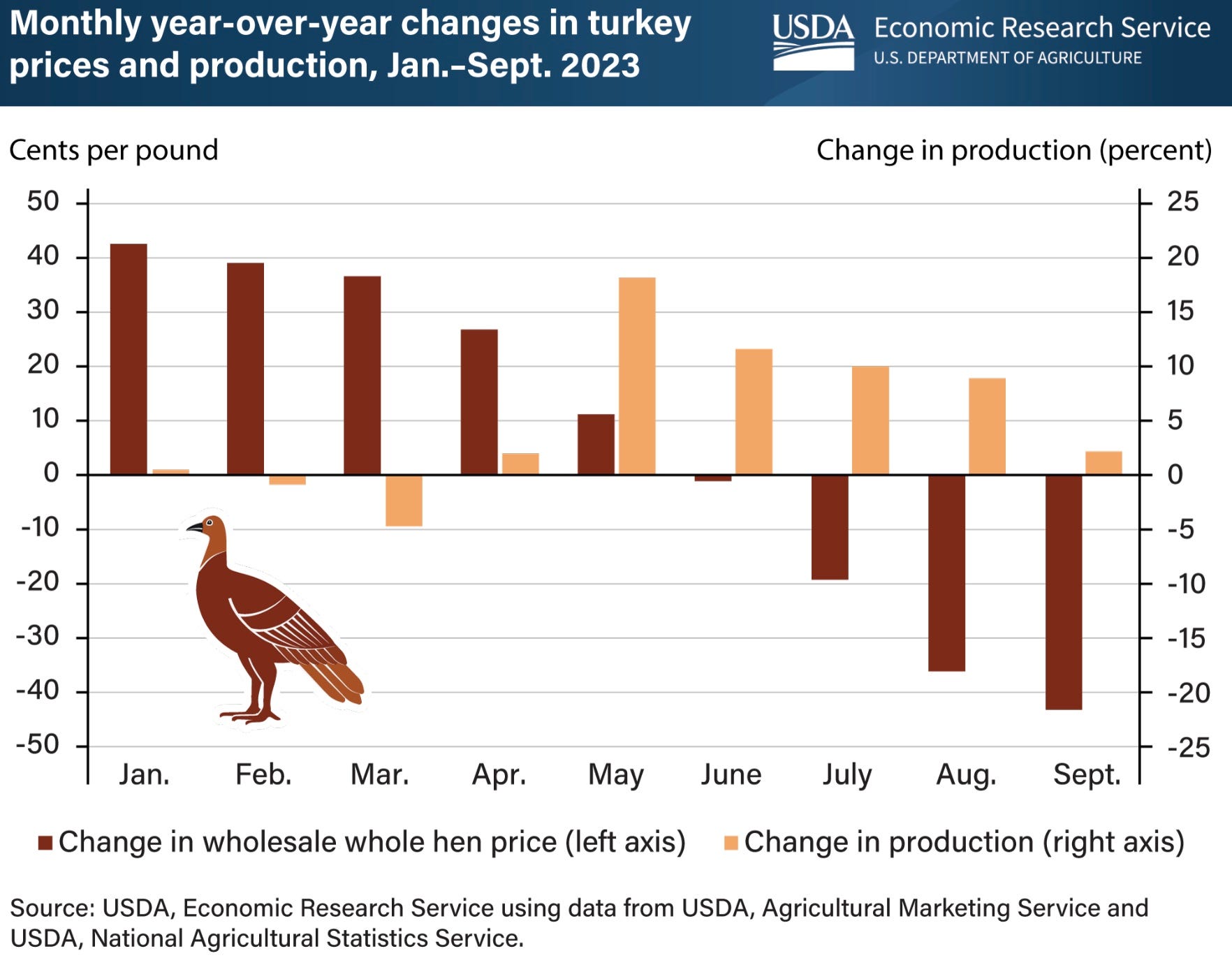
Good news travels fast during the Thanksgiving season: turkey prices are down this year. But like most “good news” in modern nutrition, there’s a catch.
Cheaper turkeys aren’t just a sign of efficient farming — they’re a sign that the birds themselves are being fed cheaper fuel. More corn, more soy, less of the insects, worms, and greens that wild turkeys evolved to eat.
We’re celebrating a discount on a bird that’s been eating what amounts to junk food.
Mr. Skeptical adds, “So, I should feel guilty that my turkey got a Costco deal on soybeans?”
“Not guilty — just aware that cheap calories don’t come free. Not for the turkey. Not for your metabolism. There is no free biological lunch.”
Subconscious Fat at 10,000 Feet
Here’s what’s really going on.
Earlier this year, the U.S. had a surplus of corn and soybeans. Export demand to Asia slowed (China, in particular, cut back on imports), leaving American producers with mountains of grain. The result? Feed costs for poultry farms dropped. Turkeys were suddenly cheap to raise — and the Thanksgiving price tag followed.
Sounds harmless, right? Except that feeding turkeys mostly soy and corn does to them what it would do to you: distorts the omega-6 to omega-3 fatty acid ratio, raises inflammation markers, and reduces the nutrient density of their meat.
Pasture-raised turkeys that forage naturally tend to have an omega-6: omega-3 ratio around 2 1. Feedlot birds can hit 15 1 or higher. That’s not trivia — that’s biology. Those fats influence inflammation, recovery, and even insulin sensitivity once they land on your plate.
Mr. Skeptical rolls his eyes. “So you’re saying my Thanksgiving dinner is basically full of vegetable oil in disguise?”
“Pretty much. A turkey that eats soy is a turkey that becomes soy.”
Subconscious Fat at Eye-Level
This isn’t just about fatty acids. It’s about feedback loops.
Corn and soy are subsidized crops — the more we grow, the cheaper feed becomes, the more it’s used to fatten livestock. That pushes prices down, consumers cheer, and the cycle reinforces itself. The problem is that cheap meat often means nutrient-poor meat.
We end up with protein that’s calorie-dense but micronutrient-shallow — less zinc, less selenium, lower vitamin E, and a fat profile that tilts toward chronic inflammation.
And since most Americans now treat turkey as an annual health halo (“lean protein, right?”), No one notices that the industrial bird they’re carving has a completely different metabolic fingerprint from the wild version.
Still glaring at me, Mr. Skeptical comments, “So the pilgrims ate organic, grass-fed, worm-finished turkeys, and we’re eating factory-fed soyballs. Progress!”
“Exactly. We optimized for efficiency and forgot the equation includes biology.”
He gets up suddenly. “Well, Mr. Thanksgiving Grinch, I’m going to eat all the turkey I want.” He then walks out of the room.
Practical Suggestions and Conclusions
I hate to admit it…But Mr. Skeptical does have a point. Sometimes, trying to be healthy can go a little too far.
You don’t need to turn Thanksgiving into a protest march. But if you care about what’s fueling your body, here’s how to make peace with your plate:
Look for pasture-raised or heritage turkeys if you can find them. They cost more — because they’re supposed to.
If you’re buying conventional turkey, in the days after eating the turkey, balance the omega-6 load with omega-3 sources like wild salmon and sardines.
Cook with real fats — butter, beef tallow, ghee — instead of vegetable oil gravies or processed shortenings.
Even if it is a corn and soy-fed turkey, that is still a lot better than loading up on tons of carbohydrates like mashed potatoes, cranberry sauce, and pumpkin pies.
More awareness, fewer illusions.
Low prices can be deceiving. When the cost of feed drops, the cost to biology usually rises somewhere else.
The irony of Thanksgiving 2025 is that the bird we’re grateful for may be the cheapest it’s been in years — and the least natural it’s ever been.
On Monday, I’ll release the video portion of this newsletter, showing you all how I spent Thanksgiving and what I ate.
We can only do our best, and not sacrifice better or good for perfection.
The main thing is to be grateful and enjoy time with family.
Be aware.
Other links related to this post:
Safe Topics to Discuss Over Thanksgiving (Published on November 22, 2023)
Thanksgiving Day Push Workout (Published on December 2, 2024)
On Thanksgiving, Avoid the Potato (Published on November 28, 2024)
PS Links on LinkedIn, Facebook, Instagram, X, and Notes. Full disclosure: ChatGPT was used to research and enhance this post.
Good to know and very valuable information!