


Subconscious Fat at 30,000 Feet
Dolly Parton died this week at 80 after what her representatives described as a brief battle with cancer.
I was genuinely saddened.
I’ve always been a Dolly Parton fan. She may have been one of the most universally likable celebrities America ever produced—talented, funny, generous and remarkably down-to-earth.
But when I heard 80, another thought entered my head:
Is 80 really that old?
Hong Kong—one of the highest meat-consuming populations per capita in the world—also has one of the world's longest life expectancies: approximately 83 years for men and 88 years for women.
So perhaps instead of simply celebrating someone reaching 80, we should also be asking why some people don’t get another five, ten or twenty healthy years.
And then I learned Dolly died after battling cancer.
I recently lost a great and kind friend to cancer, and I’m sad about it because I miss him. I do sometimes wonder what if he tried a better diet to help fight the cancer. What if Dolly Parton did the same?
Mr. Skeptical enters right on cue.
“Hermann, Dolly dies and you’re already blaming her diet?”
No.
I don’t know what caused Dolly Parton’s cancer.
But I think her death raises a question we don’t discuss nearly enough:
What does cancer eat?

This Friday, I’m joined by Gregory Meyer, a Licensed Mental Health Counselor in the Fort Lauderdale area, for a conversation about mental health, personal growth, getting unstuck, and what it really takes to move forward when life isn’t going according to plan.
We also explore the connection between our mental and physical health, why people can know exactly what they need to change yet still struggle to
take action, and why asking for help can sometimes be one of the most important steps toward moving forward.
Find Gregory at www.rpmcounseling.com ph. (786) 496- 2251; call or text
Join Gregory and me for another conversation with Stand-Up Energy on The Better Wealth and Health Podcast. 🎙️ New episode drops tomorrow, Friday, at 11:57 a.m. ET
Subconscious Fat at 10,000 Feet
Dolly was refreshingly honest about food.
She once described herself as “a junk food person.” She said she tried to eat fish and vegetables during the week, but joked that if she wanted three pizzas on the weekend, she’d eat them.
And potatoes?
She famously said every diet she’d ever fallen off had been because of potatoes—French fries, mashed potatoes or baked potatoes.
She loved traditional Southern cooking, pizza, potatoes and plenty of foods containing refined carbohydrates.
Does that mean those foods caused her cancer?
Knowing the real cause of cancer is difficult.
We don’t even know publicly what type of cancer she had.
But there is a fascinating metabolic connection between glucose and cancer that has been known for approximately a century.
Mr. Skeptical folds his arms.
“Oh boy. You’re going to tell me sugar feeds cancer.”
Actually...
Let’s see what the science says.
Subconscious Fat at Eye Level
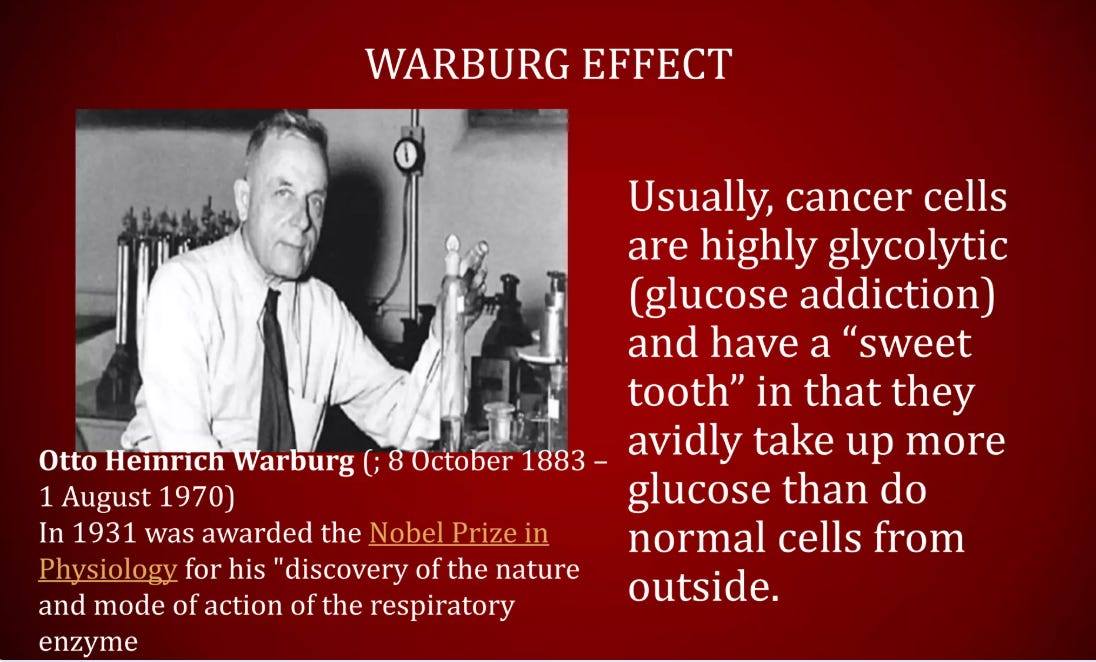
In the 1920s, German scientist and Nobel laureate Otto Warburg observed something remarkable.
Many cancer cells consume enormous amounts of glucose and convert much of it into lactate even when oxygen is available.
Today we call this the Warburg effect.
It’s not some obscure alternative-health theory.
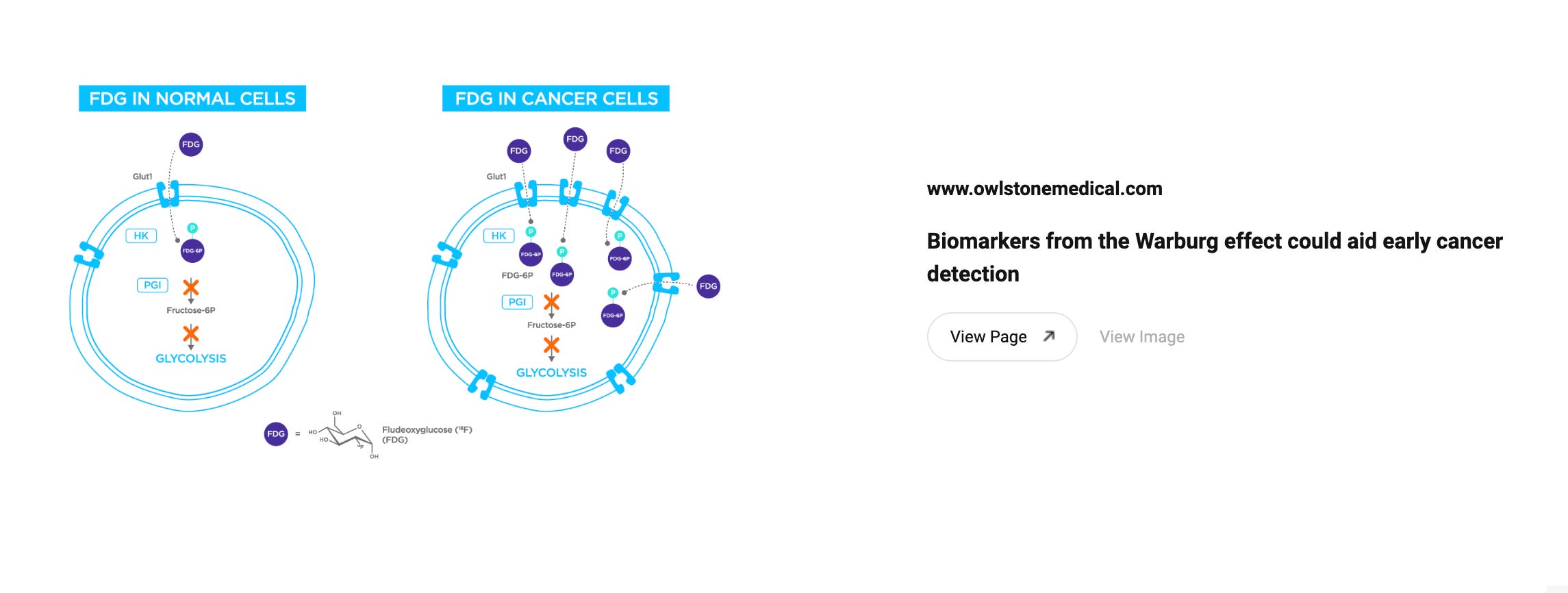
Modern medicine actually exploits cancer’s unusually high glucose uptake with FDG-PET scans, which use a radioactive form of glucose to help reveal metabolically active tumors.
Think about that for a moment.
We can sometimes find cancer by following where the glucose goes.
Mr. Skeptical interrupts.
“Then stop eating carbohydrates and starve the cancer. Case closed, right?”
Not so fast. But I like how you’re thinking, and I agree to a point.
And that’s where things become much more complicated.
Your body can manufacture glucose even when you eat virtually no carbohydrates. And cancers aren’t all metabolically identical. Some tumors can use other fuels, including amino acids and fatty acids.
So the Warburg effect doesn’t prove that eliminating dietary sugar cures cancer. Modern cancer research confirms both the importance of increased glucose consumption in many cancers and the substantial metabolic differences among tumors.
But it certainly raises an interesting question.
Researchers are studying metabolic approaches precisely because changing glucose availability, insulin signaling and other aspects of metabolism could potentially alter the environment in which certain cancers grow.
And here’s where I start asking questions.
If I developed cancer, I’d want to know:
What happens if I dramatically reduce refined carbohydrates and sugar?
What happens to my glucose?
My insulin?
My ketones?
And could changing that metabolic environment help conventional treatment?
Mr. Skeptical looks surprised.
“Wait. You’re NOT saying carnivore would have cured Dolly?”
No. I’m saying it’s a possibility.
I’m saying I wish we knew.
Those are very different statements.
We don’t currently have much clinical evidence showing that a ketogenic or carnivore diet—would have put Dolly Parton’s cancer into remission or extended her life.
But altered glucose metabolism is important enough to cancer biology that I think metabolism deserves to be part of the conversation, and I know if I ever get cancer I’m going to go pure and extreme carnivore to give my body the best chance it’s got.
Practical Suggestions and Conclusions
Dolly Parton lived an extraordinary life.
Eighty years.
Thousands of songs.
A business empire.
Generations of people entertained.
Hundreds of millions of books given to children.
And seemingly an endless supply of kindness.
But I don’t think wanting more than 80 healthy years is unreasonable.
And Dolly herself was remarkably candid about loving junk food.
Could decades of dietary choices have influenced her overall health or cancer risk?
Possibly (is what ChatGPT tells me to say), but in reality I’d say ‘very likely’.
Could eating differently after her diagnosis have changed the outcome?
We don’t know. But again, I know what I’m doing: if I get cancer, I’ll avoid all sugars and carbs to see if that can make a difference.
And anyone claiming certainty in either direction is getting ahead of the evidence.
What we DO know is that altered glucose metabolism is a hallmark of many cancers. We know the Warburg effect is real. We know cancer’s unusually high glucose uptake is important enough that medicine exploits it diagnostically with FDG-PET imaging.
And we know Dolly died at 80 in a world where women in Hong Kong average close to 88 years.
Mr. Skeptical has one last question.
“So what’s your point?”
My point is simple.
Maybe cancer treatment shouldn’t make us choose between medicine and metabolism.
Use the oncologist.
Use the imaging.
Use surgery, radiation, immunotherapy, or chemotherapy when appropriate, and after much investigation on one’s own- not just what the doctor recommends, but do your own research- for your life could very well depend on it.
But why wouldn’t we also want rigorous research into the metabolic environment we’re asking those treatments to fight in?
We want that research, but I doubt the medical/pharmacy companies will do it, just like my last post where I talked about the documentary The Cholesterol Code; the money had to be raised by crowdfunding.
Dolly Parton gave the world 80 remarkable years.
I wish we’d gotten 20 more.
And maybe one of the questions her passing should leave us asking is:
If cancer has an altered relationship with glucose, shouldn’t we be talking a lot more about what cancer eats?
Be aware.
Other links related to this post:
Could Diet Have Changed My Friend’s Cancer Outcome?
PS Links on LinkedIn, Facebook, Instagram, X, and Notes.
Full disclosure: ChatGPT was used to research and enhance this post.
🎙️The Better Wealth & Health Podcast with guest Gregory Myer is dropping tomorrow at 11:57 AM Eastern.