

Subconscious Fat at 30,000 feet
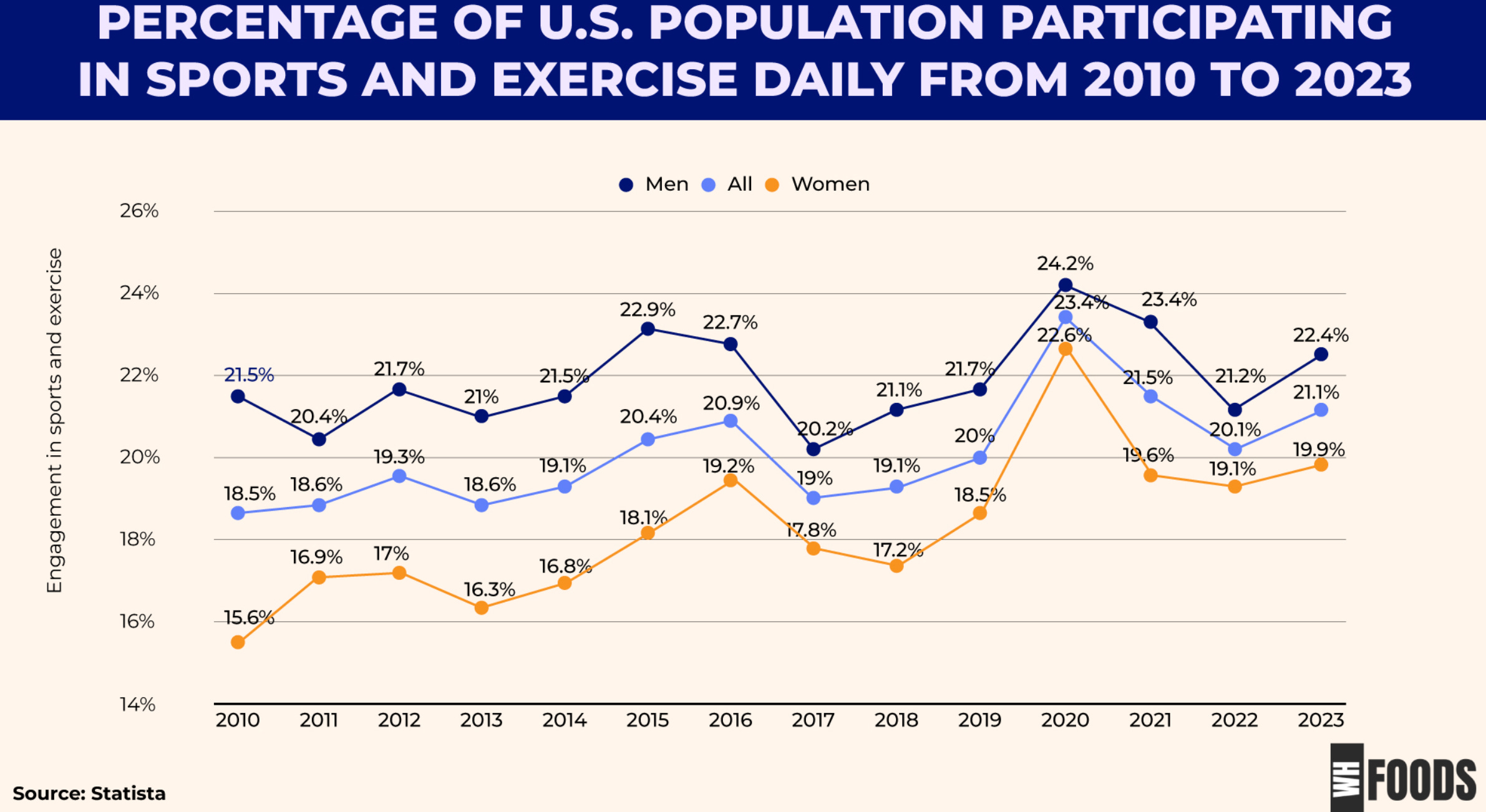
Every major health initiative seems to arrive at the same conclusion:
Move more.
Exercise more.
Be more active.
Get your steps in.
It sounds reasonable. It sounds actionable. It sounds safe.
But something interesting happens when you step back and look at the pattern.
Why does the conversation almost always drift toward movement… instead of food?
Mr. Skeptical leans in.
“Because people don’t like dieting. Pretty simple.”
That’s part of it.
But it might not be the whole story.
Because if you look closely, this pattern isn’t new.
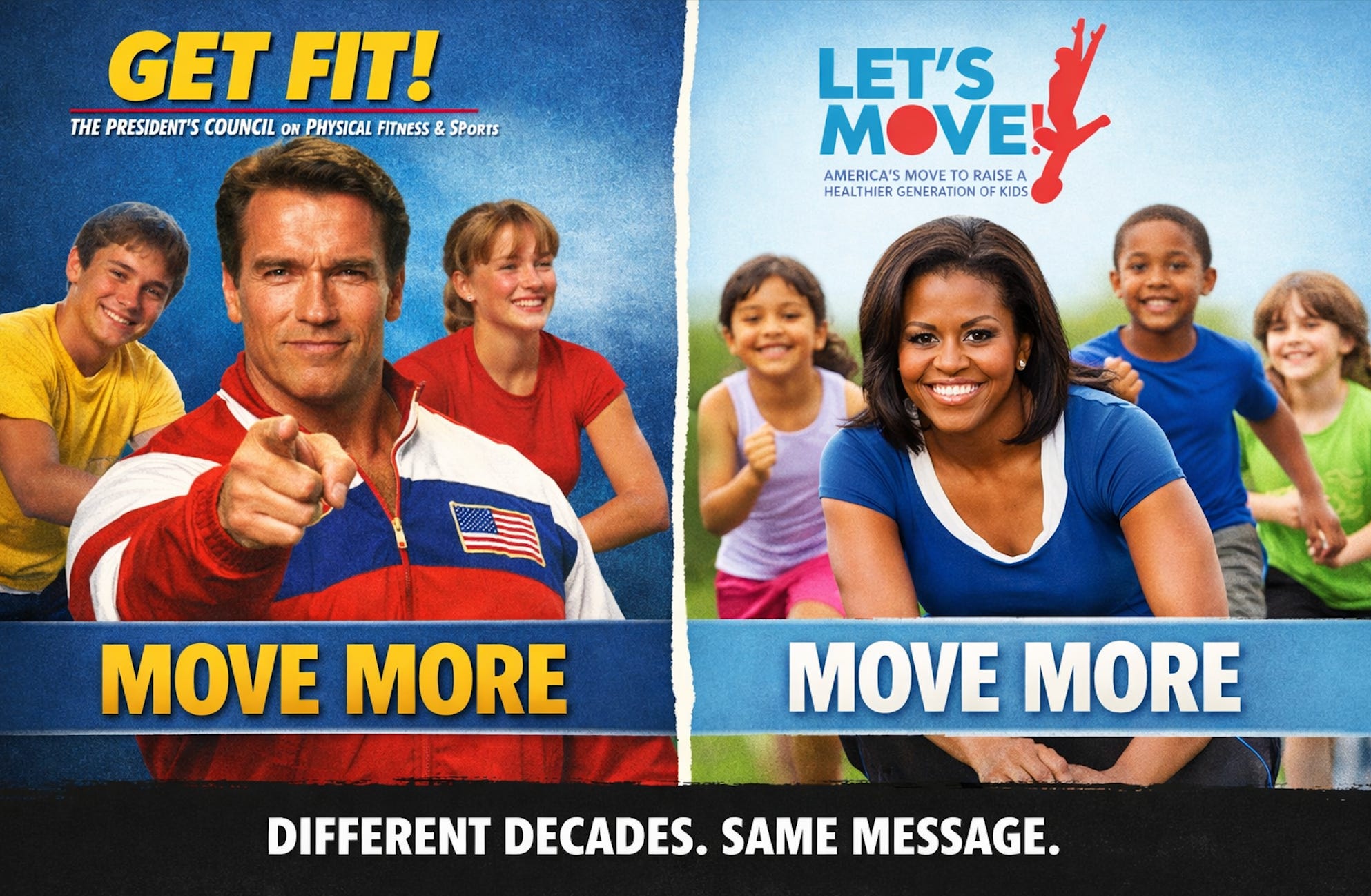
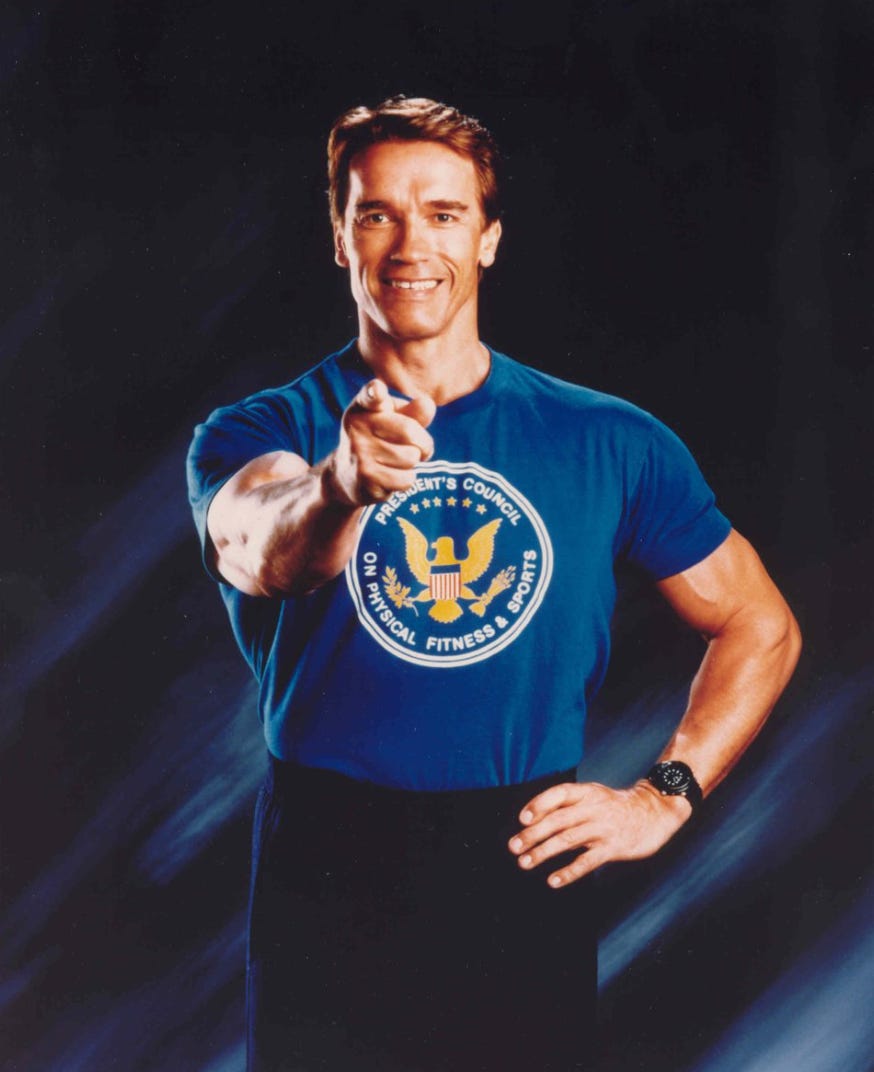
Back in the early 1990s, under George H. W. Bush, Arnold Schwarzenegger helped promote national fitness efforts as Chairman of the President’s Council on Physical Fitness and Sports—encouraging Americans, especially kids, to be more active.
Decades later, Michelle Obama, through Let’s Move!, again emphasized both nutrition and activity… but the message that stuck most publicly?
Move more.
Different era. Same direction.

Subconscious Fat at 10,000 feet
Exercise is visible.
You can film it.
Measure it.
Promote it.
You can tell someone to walk 10,000 steps and feel like progress is happening immediately.
Food is different.
Food is personal.
Cultural.
Emotional.
Habitual.
Mr. Skeptical shrugs.
“So… one is easy to talk about, and the other starts arguments?”
Exactly.
Telling people to move more is rarely controversial.
Telling people to fundamentally change how they eat?
That’s where things get complicated.
Because now you’re not just talking about behavior.
You’re talking about:
habits
identity
industry
convenience
and in many cases… addiction-like patterns
Subconscious Fat at Eye-Level
There’s also a deeper layer.
Exercise feels like addition.
You’re adding something positive to your life:
a workout
a walk
a routine
Food changes often feel like subtraction.
You’re removing:
comfort
convenience
cravings
routines you’ve had for years
Mr. Skeptical smirks.
“So people would rather add a treadmill than subtract a donut?”
That’s one way to put it.
But there’s also a systemic angle.
Entire industries are built around food production, processing, and distribution.
Changing movement guidelines is simple.
Changing food systems?
That’s far more complex.
So what happens?
We emphasize what’s easiest to implement, easiest to communicate, and least disruptive.
Move more.
Even if the bigger lever might be somewhere else.
Practical Suggestions and Conclusions
None of this means exercise isn’t important.
It is.
Movement improves:
strength
mood
longevity
resilience
But if the goal is body composition, metabolic health, and long-term change…
exercise alone rarely solves the problem.
Mr. Skeptical crosses his arms.
“So you’re saying we’ve been focusing on the smaller lever?”
In many cases, yes.
Because it’s easier.
Because it’s safer.
Because it avoids harder conversations.
The idea here isn’t to dismiss exercise.
It’s to recognize that when it comes to health, the conversation often gravitates toward what’s easiest to talk about—not necessarily what’s most impactful to change.
And once you see that pattern, it becomes harder to ignore.
Sometimes the real shift doesn’t come from doing more.
It comes from questioning what we’ve been told to focus on in the first place.
Be aware.
Other links related to this post:
PS Links on LinkedIn, Facebook, Instagram, X, and Notes. Full disclosure: ChatGPT was used to research and enhance this post.