

Subconscious Fat at 30,000 feet
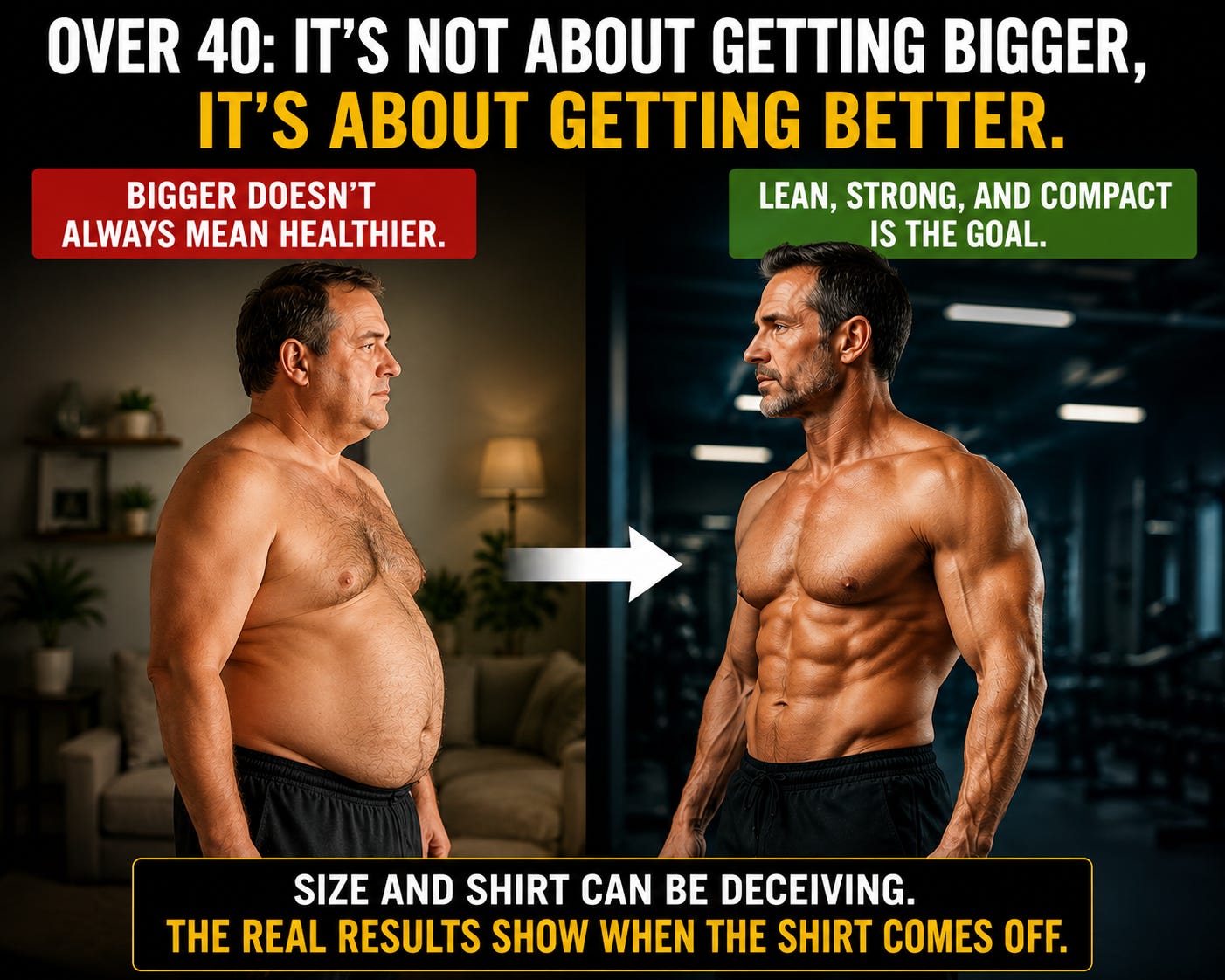
One of the biggest fears many men over 40 have about strength training is this:
“What if I get too bulky?”
Mr. Skeptical squints suspiciously.
“Yeah, because the second I touch a dumbbell at 47 years old, I’m obviously going to wake up looking like a Marvel superhero.”
Mr. Skeptical should be named Mr. Sarcasm.
Most men over 40 are nowhere near becoming “too bulky.” In fact, the exact opposite usually happens.
They become more compact.
Leaner.
Denser.
Stronger.
More athletic-looking.
Not bigger.
This is because after 40, the body changes dramatically. Testosterone levels are usually lower than they were at 18 or 25 years old. Recovery is different. Hormonal signaling changes. Bone growth slows. Muscle-building potential decreases compared to youth.
In other words, the body becomes less interested in adding sheer size and more responsive to improving efficiency.
And that is not a bad thing.
That may actually be the healthiest outcome possible.
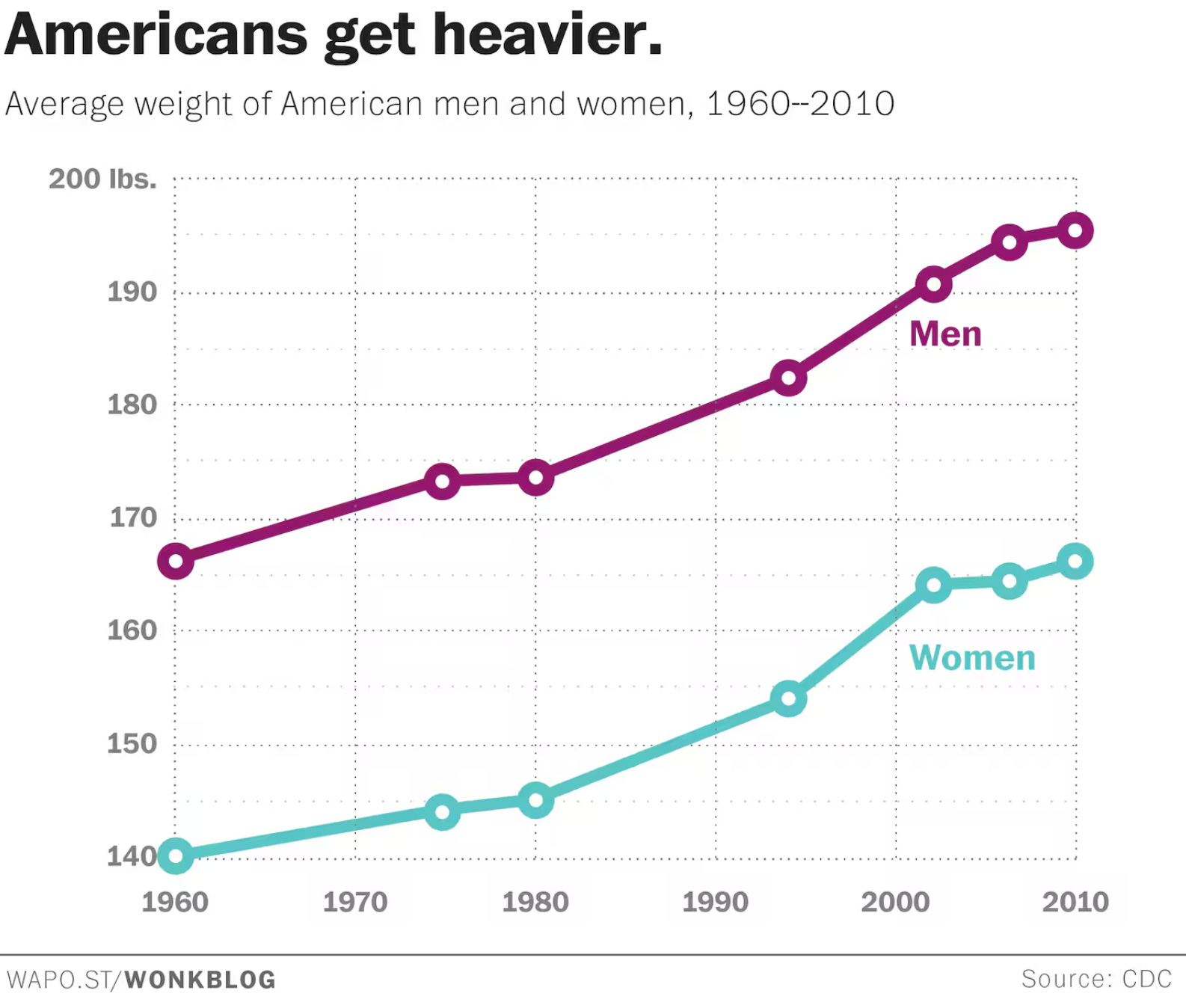
Subconscious Fat at 10,000 feet
When most people picture “muscle,” they imagine a 22-year-old bodybuilder force-feeding chicken breast and rice while desperately trying to gain mass.
But many men over 40 who start resistance training — especially while following a lower-carb, ketogenic, or carnivore-style approach — experience something very different.
They lose inflammation.
They lose water retention.
They lose visceral fat.
Their waist shrinks.
Their face becomes leaner.
Their stomach flattens.
And yes, they may gain muscle…
…but visually they often appear smaller in clothing.
Mr. Skeptical looked confused.
“So wait… I start lifting weights and eating protein and somehow I get smaller? That sounds like false advertising.”
Not exactly.
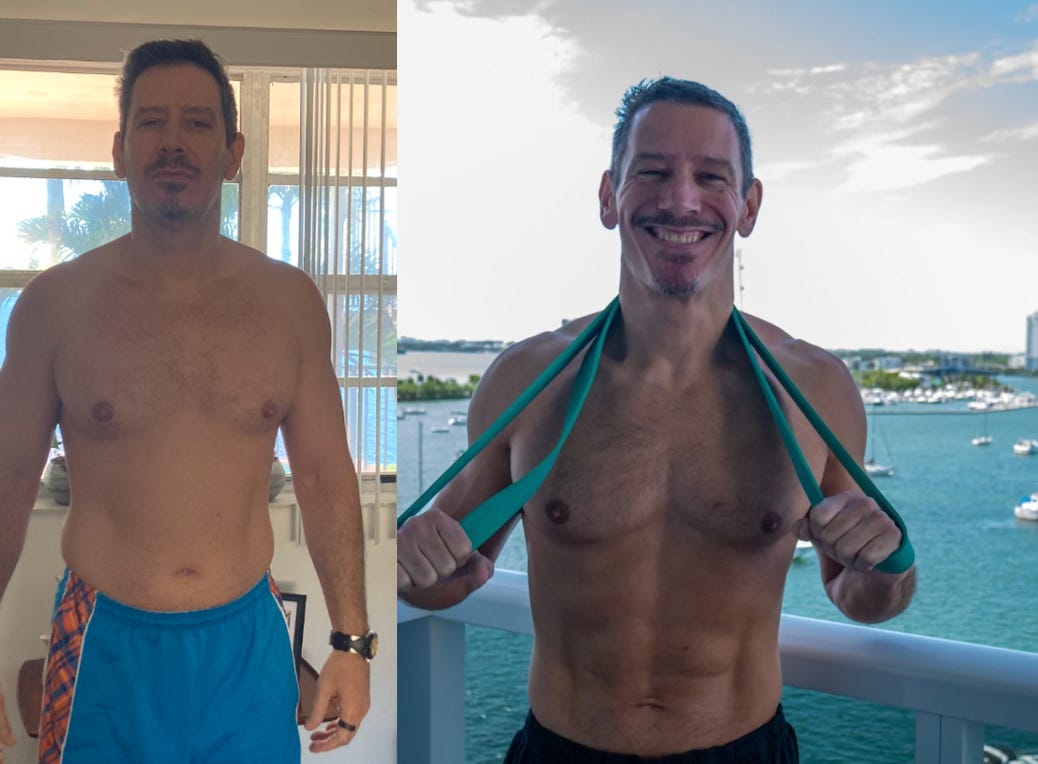
Because the real transformation is usually happening underneath the shirt.
A man may weigh less yet look dramatically healthier:
better posture
stronger shoulders
more visible jawline
flatter stomach
visible abs
more muscular legs
less puffiness
The body becomes more defined instead of merely more massive.
That is a very different goal from traditional “bulk culture.”
Even Hollywood gives us examples of this.
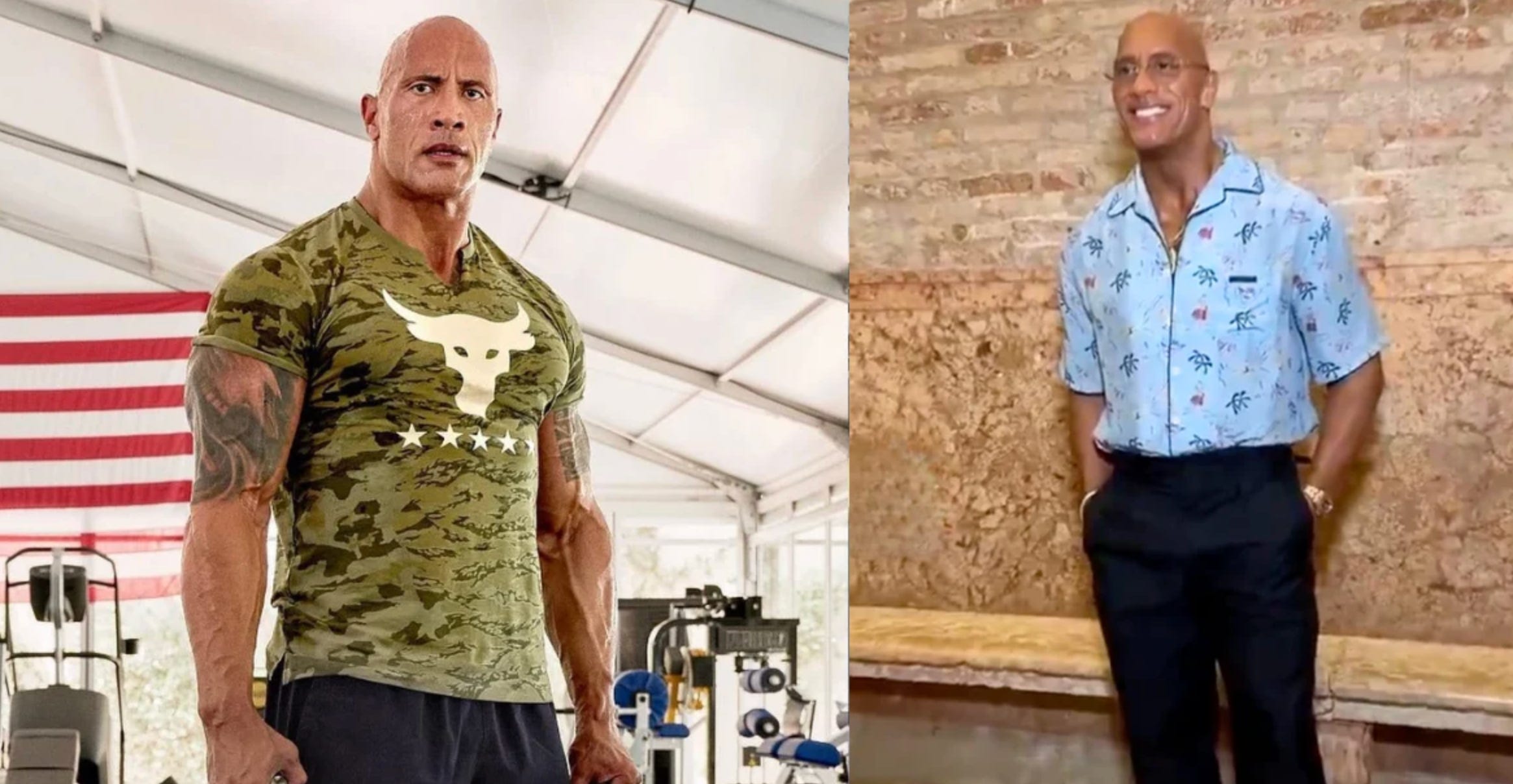
Dwayne Johnson has visibly leaned out compared to certain earlier periods of his career where he carried far more overall mass and size. While still extremely muscular, his physique in recent years appears tighter, leaner, and more conditioned rather than simply enormous.
That’s an important distinction.
Health is not always about becoming larger.
Sometimes it is about becoming more refined.
Subconscious Fat at Eye-Level
There is another uncomfortable truth hidden inside all this.
Fat often creates the illusion of size.
A man with a large belly and inflamed body may actually appear “bigger” in a shirt than a leaner, stronger man with substantially better health markers.
That can play tricks on the male ego.
Mr. Skeptical stares down at his stomach thoughtfully.
“So you’re telling me some of my ‘size’ might not actually be impressive?”
Exactly.
A flatter waistline may reduce overall circumference while simultaneously improving nearly every meaningful health metric:
insulin sensitivity
blood pressure
mobility
inflammatory load
sleep quality
cardiovascular health
And ironically, many men discover that when they finally get lean enough, their physique only truly becomes obvious when the shirt comes off.
A loose shirt may hide everything.
But underneath:
visible muscle separation
a flatter abdomen
stronger glutes
more athletic movement
less joint stress
better posture
This is one reason why chasing endless “bulk” after 40 can become counterproductive.
The body is no longer trying to become a refrigerator.
It is trying to remain functional.
Strong.
Mobile.
Capable.
Resilient.
The older male body often responds best to intelligent resistance training, sufficient protein, recovery, and reduced body fat rather than endless calorie-surplus “mass gaining.”
Practical Suggestions and Conclusions
For men over 40, the better goal may not be:
“Become bigger.”
The better goal may be:
“Become harder to break.”
That means:
maintain muscle
improve strength
reduce visceral fat
preserve joints
improve movement
stay metabolically healthy
and maintain a leaner waistline
You may not become massive.
But you may become healthier, sharper, more athletic, and biologically younger-looking.
And perhaps most importantly…
you may finally stop confusing “bulk” with health.
Mr. Skeptical folds his arms.
“So basically, I shouldn’t panic if my shirt size goes down?”
No.
You should probably panic if your waistline keeps going up.
Be aware.
PS Links on LinkedIn, Facebook, Instagram, X, and Notes. Full disclosure: ChatGPT was used to research and enhance this post.